
Socrates, Plato, and Aristotle – The Path to a Meaningful Life
Three philosophers, connected through teaching yet divided by profound differences, ask questions that continue to shape human thought. How do we distinguish knowledge from confidence? What lies beyond the visible world? Can political power be just? And is knowing what is good enough to make us act well?
Across seven successive steps, you will begin with Socrates’ life and questions, explore Plato’s ideas about reality, the soul, and the state, and discover Aristotle’s explanations of causes, virtue, and human flourishing. You will distinguish historical teachings from the author’s hypotheses and examine where a persuasive image needs a stronger argument.
The final step turns your attention toward your own thinking: how you examine beliefs, respond to objections, and translate understanding into action. Complete the Journey with a 30-question quiz and earn the "Explorer of Wisdom" badge.
 1
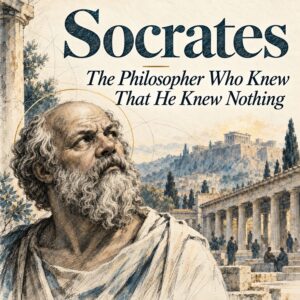
Socrates – The Philosopher Who Knew That He Knew Nothing
Meet the philosopher who made examining our lives a fundamental human task. Explore his conversations, trial, and attitude toward death to understand why acknowledging ignorance can be the beginning of wisdom.
 2
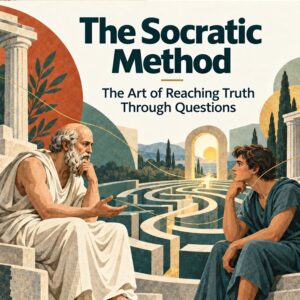
The Socratic Method – The Art of Reaching Truth Through Questions
Discover how clear definitions, thoughtful questions, and counterexamples reveal the hidden assumptions behind our beliefs. Learn how conversation can support the search for truth and why uncovering a contradiction invites reconsideration.
 3
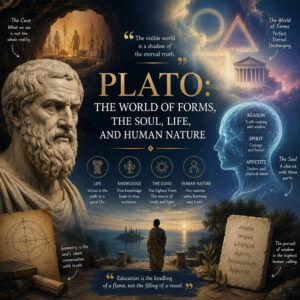
Plato: The World of Forms, the Soul, Life, and Human Nature
Explore the distinction between the changing world of the senses and the eternal Forms in Plato’s philosophy. Through the allegory of the cave and questions about the soul, love, and the Good, discover how knowledge can transform our understanding.
 4
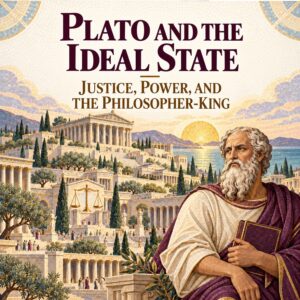
Plato and the Ideal State – Justice, Power, and the Philosopher-King
What connects a just person with a just society? Examine the philosopher-ruler, education, and the organization of the ideal city while confronting difficult questions about freedom, censorship, and the dangers of power.
 5
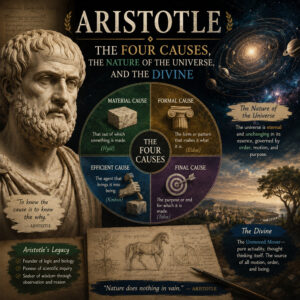
Aristotle: The Four Causes, the Nature of the Universe, and the Divine
Distinguish material, efficient, formal, and final causes through familiar examples. Then explore the author’s thought experiment about the universe and God, examining which conclusions follow from its premises and which require further justification.
 6
Aristotle and the Art of Living Well – Happiness, Virtue, and the Golden Mean
Discover why a good life requires more than pleasure, success, or knowledge of moral rules. Explore eudaimonia, habits, the golden mean, friendship, and practical wisdom as foundations of a character developed through action.
 7
Socrates, Plato, and Aristotle – Three Answers to the Question of How We Should Live
Turn philosophical questions toward your own beliefs and choices. Distinguish authority from argument, hypothesis from proof, and honest uncertainty from abandoning the search for truth-and continue the Journey with questions of your own.
Test your knowledge
Answer every question correctly to complete the journey and unlock your badge.
Mark the core articles as read to unlock the test. Supplemental Premium reading is optional.