COSMOLOGY
❖Dark Matter and Dark Energy: The Invisible Architecture of the Universe
When a person looks at the night sky, they feel as though they are observing the entire Universe. The stars shine, galaxies glow in the distance, and telescopes reveal incredible cosmic structures. For thousands of years, humanity believed that what we see represents almost everything that exists. But in the 20th and 21st centuries, science reached one of the most shocking discoveries in history: the vast majority of the Universe is invisible…

Black Holes: What They Are and Why They Hold the Greatest Secrets of the Universe
In the silence of space, there are places where the laws of common sense bend almost as strongly as space itself. There, time stretches, light is refracted like in a dream, and matter loses its form. These are black holes – not merely objects, but boundaries of our understanding. If the Universe has secrets, they are guarded precisely there. The idea of black holes did not appear suddenly as a complete scientific concept, but developed gradually over more than two centuries, beginning as a purely theoretical assumption…

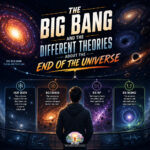
The Big Bang and the Different Theories About the End of the Universe
When we talk about the beginning of the Universe, it is difficult to ignore the scientific evidence supporting the Big Bang. Facts often prevail over human beliefs and opinions without requiring effort. Truth does not need to be defended – it defends itself. As early as 1912, Vesto Slipher measured the speed and direction of spiral nebulae by analyzing changes in the wavelength of the light they emitted. His observations showed that these objects were moving away from us…

How Do Solar Systems and Meteor Showers Form?
Have you ever seen a “shooting star” streak across the sky in a fraction of a second, leaving a thin glowing trail behind it? Or perhaps a celestial object moving slowly through the heavens over days or even weeks, with a long luminous tail stretching behind it? Both of these natural phenomena occur on a cosmic scale, and they are closely connected. Comets are celestial bodies that typically range in size from a few hundred meters to around 20 kilometers in diameter, although some of the largest known comets may exceed 100 kilometers…

PHYSICS
❖Nikola Tesla – The Man Who Illuminated the World and Outlived His Time
The history of humanity is filled with individuals who changed the world. Yet very few managed to do so as profoundly and comprehensively as Nikola Tesla. He was not merely an inventor, engineer, or scientist. Tesla became a symbol of human imagination, endless curiosity, and the pursuit of knowledge that transcended the limitations of his own era. His ideas not only transformed the technological landscape of the late nineteenth and early twentieth centuries, but they continue to shape our lives today…

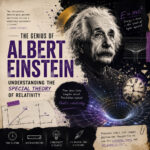
The Genius of Albert Einstein: Understanding the Special Theory of Relativity
In 1905, Albert Einstein published his Special Theory of Relativity, a revolutionary framework that permanently changed humanity’s understanding of space, time, motion, and reality itself. Before Einstein, scientists generally believed that space and time were absolute and unchanging. Time was assumed to flow at the same rate for everyone, regardless of their circumstances, while space was considered a fixed stage on which the events of the universe unfolded…

Einstein’s General Theory of Relativity: How Gravity Shapes Space, Time, and the Universe
In 1905, Albert Einstein transformed our understanding of reality with the publication of his Special Theory of Relativity. In that groundbreaking work, he demonstrated that space and time are not fixed and absolute, but are instead deeply connected and influenced by motion. Concepts that had seemed obvious for centuries – such as the idea that time flows equally for everyone – were suddenly called into question…

Quantum Field Theory – Does Anything Truly Exist?
When we observe the world around us, it appears stable, solid, and clearly defined. The mass of objects, their shape, their motion – all of this creates the sense of an objective, solid reality. But modern physics gradually reveals that this intuitive picture is only a surface layer. For centuries, the atom was considered the smallest indivisible unit of matter. Today we know that it is a complex system – a nucleus of protons and neutrons, surrounded by electrons that do not “orbit” in the classical sense, but exist as probability distributions…

NEUROBIOLOGY
❖How Social Media Changes the Brain: Dopamine, Attention, and the Collapse of the Inner World
The human brain has never in history been exposed to such a constant stream of stimuli as it is today. For hundreds of thousands of years, the human nervous system evolved in a world of relative silence, slow changes, and a limited amount of information. Attention was directed toward immediate survival, nature, human relationships, and the reality unfolding before one’s eyes. Today, however, we live in an era in which attention has become the most valuable currency of the global economy…

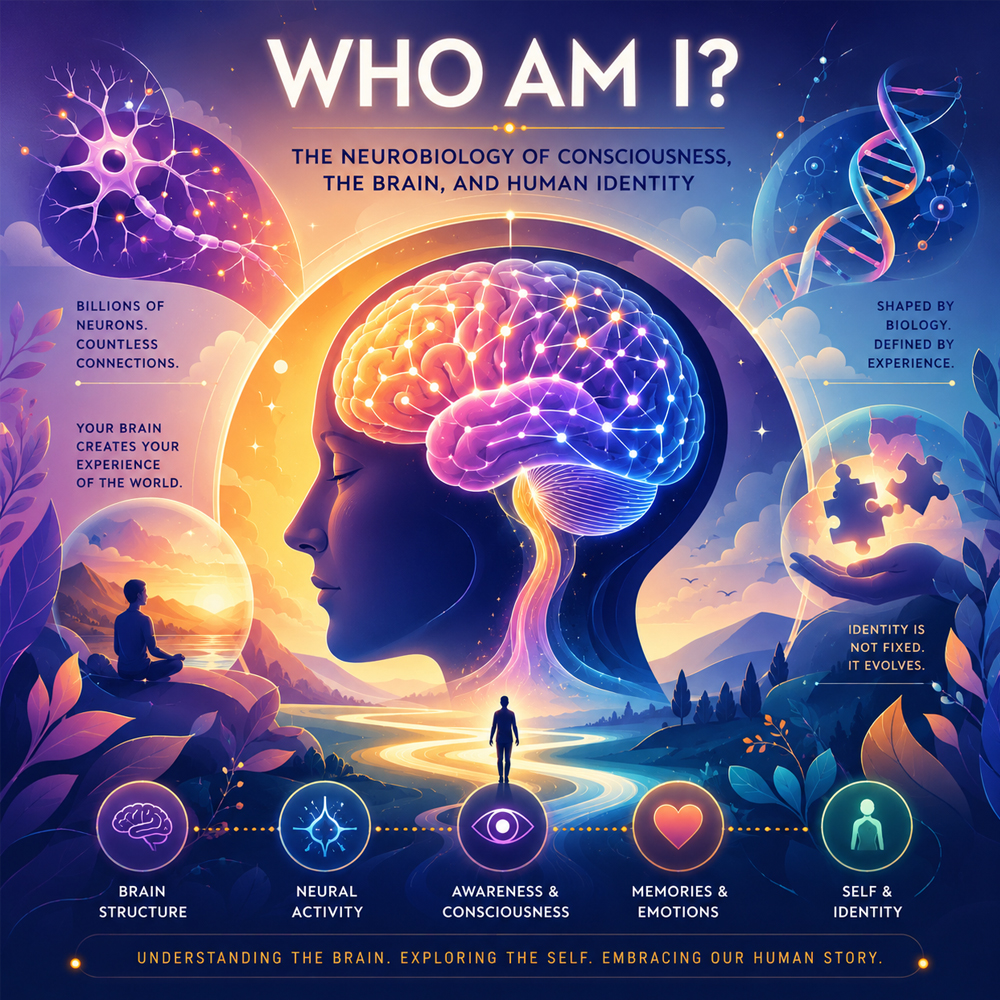
Who Am I? The Neurobiology of Consciousness, the Brain, and Human Identity
The study of the human brain may not be all that different from the study of what we perceive as the “self,” only viewed through a neurobiological lens. At first glance, the definition of the “self” appears vague, because nothing we can identify seems to fully qualify as the self itself. When we experience an emotion, we say, “I feel.” When we speak, we say, “I am speaking.” There always seems to be an “I” in our minds that exists separately from our actions, emotions, and thoughts – or at least that is how it appears to us…

The Truth About Meditation: Scientific Facts, Benefits, and How to Begin
In a world that never stops talking, signaling, demanding, and distracting us, silence has become a rarity. Not just external silence, but that inner silence in which thoughts arrange themselves, emotions calm down, and a person meets themselves. It is there – in this almost forgotten inner territory – that meditation begins. But if decades ago it was perceived as something mystical, exotic, or even incomprehensible to the Western mind, today science is beginning to tell its own story about it…

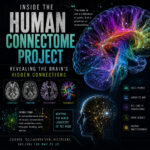
Inside the Human Connectome Project: Revealing the Brain’s Hidden Connections
Brain mapping is an attempt to create a map of the most complex territory known to us: the human brain. Scientists do not want to understand only which parts exist there, such as the frontal lobe, hippocampus, thalamus, cerebellum, and cortex. They also want to understand how these regions communicate, cooperate, and create the extraordinary range of human experience, from memory and emotion to language, creativity, attention, and consciousness itself…

Free Will or Determinism: Do We Have Real Choice According to Physics and Neuroscience?
Every day we make dozens, even hundreds of decisions. What to say, what to do, which direction to take. Some of them are small and almost unnoticeable; others change our lives. And yet we rarely think about something that lies at the foundation of every single one of them – whether we actually have a real choice at all. At first glance, the answer seems obvious. Of course we do. We feel hesitation, consider options, and choose. But this feeling may be misleading…

Why the Brain Searches for Meaning in Everything – The Scientific Explanation
There is something deeply human in standing before chaos and refusing to accept it as the final answer. To look at randomness – in the noise of the city, in the coincidences of everyday life, in the order of numbers – and to feel, almost instinctively, that behind all of it there must be meaning. That things cannot simply be as they are – without reason, without intention, without a message. This need is not a weakness. It is built into the very architecture of the human brain…

How Consciousness Emerged: Why Humans Developed It and What It Means
To ask why consciousness exists is like asking why there is light in the cosmos. We can describe the mechanism, we can measure the energy, but the experience itself – the very “feeling” – remains elusive. And yet, it is precisely this feeling that makes us human. Consciousness is not just a function. It is an experience. It is not only thinking, but awareness that you are thinking. It is not only life, but knowing that you are alive…

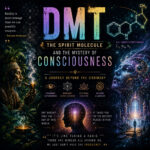
DMT: The Spirit Molecule and the Mystery of Consciousness
The prevailing scientific view of dimethyltryptamine (DMT) describes it as a powerful naturally occurring psychedelic compound belonging to the tryptamine family. DMT is often classified as a natural psychedelic because it can be found in numerous plant species and has also been detected in the bodies of humans and other animals. Although DMT has been identified in human tissues, its precise biological role remains uncertain…

OTHERS
❖Biology Fundamentals: Cells, DNA, Mitosis, Meiosis, and CRISPR Explained
Biology is the science of life in the universe we inhabit. It reveals the beauty of the vast diversity of living organisms and the harmony that exists among them. It shows us how, on a deeper level, all organisms participate in a great cycle of life, and how every living being depends, directly or indirectly, on every other. A deeper study of biology can lead a person to see themselves as an extraordinarily complex being…

The Global Plant Network: A Potential Solution to Plastic Pollution
Towards the end of the 20th century, scientists from various fields began investigating vast underground networks connecting plants across distances of hundreds and even thousands of kilometers. Behind every major scientific discovery that transforms our understanding of the world lies a complex explanation that must eventually be distilled into a form people can grasp. At the heart of science is the principle that knowledge should always be traceable back to its source…