
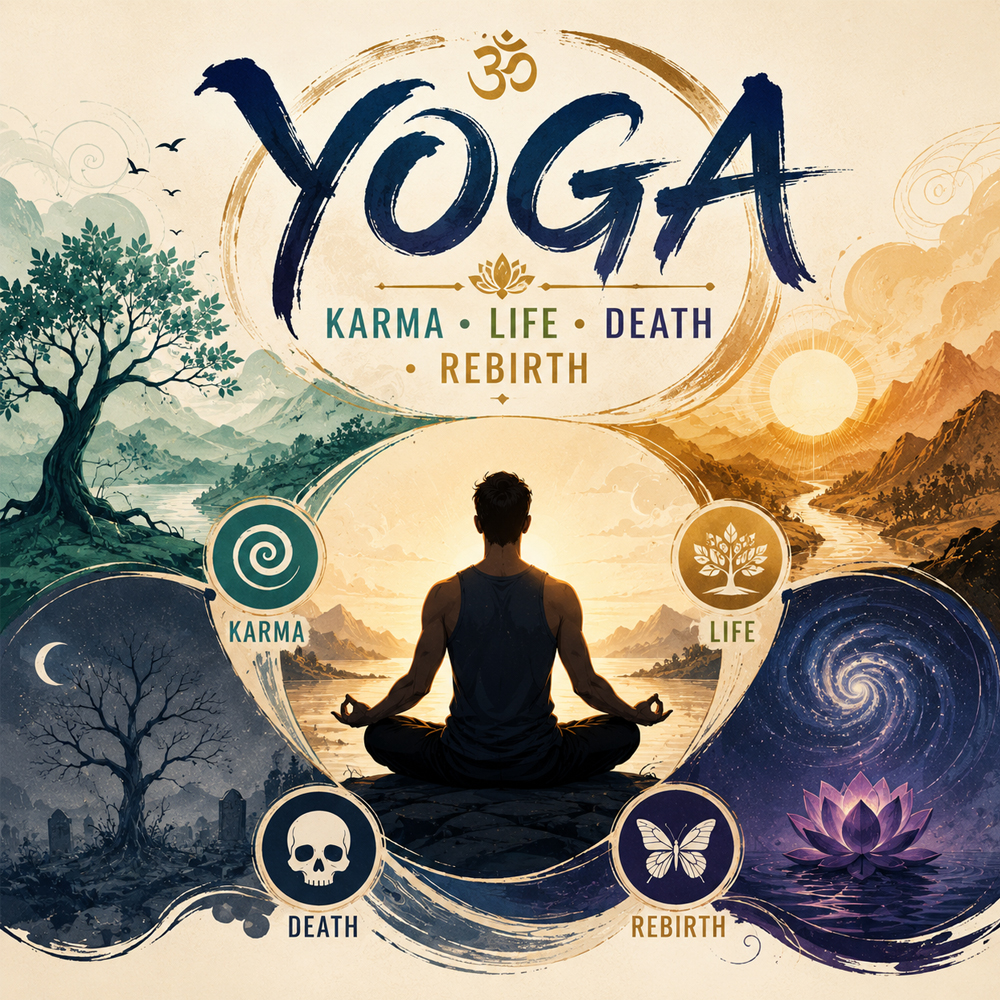
Death is a concept we believe we fully understand. The heart stops, the circulatory system is interrupted, the organs no longer receive oxygen and stop functioning, the brain ceases its activity, and we declare the person dead.
Centuries ago, a person was declared dead when they were unable to wake up for one reason or another. Later, humanity took a step forward, and people were considered dead when breathing could no longer be detected. Even later, death was believed to occur when the heart stopped beating.
Today we know that all these events can mean many other things, but not necessarily “death.” In the 21st century, we have different types of “death.”
The absence of brain activity is called “brain death,” while the stopping of the heart is called “clinical death.” And yet people have returned to life even from these states.
Over time, we humans have expanded our understanding of when life ends, but have we reached the end, or does the process of death continue beyond the shutdown of the organs?
What we call life is the dynamism of energy, and what we call death is an inert state of energy. Death is the process of life moving from dynamism into inertia.
– Sadhguru
Karma
Absolutely everything in the Universe is a collection of memory manifesting on different levels.
In yoga, there are several main levels of memory – elemental memory, atomic memory, evolutionary memory, genetic memory, karmic memory, unconscious memory, subconscious memory, and conscious memory. Everything is considered to carry imprints within itself, because of which it is what it is.
Our genes carry the imprints of our ancestors, because of which our body is what it is. And just as we can trace the life of the planet by analyzing our own body, we can also trace the source of our actions and thoughts by examining our past, which has built our character.
This is called “karma” – past imprints manifesting in the present and creating the future. When a certain imprint in memory becomes strong enough, it turns into a tendency, and a tendency is something that seeks expression, manifestation.
For example, if at an early age a certain color made a huge impression on us, and the memory of it left a strong imprint within us, it is likely that we will have a tendency to prefer that color over others.
Elemental Memory:
Atomic Memory:
– Atomic memory is connected to the material substance of the Universe. It represents the way different atoms and molecules are formed. Together with elemental memory, it creates what we call “inanimate matter.”
Evolutionary Memory:
– Evolutionary memory is the foundation of biological life. Thanks to it, we have two arms, two legs, a head, a brain, and so on. Because of it, we are humans, not animals or insects. In other words, its expression is found in the diversity of organisms in the world.
Genetic Memory:
– Genetic memory is the reason why every person differs from every other. Evolutionary memory is the reason we are human beings, while genetic memory is the reason why, even though we are the same type of organism, we possess different traits.
Karmic Memory:
– Karmic memory is the collection of all the imprints we have gathered, not only from the moment of our birth, but also from our past lives, as well as from the process of evolution itself.
Unconscious, Subconscious, and Conscious Memory:
– The next three levels of memory are connected to the mind, or the “mental body.” There is a vast collection of memories of which we are unconscious – this is Unconscious Memory. There is also subconscious memory, which lies just beneath the conscious. And finally, we have conscious memory, which we use for the thinking process in our everyday waking state.
All these levels of memory create what we are, and their interplay, which weaves them together, is what we call “our life.”
Rebirth
But if all the other levels of memory – genetic, karmic, unconscious, and subconscious – enter conscious memory, it is very likely to be overwhelming for the person, since the memory of perhaps hundreds, even thousands, of past lives may prove mentally and emotionally unbearable.
Nature acts in a way that separates only a “portion” from this bank of memories for a person to be born with. The entire portion of Karma they possess is called “Sanchita Karma,” while the small portion of it allotted for a given life is called “Prarabdha Karma.”
Prarabdha Karma is the “more urgent” one – that is, the imprints left by certain things and events are stronger and create stronger tendencies compared to the others. This is Nature’s way of making a very complex process easier.
If a person manages to complete their “Prarabdha Karma” for this life, they may “scoop up” a new portion from their “Sanchita bank.” The spiritual process is about dealing with as many portions as possible within one life.
For this reason, it is believed that when a person sets out on a spiritual path, terrible things begin to happen to them within a short period of time. This is because, for such a person, life seems to begin moving in fast-forward.
The spiritual process is an intensification of life, and increasing intensity requires more fuel. “Bad things” are not bad in themselves, but are “bad” because of the person’s desires, which are triggered by the new portions of prarabdha karma they constantly draw in.
A person on the spiritual path is trying to deal with all their sanchita karma in one lifetime. Some monks connected with the yoga system try to train their body and mind, since it is believed that sharp intellect and a healthy bodily spirit carry their own imprints in a person’s karma, giving the potential for one to be born with greater prarabdha karma in their next life.
Intensive training of the mind and body acts like creating a larger container for karma.
The five sheaths
- Anna maya-kosha (translated as the food sheath), which is the material body.
- Mano maya-kosha, which is the mental body. It is inseparable from the material sheath, because the way we think and feel is directly reflected in the physical body, and vice versa. It is the coordinator of the five senses. The intelligence operating in the brain before conscious intellectual activity, but also much more than that.
- Prana maya-kosha, which is the energy body. It is made up of the five pranas (vital energies).
- Vijnana maya-kosha is a sheath beyond the physical. Vijnana maya-kosha is translated in the context of “knowledge that transcends the material” and is the link between the material and the non-material. One who is conscious of this sheath is clear about oneness.
- Ananda maya-kosha, which is translated in the context of “the sheath consisting of bliss” and is often called the etheric body. It is entirely beyond the physical and cannot be defined in any way. In yoga, it is spoken of only as a state of experience.
The five pranas
- Samana vayu – maintains body temperature. Control over it gives a person the ability to keep their temperature normal in extreme cold or heat. In the Himalayas, barefoot monks and sadhus can be seen walking around with barely any parts of their bodies covered. Samana vayu also has healing properties and is connected with digestion.
- Prana vayu – controls breathing and thinking. In Yoga, great emphasis is placed on different types of breathing techniques, because breathing is closely connected to mental activity, and mental activity in turn is connected to states of consciousness. When we think about one thing, we breathe in one way; when we think about something else, we breathe in a completely different way. The reason the two are connected is that they have a common source – prana vayu.
- Udana vayu – the word itself translates as “to fly.” It is believed that a person who has control over udana vayu may weigh 80 kg, but feel their body as if it were 50. There are schools in China that emphasize control over udana vayu. It is assumed that it is entirely possible for a person with conscious control over this energy to make their body levitate a few centimeters. In sports, we sometimes see elite athletes jumping impossibly high at certain moments, considering their physical structure and musculature – this is an unconscious, more intense activity of udana vayu.
- Apana vayu – connected with the excretory system and sensory functions. By “excretory system,” purification at the cellular level is meant. It is believed that only when the body is purified at the cellular level does it become fit for adequate sensory perceptions. When the body does not purify itself well, it becomes sluggish and sleepy, which sooner or later affects the mind as well.
- Vyana vayu – the energy that “stitches” all the cells into one complete organism. There are cases in which the bodies of certain yogis and monks did not begin to decompose for a very long period after their death. This happens when the one leaving the body leaves a certain amount of Vyana vayu in it, which keeps it whole. A person who has control over their Vyana vayu is believed to be able to leave their body whenever they wish.
The processof death
- When breathing stops and we declare the person dead, the energies begin to leave the body. Between 21 and 25 minutes after death, Samana vayu leaves the body and it loses its temperature.
- After the breath stops, Prana vayu also begins to leave the body, and it starts losing its respiratory qualities and its mental aspects. This happens within 48 to 90 minutes. If death occurred naturally, or due to old age, Prana vayu is assumed to have left the body within 60 minutes. If a young and vital person has died, it may take up to 90 minutes. During this time, respiratory activity and mentality are still active, but not in the same sense as we perceive them while alive. For this reason, in India, cremation is recommended to be delayed for at least 90 minutes after death.
- After 6 to 12 hours following the stopping of the breath, Udana vayu has left the body. The body becomes heavier than usual. It has not become heavier in terms of kilograms, but it feels heavier.
- From 8 to 18 hours after the stopping of the breath, Apana vayu has left the body. Until it has completely left the body, the body still possesses sensations. For this reason, there are cases in which the body of someone who has recently died twitches somewhere.
- Vyana vayu, which is the preserving nature of prana, leaves most slowly. Its departure occurs from 11 to 14 days after the stopping of the breath. If the deceased was young and vital, and the body is not completely crushed, it may take from 48 to 90 days. During this period, life still carries out certain processes, and certain rituals can be performed to help the deceased. In India, these rituals are common.
Read More:
- Shiva – The First Yogi and Guru, the Originator of Spirituality
- The Life of Jiddu Krishnamurti and His Legacy to Humanity
- Sadhguru: The Story of His Enlightenment, Vijji, and the Mission of the Dhyanalinga