

Introduction to the World of Analytical Psychology
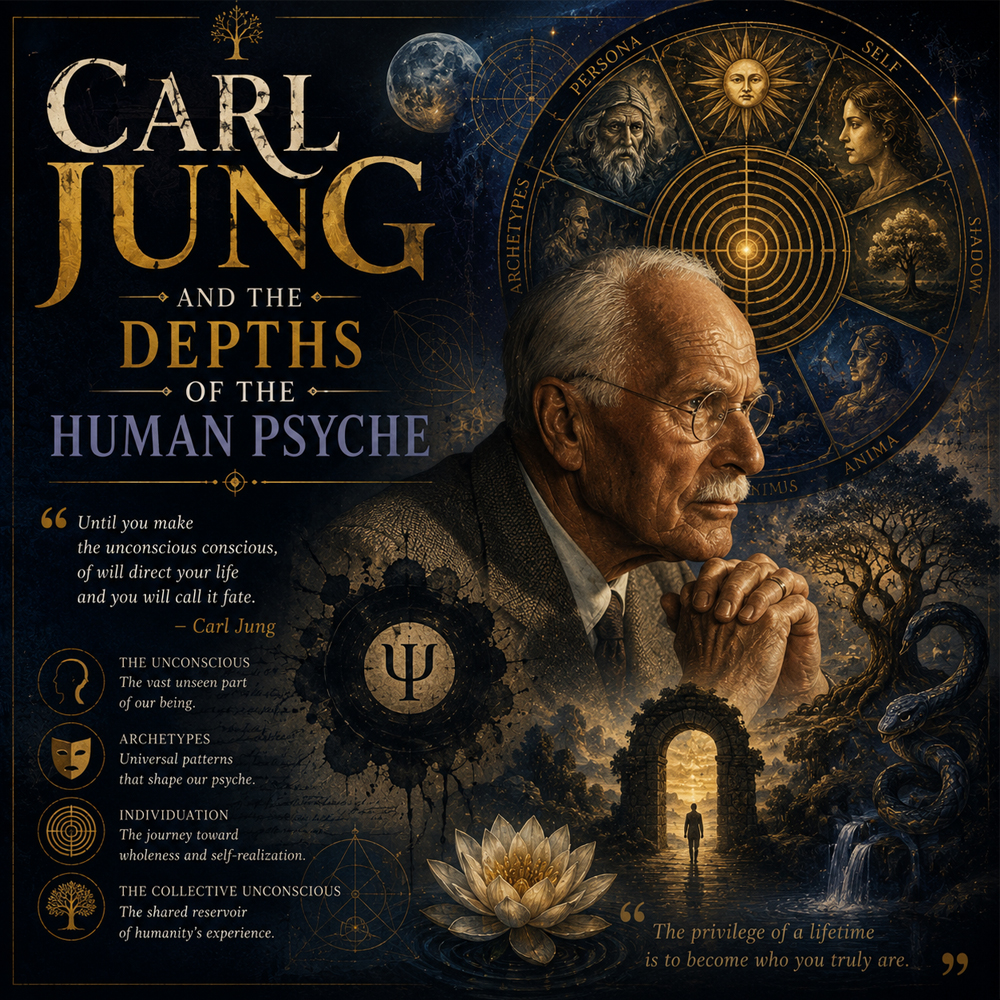
Carl Gustav Jung remains one of the most influential and controversial figures in the history of modern psychology. His ideas not only transformed the way psychologists understand the human psyche, but also had a profound impact on philosophy, literature, religion, art, and even popular culture. While many scholars and therapists focused on the measurable and rational aspects of human behavior, Jung ventured into a territory that, in his time, seemed almost mystical. He explored dreams, symbols, archetypes, the collective unconscious, and the relationship between humanity and spirituality.
Born in the late nineteenth century, Jung lived during an era in which science and religion existed in a complex state of tension. Industrialization and the rapid advancement of technology led many people to believe that rationalism would eventually provide answers to all human questions. Yet the inner world of the individual remained a mystery. It was within this gap that Jung’s fascination with the unconscious emerged. To him, the human soul was not merely a collection of instincts and traumas, but a vast living system carrying within it the inheritance of all humanity.
Jung became known not only for his theories but also for his willingness to challenge established authorities. His conflict with Sigmund Freud developed into one of the most significant intellectual divisions in the history of psychology. Although the two men were initially close collaborators, their differences gradually became irreconcilable. Freud viewed human beings primarily through the lens of sexual drives and repressed desires, whereas Jung believed that the psyche contained far deeper and more universal structures.
Today, more than half a century after his death, Jung’s ideas continue to inspire psychologists, philosophers, writers, and individuals seeking a deeper understanding of themselves. His work remains relevant because it addresses questions that are timeless. What is the nature of human identity? Why do we repeat certain patterns of behavior? What lies behind the symbols that appear in our dreams? And what is the relationship between personal experience and the collective history of humanity?
Carl Jung’s Childhood and Early Years
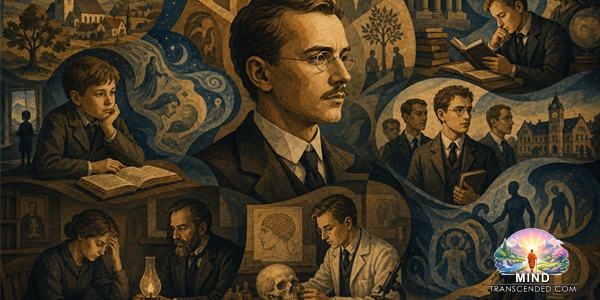
Carl Gustav Jung was born on July 26, 1875, in the Swiss village of Kesswil. He grew up in a family with deep religious roots. His father was a Protestant pastor, and many of his relatives were also connected to the church. From an early age, Jung was surrounded by religious symbols, theological discussions, and questions concerning the human soul. This environment had a profound influence on his future thinking.
However, his childhood was far from peaceful and carefree. Jung often described himself as a lonely child who felt different from others. He spent much of his time in reflection, observation, and inner fantasy. Even as a young boy, he experienced vivid dreams and visions, which he would later interpret as an important part of personal development. Rather than dismissing them as childish imagination, he took them seriously and sought to understand their meaning.
His relationship with his parents was also complex. His mother suffered from psychological difficulties and often behaved unpredictably. This gave the young Jung the impression that the human psyche contained hidden and potentially dangerous depths. He began to view the world as a place where an invisible dimension existed behind visible reality. These early experiences played a crucial role in shaping his interest in the unconscious mind.
At school, Jung stood out for his intelligence, although he did not always fit easily into social circles. He preferred solitude and reading to noisy gatherings. He was deeply interested in philosophy, mythology, history, and religion. Even then, he wondered why different cultures around the world shared similar symbols and myths. These questions would later become the foundation of his theory of archetypes.
When he chose to study medicine at the University of Basel, Jung was already convinced that he wanted to understand the human soul. At that time, psychiatry was only beginning to develop as a scientific discipline, and many mental illnesses were viewed with fear and prejudice. Jung, however, saw in them not only disease, but also a gateway to the deeper layers of human consciousness. This perspective set him apart from many of his contemporaries.
Meeting Sigmund Freud and the Beginning of a Great Partnership
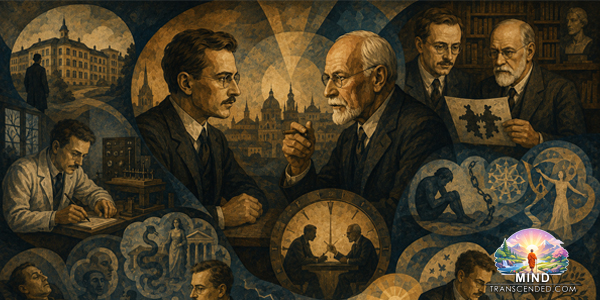
At the beginning of the twentieth century, Carl Jung was already a promising young psychiatrist working at the Burghölzli Clinic in Zurich. There, he treated patients suffering from severe mental disorders and conducted experiments on word associations. It was these studies that attracted the attention of Sigmund Freud, who had already gained recognition for his revolutionary ideas in psychoanalysis.
The first meeting between Jung and Freud became legendary. The two men reportedly spoke for more than thirteen hours without interruption. Freud saw in the young Swiss psychiatrist someone capable of continuing and promoting psychoanalysis beyond the Jewish intellectual circles of Vienna. Jung, in turn, was deeply impressed by Freud’s courage and intellectual depth.
For several years, their relationship remained exceptionally close. They exchanged ideas, analyzed dreams, and discussed the future of psychology. Freud even referred to Jung as his intellectual heir. Beneath the surface, however, important differences gradually began to emerge. Jung felt that Freud’s theory was too limited and reduced the human psyche primarily to sexual drives and impulses.
For Jung, libido was not merely sexual energy but a universal psychic force. He believed that human behavior was shaped not only by repressed desires, but also by the search for meaning, spirituality, and personal growth. This distinction may have seemed philosophical, yet it fundamentally altered the entire framework of psychology. While Freud focused on the past and psychological trauma, Jung increasingly turned his attention toward the future, human potential, and the process of individuation.
The break between the two men eventually became unavoidable. In 1913, their relationship came to an end. It was a difficult period for Jung, who lost not only a colleague but also someone he had long regarded as a mentor. Yet it was precisely after his separation from Freud that Jung began developing many of his most original and influential ideas.
Analytical Psychology as a New Direction
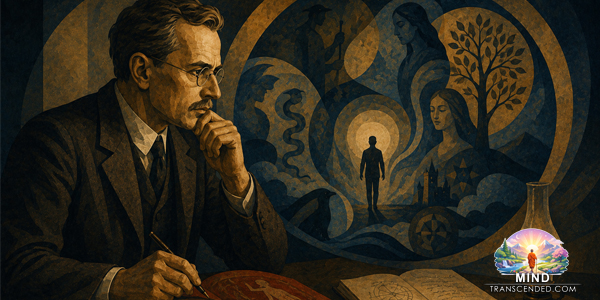
Following his separation from Freud, Carl Jung entered a period of profound inner crisis. He began experiencing intense visions, unusual dreams, and powerful emotional upheavals. Rather than attempting to suppress them, Jung consciously chose to immerse himself in his own unconscious. This period lasted several years and became the foundation for the development of analytical psychology.
Jung documented many of these experiences in his famous Red Book, which remained unpublished for decades. Within its pages, he recorded symbolic visions, dialogues with inner figures, and reflections on the nature of the human soul. To many readers, these writings appeared mystical and even unsettling, but for Jung they represented a method of exploring the deepest layers of the psyche.
Analytical psychology differs from classical psychoanalysis in several important ways. Jung did not view the unconscious merely as a repository of repressed desires. Instead, he believed it contained immense creative potential. The unconscious could serve as a source of inspiration, wisdom, and spiritual transformation.
\Jung also believed that the psyche possesses a natural tendency toward balance. When individuals neglect certain aspects of themselves, those neglected parts begin to manifest through symptoms, dreams, and emotional conflicts. The goal of therapy, therefore, is not simply the elimination of symptoms, but the integration of the personality as a whole.
This perspective transformed the way psychotherapy was understood. Rather than seeing the patient as a broken mechanism that needed repair, Jung viewed each individual as someone undergoing a process of inner development. In this sense, analytical psychology became not only a therapeutic method, but also a philosophy of human life.
The Collective Unconscious and Archetypes
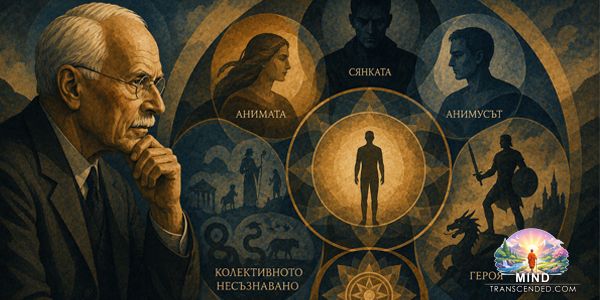
One of Carl Jung’s most famous and revolutionary ideas is the theory of the collective unconscious. According to Jung, beyond the personal unconscious – which contains individual memories and experiences – there exists a deeper layer of the psyche shared by all human beings. This collective unconscious represents a psychological inheritance passed down through the entire history of humanity.
Jung believed that the collective unconscious contains universal patterns known as archetypes. These are ancient psychic structures that manifest themselves in myths, religions, fairy tales, art, and dreams. Archetypes are not specific images, but rather patterns of experience. They shape the way we perceive both the world and ourselves.
One of the most important archetypes is the Shadow. It represents the repressed and rejected aspects of the personality – the traits that individuals refuse to acknowledge within themselves. The more a person suppresses the Shadow, the more powerfully it expresses itself through unconscious behavior. Jung believed that genuine psychological growth requires confronting and integrating the Shadow.
Another key archetype is the Anima and Animus. The Anima symbolizes the feminine dimension within the male psyche, while the Animus represents the masculine dimension within the female psyche. According to Jung, psychological development involves embracing these inner opposites. Doing so allows the personality to become more complete and balanced.
The Hero archetype also plays a central role in Jung’s theory. The Hero is the figure who undergoes trials, confronts monsters, and emerges transformed. This pattern appears in nearly every mythology around the world. Jung believed that it symbolizes the individual’s inner journey toward self-awareness and personal transformation.
The most important archetype, according to Jung, is the Self. The Self represents the center and totality of the psyche. It is a symbol of inner harmony, wholeness, and integration. The process of moving toward the Self is what Jung called individuation.
The Process of Individuation and the Search for Wholeness
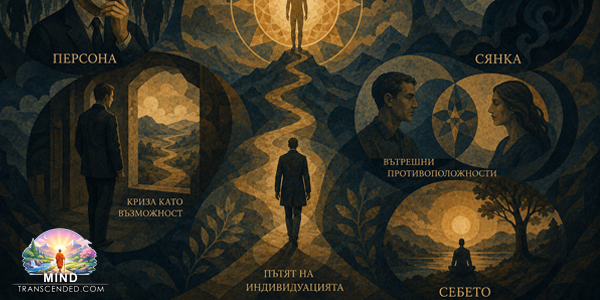
One of the central ideas in Carl Jung’s work is the process of individuation. This concept describes the journey toward psychological wholeness and inner integration. According to Jung, a person is not born fully complete. The personality develops gradually through encounters with different aspects of the psyche.
Individuation does not mean selfishness or isolation. On the contrary, it requires deep self-knowledge and honesty toward one’s own nature. Many people spend their lives playing social roles and attempting to meet the expectations of society. Jung referred to this social mask as the Persona. It is necessary for functioning in society, but when a person becomes completely identified with it, they lose contact with their authentic Self.
The process of individuation begins when an individual realizes that behind the Persona lie repressed and unexplored aspects of the personality. This often occurs during periods of crisis, depression, or inner conflict. Rather than viewing such experiences as failures, Jung saw them as opportunities for transformation.
Confronting the Shadow is one of the most difficult stages of individuation. A person must acknowledge their own fears, aggression, envy, and weaknesses. This requires tremendous courage, as society often encourages an idealized image of the self. According to Jung, however, the repressed Shadow becomes destructive precisely when it remains unconscious.
After integrating the Shadow comes the encounter with the inner opposites. The man must embrace his sensitivity and emotional nature, while the woman must embrace her strength and rationality. This process leads to a deeper sense of inner balance and psychological harmony.
The ultimate goal of individuation is the approach toward the Self. This is not a state of perfection, but one of inner wholeness. Jung believed that no person ever fully attains this ideal, yet the very movement toward it is what gives life meaning and purpose.
Dreams as a Gateway to the Unconscious
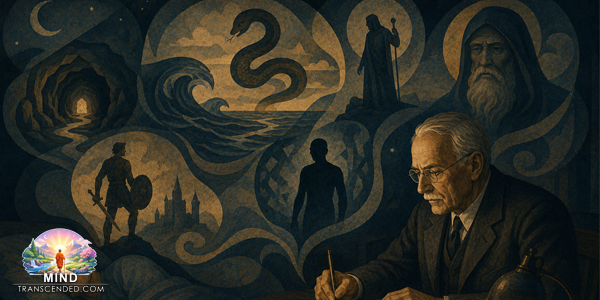
Carl Jung attached immense importance to dreams. For him, they were not random images or the result of chaotic brain activity. Dreams were messages from the unconscious that revealed important aspects of inner life. They exposed conflicts, fears, desires, and untapped potential for growth.
Jung differed from Freud in the way he interpreted dreams. While Freud often viewed them as disguised expressions of sexual desires, Jung believed that dream symbols carried a much broader significance. The same symbol could hold different meanings for different individuals, depending on their personal circumstances and stage of psychological development.
According to Jung, dreams often serve a compensatory function. If a person is excessively rational and suppresses their emotions, their dreams may become highly emotional and chaotic. If someone is overly absorbed in fantasy, their dreams may appear more realistic and grounded. In this way, the psyche attempts to restore balance and maintain psychological equilibrium.
Jung paid particular attention to the symbols that appear in dreams. He observed that people from different cultures often dream of remarkably similar images. Caves, snakes, oceans, heroes, wise elders, and shadowy figures appear in dreams throughout the world. To Jung, this provided evidence for the existence of archetypes within the collective unconscious.
For Jung, therapeutic work with dreams was not a matter of mechanical interpretation. It required an ongoing dialogue between consciousness and the unconscious. Dream analysis helps individuals understand their inner conflicts and move toward deeper self-knowledge and psychological integration.
Today, many schools of psychotherapy continue to draw inspiration from Jung’s ideas. Although modern science approaches dream symbolism with greater caution, interest in dreams as a tool for understanding the human psyche remains very much alive.
Jung and the Relationship Between Psychology and Religion
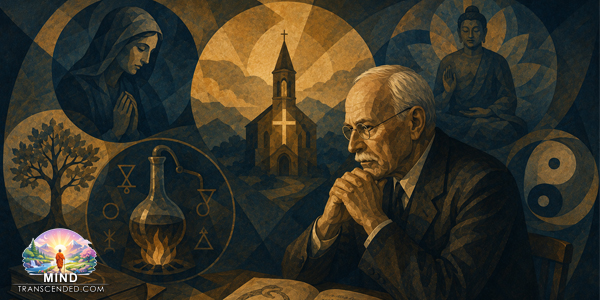
One of the most distinctive aspects of Carl Jung’s work was his interest in religion and spirituality. At a time when many scientists viewed religion as superstition or a relic of the past, Jung regarded it as a profound psychological reality. For him, religious symbols and myths were not merely inventions, but expressions of archetypal processes within the human psyche.
Jung believed that modern individuals suffer from a form of spiritual emptiness. In his view, modern civilization has lost its connection to symbols, rituals, and the mystery of life. This loss creates feelings of alienation and meaninglessness. He often emphasized that many psychological problems are, at their core, spiritual in nature.
Throughout his research, Jung examined Christianity, alchemy, Eastern religions, Gnosticism, and the mythologies of various cultures. He searched for the common symbols and patterns that appeared across different traditions. To Jung, religious imagery represented the language of the collective unconscious.
He was particularly fascinated by alchemy. Although alchemy was long regarded as a primitive form of chemistry, Jung saw it as a symbolic process of inner transformation. In his interpretation, alchemical texts described not only the transformation of metals, but also the transformation of the human soul.
Jung did not insist that people must be religious in the traditional sense. Rather, he believed that human beings possess an innate need for meaning, symbolism, and a connection to something greater than themselves. When this need is ignored, the psyche suffers and loses its sense of balance and purpose.
Introversion and Extraversion
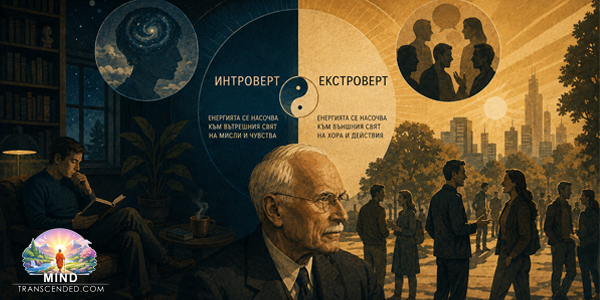
Among Carl Jung’s most influential ideas is his theory of introversion and extraversion. Today, these concepts are part of everyday language, but it was Jung who first introduced them into psychology as fundamental personality orientations.
According to Jung, the extravert directs their energy toward the external world. They gain vitality through social interaction, activity, and engagement with their surroundings. The introvert, by contrast, draws energy from the inner world of thoughts, feelings, and reflection.
Jung emphasized that no individual is entirely introverted or entirely extraverted. Every person possesses both tendencies, although one usually becomes dominant. Problems arise when individuals attempt to live in ways that contradict their natural psychological orientation.
Jung’s theory became the foundation for many later models of personality. One of the most well-known is the Myers-Briggs Type Indicator, which classifies people into different psychological types. Although some researchers have criticized such systems, Jung’s influence on modern personality psychology remains undeniable.
It is important to understand that, for Jung, introversion does not mean shyness, nor does extraversion imply superficiality. These are simply different ways of relating to the world. An introvert can be confident and socially skilled, while an extravert can be thoughtful and deeply reflective.
Today, in a world shaped by constant connectivity and social media, Jung’s ideas about personality types appear more relevant than ever. Many people feel pressured to remain continuously active and communicative, even when their psyche longs for silence, solitude, and inner renewal.
Jung’s Influence on Literature and Art
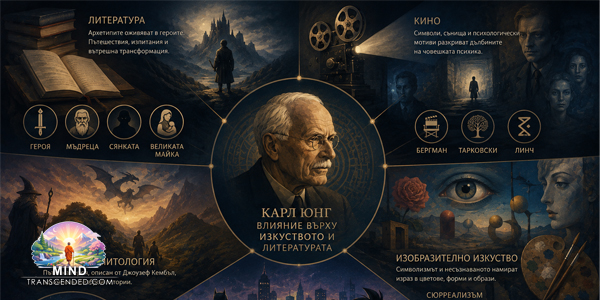
It is difficult to find a twentieth-century thinker whose influence on art and literature was as far-reaching as that of Carl Jung. His ideas about archetypes, mythology, and the unconscious have inspired writers, filmmakers, artists, and musicians around the world.
Many authors draw upon Jung’s archetypal patterns when creating their characters. Figures such as the Hero, the Wise Old Man, the Shadow, and the Great Mother appear in countless novels, films, and theatrical works. Even modern Hollywood screenplays often follow narrative structures closely aligned with Jungian models.
His influence is particularly evident in fantasy literature. Writers such as Joseph Campbell, who developed the theory of the Hero’s Journey, drew direct inspiration from Jung’s work. These ideas later influenced major film franchises such as Star Wars, where archetypal themes play a central role.
In the visual arts, Jung inspired creators interested in symbolism and the inner world of the psyche. The Surrealists, for example, sought to express the unconscious through imagery and free association. Although Jung’s relationship with Surrealism was not a direct one, their intellectual pursuits often overlapped.
Jung also left a lasting mark on cinema. Directors such as Ingmar Bergman, Andrei Tarkovsky, and David Lynch employed symbolism, dreams, and psychological motifs closely related to analytical psychology. Their films frequently explore divided identities, encounters with the Shadow, and the search for inner meaning.
Even popular culture has been profoundly shaped by Jung’s ideas. Archetypal characters appear in comic books, video games, and television series. Although many people may not realize it, Jungian psychology continues to influence the way contemporary society tells stories and understands the human experience.
Criticism of Jung and the Controversial Aspects of His Work
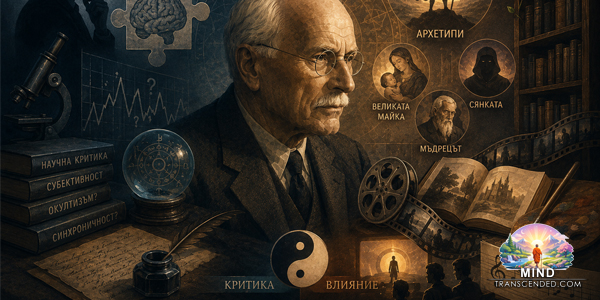
Despite his enormous influence, Carl Jung remains a controversial figure. Many scholars have criticized his ideas as insufficiently scientific and difficult to verify. Concepts such as the collective unconscious and archetypes are challenging to measure using modern scientific methods. As a result, some psychologists regard analytical psychology more as a philosophical or cultural framework than as a rigorous scientific discipline.
Critics have also pointed out that Jung sometimes relied on highly symbolic and expansive interpretations. The same symbol can be understood in multiple ways, creating a risk of subjectivity. This makes many of his theories difficult to test or validate through empirical research.
Another controversial aspect of Jung’s work is his interest in occultism and mysticism. He explored subjects such as astrology, alchemy, and synchronicity. To many scientists, these interests appeared to depart from the principles of rational inquiry. Jung, however, did not necessarily interpret these fields literally, but rather viewed them as symbolic systems capable of revealing important aspects of the human psyche.
The concept of synchronicity has been especially debated. According to Jung, meaningful coincidences can sometimes occur between inner psychological states and external events. He did not claim that such experiences were magical, but suggested that the human mind naturally seeks and creates connections between experiences. Nevertheless, many researchers remain skeptical of this idea.
There have also been criticisms of some of Jung’s cultural and social views. Certain scholars argue that aspects of his work reflect the limitations and assumptions of the era in which he lived. This criticism is particularly directed toward some of his generalizations concerning gender roles and cultural differences.
Despite these criticisms, Jung’s influence remains profound. Even those who do not accept his theories literally often acknowledge that he raised fundamental questions about the human psyche, symbolic thought, and the deeper dimensions of human experience.
Jung and Modern Psychotherapy
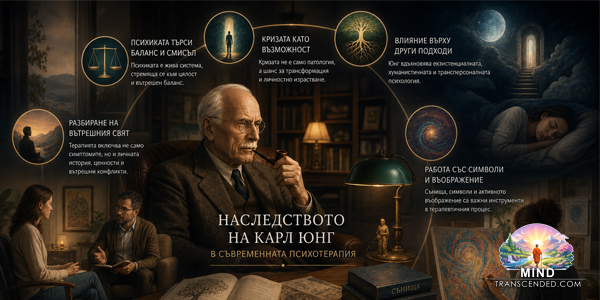
Although analytical psychology is not the dominant school in contemporary clinical practice, Carl Jung’s influence on psychotherapy remains profound and enduring. Many modern therapeutic approaches incorporate ideas that can be traced back to Jungian thought.
Particularly important is the understanding that the psyche is not merely a mechanism for adaptation, but a living system striving for balance and meaning. Today, many therapists work not only with symptoms, but also with an individual’s personal history, values, and inner conflicts.
Jung’s work has influenced existential psychology, humanistic therapy, and transpersonal psychology. The idea that human beings seek meaning and wholeness became a central theme for many psychologists who followed in his footsteps.
The use of symbols, imagination, and dreams also remains relevant. Although contemporary psychology approaches mystical interpretations with greater caution, many therapists continue to employ creative methods inspired by Jung. Art therapy, active imagination, and the exploration of personal myths are examples of this lasting legacy.
Jung also transformed the way psychological crises are understood. Rather than viewing them solely as forms of pathology, he regarded them as opportunities for growth and transformation. This perspective is especially valuable in the modern world, where many people struggle with existential crises and feelings of inner emptiness.
In recent decades, interest in Jungian psychology has experienced a renewed resurgence. One reason is that Jung’s ideas offer not only a clinical framework, but also a deeper philosophical perspective on human life, personal development, and the search for meaning.
Synchronicity and the Mystery of Meaningful Coincidences
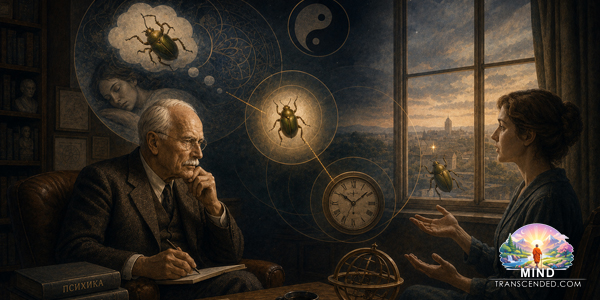
One of Carl Jung’s most intriguing ideas is the concept of synchronicity. It describes situations in which two events appear to be connected not through a cause-and-effect relationship, but through meaning. Jung observed that, at times, a person’s inner experiences coincide with external events in remarkably significant ways.
The most famous example he described involves a patient who was recounting a dream about a golden scarab. As she spoke, an insect strikingly similar to the one in her dream appeared at the window of Jung’s office. To Jung, this was not merely a coincidence, but a symbolic moment that produced a profound psychological effect on the patient.
Jung did not claim that synchronicity violated the laws of physics. Rather, he believed that human life contains layers of meaning that cannot be explained solely through mechanical causation. In this respect, the idea of synchronicity brought his work closer to philosophy and spirituality.
The concept has generated considerable debate. Critics view it as an example of the human tendency to perceive patterns and connections where none objectively exist. Supporters of Jung, however, see it as an expression of the deep relationship between the psyche and the world around us.
What makes synchronicity especially fascinating is that it continues to resonate with people today. Many individuals report experiences of unusual coincidences that seem charged with personal meaning. Whether interpreted as a psychological phenomenon or something more profound, such experiences reveal humanity’s enduring search for connection, purpose, and significance in life.
Jung and the Modern Culture of Self-Discovery
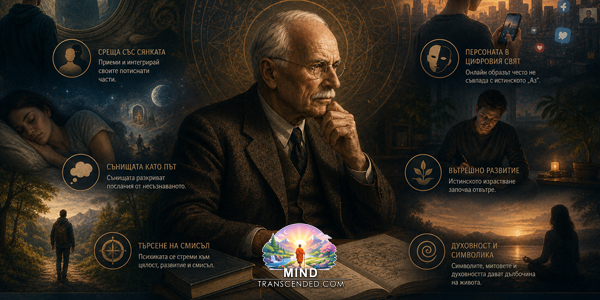
In recent years, interest in self-discovery, psychology, and inner development has grown dramatically. People are increasingly seeking ways to understand themselves, overcome inner conflicts, and find meaning in their lives. It is precisely in this context that Carl Jung’s ideas have gained renewed relevance.
Modern culture often emphasizes external success, productivity, and constant activity. Jungian psychology offers a different perspective. It reminds us that genuine growth requires an encounter with the inner world. Individuals cannot simply escape their fears, complexes, and unconscious impulses.
Many people today find in Jung a language through which they can better understand their own experiences. The concept of the Shadow, for example, has become widely used in discussions of personal development. More and more individuals recognize that repressed emotions and unresolved trauma do not disappear, but continue to influence their lives in subtle ways.
Social media also creates an interesting context for Jung’s ideas. These platforms encourage the construction of a Persona – a carefully curated image presented to the world. At the same time, many people experience a growing disconnect between their online identity and their genuine feelings. This makes Jung’s insights into authenticity particularly relevant in the digital age.
The growing interest in meditation, symbolism, dreams, and spirituality also suggests that modern individuals are searching for something beyond material success. Jung would likely have described this as the psyche’s natural striving toward wholeness, meaning, and a deeper understanding of itself.
Jung’s Final Years
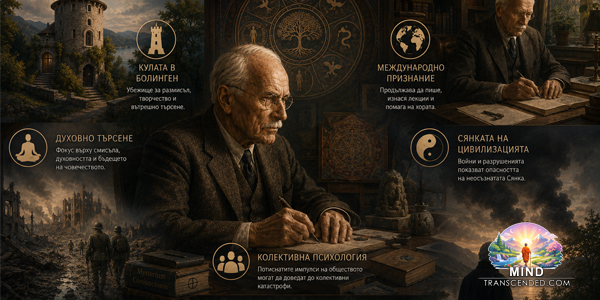
In the later years of his life, Carl Jung had become an internationally recognized thinker. He continued to write, lecture, and work with patients. Despite his fame, however, Jung remained deeply devoted to inner exploration and self-reflection.
He spent much of his time at his tower in Bollingen, a retreat that he helped design and build himself. The tower became a sanctuary for contemplation and creativity. There, Jung devoted himself to writing, meditation, and symbolic rituals. To him, the architecture of the tower reflected the inner structure of the psyche itself.
During the final decades of his life, Jung increasingly focused on questions of spirituality, meaning, and the future of humanity. He was deeply concerned by the destructive forces he perceived within modern civilization. In his view, the two World Wars demonstrated how dangerous the unconscious Shadow of society could become when left unrecognized and unintegrated.
Jung believed that collective catastrophes were closely connected to psychological processes. When societies suppress certain impulses and refuse to confront their own aggression, these forces can eventually erupt in destructive ways.
Until the very end of his life, Jung remained intellectually active. He passed away in Switzerland in 1961, leaving behind an immense legacy. His books, letters, and lectures continue to be studied, discussed, and interpreted by scholars, therapists, and readers throughout the world.
Why Carl Jung Remains Relevant Today
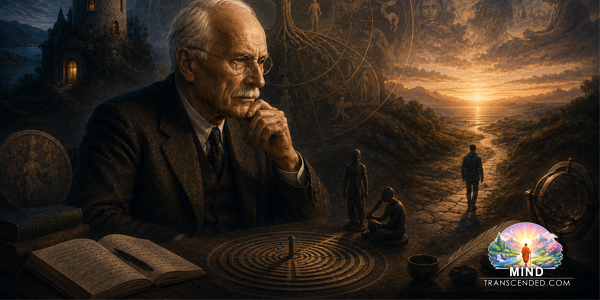
Carl Jung is one of those rare figures who cannot be confined to a single discipline. He was at once a psychiatrist, philosopher, cultural scholar, and spiritual thinker. It is precisely this multidimensional nature that makes his work so influential and enduringly relevant.
In a world dominated by technology, information, and constant noise, Jung’s ideas remind us of the importance of the inner life. He demonstrated that human beings are not merely rational creatures, but complex psychological and symbolic systems. Our dreams, fears, fantasies, and myths all carry meaning.
Jung also offers a deeper perspective on crisis and suffering. Rather than viewing them solely as problems to be eliminated, he saw them as essential parts of the process of growth and transformation. This understanding has provided hope and guidance to many people navigating difficult periods in their lives.
His work remains important because it views the individual as part of a larger human story. Archetypes, myths, and symbols connect personal experience to the collective history of humanity. In doing so, they create a sense of belonging, continuity, and meaning.
Of course, not all of Jung’s ideas can be accepted uncritically. Some remain controversial and difficult to verify. Yet even his critics acknowledge that he expanded the boundaries of psychology and raised questions that continue to resonate today.
Ultimately, Carl Jung’s legacy is not limited to any particular theory. It lies in his invitation to turn inward, explore the depths of the psyche, and seek a deeper meaning in life. It is this invitation that continues to inspire generations of people around the world.
Conclusion
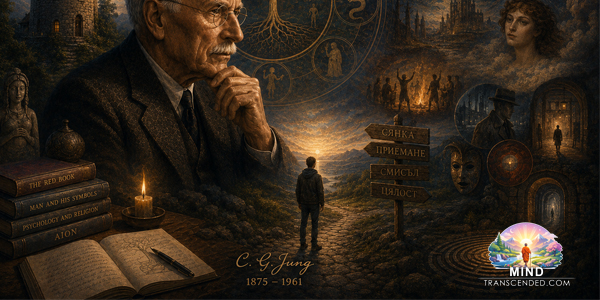
Carl Jung remains one of the most remarkable figures in the history of psychology and human thought. His work transcended the boundaries of traditional science and ventured into the realms of mythology, philosophy, religion, and art. This made him both admired and criticized, yet it was precisely his willingness to think beyond established frameworks that transformed him into such an influential thinker.
His ideas about the collective unconscious, archetypes, and individuation offered a new way of understanding the human psyche. Rather than viewing human beings as mechanical systems driven solely by instincts and traumas, Jung saw them as individuals striving for wholeness, meaning, and spiritual growth.
His influence extends far beyond psychotherapy. Literature, cinema, philosophy, and popular culture continue to draw upon Jungian ideas, often without even realizing it. The archetypal images and symbolic structures he described have become part of the way modern society understands stories, identity, and the human experience.
Perhaps Jung’s most important message is that individuals must have the courage to look inward. They must confront their Shadow, accept their inner contradictions, and seek their own wholeness. This is a difficult and often painful process, but according to Jung, it is the path that leads to genuine inner freedom.
In an age of rapid change, social pressure, and existential uncertainty, Carl Jung’s ideas seem more relevant than ever. They remind us that beneath the surface of everyday life lies a profound inner world waiting to be explored. And perhaps it is through that exploration that we discover not only ourselves, but also our connection to the whole of humanity.
Author: Vasil Stoyanov