
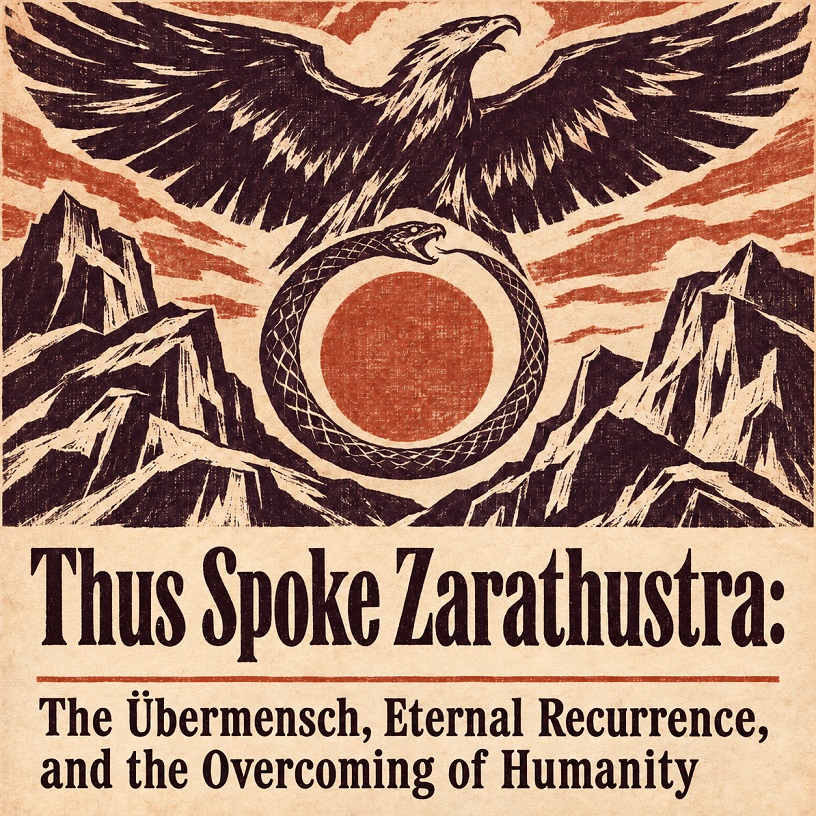
Some books explain philosophical positions, while others change the very way we ask questions about our lives. Friedrich Nietzsche‘s Thus Spoke Zarathustra belongs to the second category. It offers neither a comfortable system of rules nor the promise of peace in exchange for obedience. Instead, it challenges human beings to reconsider inherited values, accept responsibility for their existence, and turn life into a creative undertaking. Behind its images of the prophet, the mountain, the sun, the eagle, and the serpent stands one of modern philosophy’s boldest attempts to answer a demanding question: how should we live when the old foundations of meaning have lost their authority?
Three closely connected themes stand at the center of that undertaking: the Übermensch, eternal recurrence, and self-overcoming. They are often discussed separately, but Nietzsche’s thought becomes most powerful when we see how they illuminate one another. The Übermensch represents the creation of new values; eternal recurrence is the ultimate test of our affirmation of life; self-overcoming is the movement through which such affirmation becomes possible. Understanding them requires more than defining philosophical terms. We must follow the drama of Zarathustra himself-a teacher who must learn, a speaker who encounters doubt, and a solitary figure who repeatedly returns to other people.
A Book That Philosophizes Through Images, Rhythm, and Dramatic Action
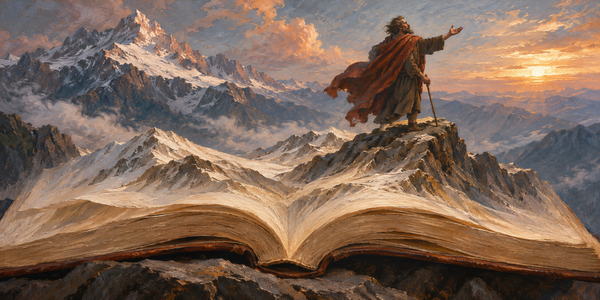
Nietzsche composed Thus Spoke Zarathustra between 1883 and 1885. Its first three parts appeared in 1883 and 1884, while the fourth was privately printed in a small edition in 1885. The full subtitle, A Book for All and None, already announces the work’s paradox. It addresses fundamental human questions, yet it refuses to make itself effortlessly accessible to every reader. Its language demands participation, interpretation, patience, and a willingness to have one’s own assumptions challenged.
Philosophy here does not unfold as a series of definitions and formal proofs. It develops through speeches, parables, songs, encounters, and symbolic scenes. Zarathustra descends from his mountain, addresses a crowd, speaks with hermits, gathers disciples, experiences disappointment, withdraws, and returns to the world. These movements belong to the philosophical substance of the book rather than serving as decorative storytelling. Nietzsche shows that insight is not an object that can pass unchanged from one mind into another. It transforms the person who expresses it and encounters resistance in the person who hears it.
The choice of the name Zarathustra is especially significant. The historical Zarathustra, also known as Zoroaster, is associated with the ancient Iranian religious tradition and its morally charged distinction between good and evil. Nietzsche turns that name into a literary instrument of revaluation. In his interpretation, the figure associated with a decisive moral division must become the first to question the inherited framework of moral oppositions. This is not a historical account of Zoroastrianism. Nietzsche’s protagonist is a philosophical and literary character through whom the conflict between established duty and the creation of new values is dramatized.
The biblical echoes are equally deliberate. Repetition, prophetic declarations, rhythmic addresses, and symbolic gestures recall sacred literature. Yet this resemblance of form serves a radically different purpose. Zarathustra does not deliver a revelation that must be accepted as the final truth on the authority of an external power. His message undermines dependence on ultimate guarantees. He wants listeners to learn to create rather than merely repeat. That is why he sometimes insists that his disciples must lose him in order to find themselves. Genuine understanding is not obedience to a teacher’s voice but the capacity to move beyond it.
This literary design also explains why isolated sentences from the work are so easily misunderstood. A speaker may employ irony, exaggeration, masks, or provocation. Some passages express ideals, others reveal resistance to those ideals, and still others expose their dangerous proximity to pride and self-deception. Readers must distinguish the protagonist’s immediate statements from the complex structure of the entire book. A dramatic image should not automatically be treated as a literal command, and a deliberately unsettling phrase should not be mistaken for a complete philosophical argument.
The significance of Zarathustra lies partly in its transformation of philosophical literature. Form becomes an active participant in thought. Self-overcoming is not presented as a completed doctrine; it is enacted through a character who must repeatedly confront his own limitations. The book does not merely describe the difficulty of beginning anew. It makes readers experience that difficulty through interruptions, emotional reversals, exhilaration, anxiety, and unexpected changes of direction.
Consequently, the most fruitful approach is not to search for one hidden sentence that explains everything. We must trace the development of its images. The mountain signifies solitude and preparation, but it is not a permanent home. The marketplace signifies publicity and the failure to listen. Dancing represents lightness without necessarily implying carelessness. Laughter can liberate, yet it can also wound. Nietzsche creates a world in which every great idea carries a psychological cost. This is what turns his philosophy into an adventure rather than a collection of dry abstractions.
The Descent from the Mountain and the Crisis of Inherited Values
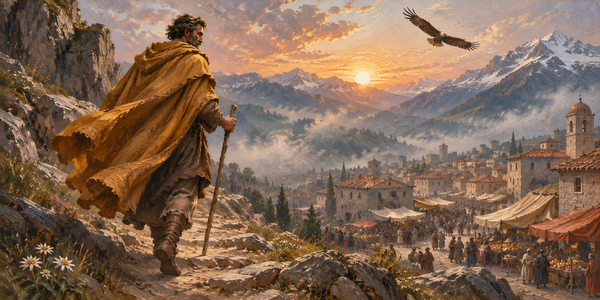
The opening scene is among the most memorable in philosophical literature. After ten years of solitude, Zarathustra leaves his mountain. He has accumulated wisdom and wishes to share it, just as the sun distributes its light. The comparison matters: knowledge should not remain the private possession of a sage shut away from the world. It seeks encounter, risk, and fruitful generosity. Yet the descent is no triumphal procession. It leads to a confrontation with people who do not recognize the question being placed before them.
On his journey, Zarathustra meets an old saint devoted to God. After leaving him, Zarathustra observes that the holy man has not yet heard that God is dead. This formulation has an important precedent in The Gay Science, where Nietzsche explores the enormous cultural consequences of the collapse of Christianity’s metaphysical authority in European life. It is not a report of the physical death of a deity. It diagnoses a historical condition: beliefs and values that once gave a culture a common direction have lost their power to convince, while people have not yet understood the consequences.
Here the problem of nihilism emerges. If truth, goodness, and purpose have been understood as guaranteed by a transcendent order, what happens when confidence in that order disintegrates? One response is despair: without a supreme judge, nothing matters. Another is to continue following old habits mechanically, without believing in their meaning. A third is to seek replacement idols-state, collective identity, success, prestige, or comfort-that occupy the vacant position of the absolute. Nietzsche does not regard these responses as adequate solutions. They reveal how difficult it is to endure the freedom opened by the loss of inherited certainty.
In the marketplace Zarathustra announces the Übermensch, but the crowd is more interested in the spectacle of a tightrope walker. The scene is more than a satire of an uncomprehending public. Suspended between two towers above a dangerous emptiness, a human being walks a rope. The image turns an abstract proposition into visible action: human existence is a transition rather than a secure final destination. The performer is exposed to danger and eventually falls. Zarathustra remains with the dying man while the crowd disperses. The scene contrasts the shallow appeal of public entertainment with the seriousness of an actual human life.
The marketplace is not condemned simply because it contains many people. The problem is an attitude that treats the deepest questions as another spectacle. When a crowd expects amusement, an appeal to responsibility for the future sounds alien. Zarathustra gradually discovers that one brilliant speech cannot transform everyone. Different listeners, different forms of communication, and above all a person’s own willingness to change are necessary. Philosophical education cannot be achieved through forceful suggestion alone.
The death of God and the crisis of values do not mean that Nietzsche proposes replacing religious morality with simple selfish pleasure. He is interested in the origin, operation, and value for life of moral judgments. Why have particular qualities been declared good? Which forms of existence do those judgments encourage? When is humility an expression of strength, and when does it conceal fear? When is sacrifice generosity, and when is it an instrument of control? Such questions cannot be settled by merely opposing the old to the new. They demand a careful investigation of human motives.
The descent from the mountain also warns against self-satisfied isolation. A thinker who never tests ideas in encounters with other people risks turning insight into a private legend of personal greatness. Zarathustra fails in his first attempt, and failure forces him to reconsider how he speaks. This change reveals the beginning of self-overcoming. A teacher who wants to transform the world must first recognize the limits of his own ability to be heard.
The Übermensch: An Ideal of Creation, Not Biological Privilege
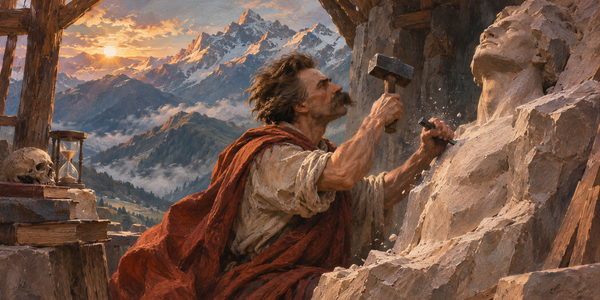
The Übermensch is Nietzsche’s most famous and one of his most frequently misused concepts. In the prologue, Zarathustra declares that humanity is something that must be overcome. He is not describing an established biological species or presenting a scientific program of hereditary improvement. The Übermensch functions as a philosophical image of an existence capable of creating values without hiding behind ready-made justifications. It names a direction of transformation, not a class of people already entitled to rule everyone else.
Nietzsche places this image within the loss of traditional absolute foundations. If human beings can no longer receive the final purpose of life as an external command, they face a creative task. Creating values does not mean declaring every whim good. It means examining which purposes can organize a life, which commitments deserve lasting loyalty, and which efforts turn possibilities into reality. Creation requires discipline, self-knowledge, and a willingness to bear consequences.
The Übermensch is connected to the earth. Zarathustra urges people to remain faithful to the earth instead of devaluing concrete existence in the name of an imagined world beyond it. Here the earth means more than physical matter. It includes the body, relationships, history, suffering, joy, time, and the irreducible conditions of human existence. The ideal is not an escape from limitation but a creative response to it. What is higher is not discovered by despising life, but by transforming it.
We must also distinguish strength from brute coercion. Nietzschean strength cannot be reduced to physical superiority, political office, or the ability to hurt other people. Someone unable to govern personal envy, fear, or hunger for recognition remains dependent on the very people they wish to dominate. A deeper strength consists in giving form to one’s impulses, creating instead of merely reacting, and acting without constant demands for approval. In this sense, inner mastery matters more than external domination.
That distinction sets an essential boundary against political abuse of the concept. The Übermensch is not equivalent to racial superiority, and Thus Spoke Zarathustra is not a handbook of eugenics. Elements of Nietzsche’s vocabulary were subsequently distorted and appropriated for ideological purposes, including by National Socialism. This historical appropriation does not eliminate the need for critical reading. Nietzsche’s writings contain sharp hierarchical judgments and provocative formulations that deserve scrutiny, but they do not justify automatically turning the Übermensch into a racial category. Philosophical meaning must be drawn from arguments and literary context rather than from later slogans.
The Übermensch is opposed to complacency. It is not someone who has reached a comfortable final form and has nothing left to learn. Its value lies precisely in the capacity to continue surpassing established limits. From this perspective, even success becomes dangerous. Once achieved, it tempts people to become monuments to their previous efforts. A creative life refuses to exchange movement for static self-admiration.
Zarathustra describes humanity as a bridge rather than an end. A bridge matters because it enables passage, but it does not render what it connects worthless. Human fragility, conflict, and incompleteness are the conditions from which the desire for transformation arises. Greatness does not consist in denying the human; it consists in refusing to declare the present human condition the final and unchangeable measure of all possibilities. This tension gives the Übermensch its philosophical force.
The Last Man and the Temptation of Comfortable Existence
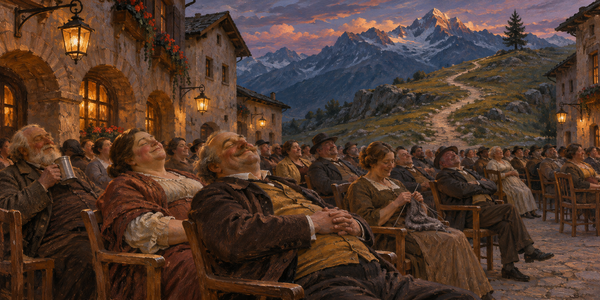
To understand the Übermensch, we must examine its contrasting image: the last man. Zarathustra presents him to the crowd as a being who has made security, comfort, and the avoidance of risk into supreme goals. The last man wants neither great passions nor difficult truths nor dangerous undertakings. He prefers small pleasures, predictable days, and a society in which nobody stands out too much. The irony of the scene is merciless: the crowd asks for precisely this kind of life.
This image is not simply a criticism of material well-being. Nietzsche does not claim that illness, poverty, and insecurity are virtues in themselves. The problem arises when well-being becomes the sole measure of meaning. Then every effort without an immediate payoff looks suspicious, every passion that disrupts comfort appears unnecessary, and every aspiration toward excellence is dismissed as impractical eccentricity. People preserve the means of living but lose sight of what they are living for.
The last man also displays a peculiar kind of self-satisfied certainty. He believes he has discovered happiness because he has reduced sources of disturbance to a minimum. In his world, profound transformation has no place because transformation brings discomfort. Tragic seriousness has no place either, because it interrupts the cheerful surface of everyday life. Existence becomes flat: safe, organized, and emptied of creative tension.
The image remains relevant not because contemporary society can simply be equated with Nietzsche’s picture, but because it raises a permanent question for every culture of convenience. What happens when we measure time solely by efficiency? What do we lose when we reject every activity that requires long preparation without a guaranteed reward? What does it mean to possess information about everything while having a considered position on nothing? The last man warns against the voluntary narrowing of human possibility.
Despite the severity of the criticism, Nietzsche’s image gives us no reason to despise particular people who seek peace. The need for safety is a legitimate human concern, and the desire to reduce suffering carries moral weight. The tension appears when that concern is presented as the whole truth about human beings. Living involves choosing between goods that cannot always be reconciled: peace and risk, belonging and independence, acceptance and transformation. Philosophical maturity does not erase one side; it refuses to conceal the cost of choosing.
The contrast between the last man and the creator is especially revealing. A creator need not be an artist or scientist. It can be anyone committed to work whose value extends beyond immediate comfort: developing character, raising a child attentively, mastering a demanding craft, investigating truth, building a just institution, or changing a destructive habit. These are contemporary applications rather than literal definitions given by Nietzsche. Their common element is the ability to endure effort for a value one has genuinely examined.
The last man also reveals a paradox of freedom. Someone externally free may become inwardly dependent on the easiest available choice. The more possibilities appear, the more urgently that person seeks to avoid the risk of deciding. Nietzsche counters this passivity with the courage to adopt a direction. Freedom becomes substantial not through endless options but through responsible commitment to a worthwhile undertaking.
The Three Metamorphoses of the Spirit: Camel, Lion, and Child

One of the clearest parables in the first part of Zarathustra describes three transformations of the spirit: into a camel, a lion, and a child. This sequence is neither a psychological test nor a mandatory biography for every human being. It is a symbolic map of our relationship to duty, freedom, and creativity. Nietzsche uses it to show why liberation from old values is necessary but insufficient on its own.
The camel is the spirit capable of bearing weight. It asks what is difficult and accepts the challenge. There is dignity in this image: discipline, endurance, learning, and the willingness to undertake obligations. Someone who has never developed such strength can easily confuse freedom with an inability to commit to anything. The camel shows that maturity begins with mastering effort. Its limitation, however, is submission. It can carry almost any command without asking whether the command deserves obedience.
In the desert, the spirit becomes a lion. The lion confronts the dragon of “Thou shalt,” whose scales glitter with established values. Against it, the lion declares “I will.” This is the moment of negation without which creative freedom cannot begin. A person must acquire the strength to question traditional authority, fear of condemnation, and attachment to comfortable obedience. The lion protects the space in which something new can emerge.
Yet the lion is not the creator. It knows how to say no, destroy, and liberate. Negation alone cannot produce a positive purpose. If an entire personality becomes organized around resistance to an external authority, it remains dependent on that authority. A rebel who knows only what they oppose still receives their identity from an opponent. This is one of the parable’s most penetrating insights: freedom from something must become freedom for something.
That is why the third transformation is the child. It symbolizes a new beginning, play, innocence, and creative affirmation. The child does not represent ignorance or irresponsibility. Coming after the camel and the lion, it signifies the ability to begin again without remaining chained either to old duties or to endless anger against them. Play here is serious: it creates rules, worlds, and meanings. The creator accepts an undertaking not as a burden imposed from outside but as a freely chosen activity.
The three figures reveal different dimensions of personal development. Without the camel there is no endurance; without the lion there is no independence; without the child there is no creation. Each stage can become distorted if treated as a permanent destination. The camel becomes uncritically obedient, the lion endlessly negative, and the child superficially capricious if the achievements of the earlier transformations are missing. The parable is powerful because it portrays freedom as a complex capacity requiring both a memory of effort and readiness for renewal.
This model also illuminates Zarathustra himself. He bears the weight of his knowledge, struggles against established idols, and continually seeks the harder task of affirming life without remaining trapped in negation. His crises show how easily destructive criticism turns into vanity. Exposing another person’s mistake can provide a momentary feeling of superiority. Creating something valuable enough to withstand the test of time demands far more.
The parable also suggests an important lesson about education. Good education should not produce merely obedient carriers of information or people skilled only at disputing every statement. It should cultivate independent work, reasoned disagreement, and the capacity to create new solutions. This is a contemporary reading of Nietzsche’s images rather than a pedagogical program he literally formulated. It helps explain why the three metamorphoses remain fruitful beyond their original literary setting.
The Will to Power and the Deeper Logic of Self-Overcoming
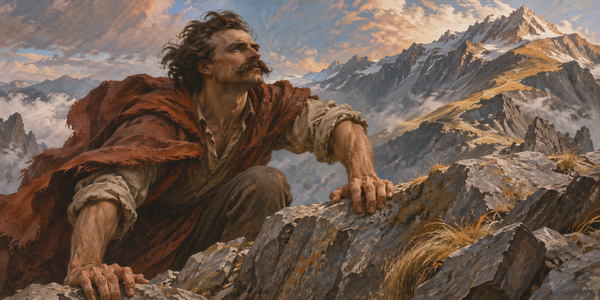
In the second part, particularly in the discourse “On Self-Overcoming,” Nietzsche connects life with the will to power. This concept demands care because the word power immediately suggests political domination. In Nietzsche, however, it designates a broader complex of tendencies toward expansion, formation, overcoming resistance, interpretation, and establishing direction. His thesis is a philosophical interpretation of life, not an empirically demonstrated universal law of biology. Keeping that distinction clear prevents a provocative concept from becoming a misleading scientific slogan.
Self-overcoming arises from the tension between what has already been achieved and the possibility of a new form. Life cannot be reduced to preserving its current condition. It develops through effort, conflict, revaluation, and the reorganization of forces. In human beings, this movement acquires a conscious dimension: we not only possess desires, but can also assess which deserve to guide us. We can change habits, test convictions, and develop new ways of acting.
One of the most important features of this thought is that people are not entirely transparent to themselves. Our motives are mixed. Pride can disguise itself as principle, fear as prudence, and the desire for approval as selfless goodness. Nietzsche urges us to investigate not only what we claim but also the forces speaking through our claims. Self-overcoming is therefore not an exercise in positive thinking. It begins with a willingness to confront uncomfortable truths about our own motivations.
The will to power can also manifest as the ability to create form. A musician does not conquer an instrument by destroying it; mastery transforms the resistance of the material into expression. A researcher does not advance by demanding that the world confirm a theory; progress requires revising thought in response to difficult evidence. Someone learning to speak honestly does not abolish fear by decree; they build a habit of acting despite it. These analogies show how power can mean mastery and transformation rather than violence against others.
Here we encounter the difference between strength that creates and strength that merely retaliates. When an entire life revolves around proving that other people are responsible for one’s dissatisfaction, it remains dependent on them. Reactive existence feeds on grievance. It needs a constant adversary to sustain its sense of importance. Creative strength, by contrast, establishes a purpose that cannot be reduced to defeating another person. It transforms the energy of conflict into work on one’s own future.
Nietzsche does not thereby eliminate the need to criticize injustice. He asks what happens when criticism consumes the entire personality. Someone can be correct in their accusations yet lose the ability to live beyond them. Self-overcoming requires a transition from perpetual reaction to independent creation. It does not mean excusing every wrong suffered. It means refusing to allow that wrong the final word in defining one’s identity.
The relationship between self-overcoming and values is especially interesting. Human purposes are not eternal tablets carved in stone. They too must undergo revaluation when they cease to serve the life for which they were created. This need not produce chaos. It can demand a higher form of responsibility: remaining faithful to the meaning of an undertaking without turning its historical form into an untouchable idol. Strength includes the capacity to correct oneself.
Self-overcoming is not a single heroic event. It has a rhythm made up of small decisions, accumulated skills, failures, and renewed attempts. Nietzsche’s language is grand, but his challenge reaches ordinary areas of existence: how we work, how we respond to criticism, what we do with envy, whether we can admit an error, and whether we can continue after disappointment. The grand image of overcoming becomes philosophically meaningful precisely when it stops decorating our self-image and starts demanding something from our character.
Eternal Recurrence: The Heaviest Thought and the Test of Affirmation

Eternal recurrence is the most radical idea in Thus Spoke Zarathustra. Its power does not lie merely in the suggestion that everything repeats. It transforms our relationship to existence into an uncompromising question: can a person desire life so completely that they would accept its endless repetition? Not only moments of happiness, achievements, and cherished encounters, but also mistakes, losses, pain, boredom, and disappointment. Here affirmation ceases to be an attractive slogan and becomes a formidable test.
The idea has an important precursor in The Gay Science, aphorism 341, titled “The Greatest Weight.” There a demon confronts a person with the thought that they must live exactly the same life again and again, without a single change. Their reaction reveals their relationship to existence: horror, anger, despair, or joyful assent. In Zarathustra, the theme receives a more complex dramatic treatment. It is no longer simply an imagined question posed from outside; it becomes a thought the protagonist himself must endure.
In “On the Vision and the Riddle,” Zarathustra describes a gateway bearing the inscription “Moment.” Two endless paths branch from it, one backward and one forward. The scene connects the present with infinity and gives the problem of time an image that cannot be reduced to a textbook diagram. The gateway is the point where past and future meet as a question addressed to someone living now. If everything is woven into recurrence, every moment carries immeasurable weight.
The same section includes the vision of a shepherd with a snake lodged in his throat. Zarathustra cries out for him to bite off its head. The shepherd is then transformed and bursts into an extraordinary laugh. The image carries several possible meanings, but its central dramatic movement is unmistakable: an experience that suffocates us is not overcome by passive waiting. An act is needed that turns the unbearable into a new capacity for life. The laughter does not erase horror; it marks a transformed relationship to it.
Later, in “The Convalescent,” Zarathustra’s animals recite the formula of eternal recurrence with an almost musical ease. Zarathustra himself, however, experiences the thought as illness and trial. This difference is essential. Repeating a magnificent phrase is not the same as bearing its implications. Zarathustra confronts the prospect that everything he loves will return together with everything he despises: pettiness, mediocrity, and the last man. Genuine affirmation does not allow us to select only the beautiful half of existence.
Philosophers continue to debate whether eternal recurrence should be understood as a cosmological hypothesis about the actual structure of the world, an existential test, or a thought combining both aspects. Nietzsche explored recurrence in natural-philosophical terms as well, but that does not establish the exact repetition of all events as a scientifically proven fact. Within the literary structure of Zarathustra, the transforming force of the question is central. It measures the extent to which a person can accept life without the consolation that its painful elements will ultimately be erased by a final judgment.
Eternal recurrence is connected with the love of fate-amor fati, a phrase Nietzsche develops elsewhere in his writings. This is not resignation born of helplessness. The resigned person says that the past cannot be changed and therefore must be endured. The affirming person seeks a deeper transformation: to stop demanding a life from which the entire painful past has been magically removed. This does not mean calling cruelty good or refusing to struggle against suffering. It means recognizing that one’s actual life has a history that cannot be exchanged for an imaginary flawless past.
Here the idea reveals its most personal dimension. Everyone carries moments they wish they could change. Memory easily becomes an endless trial against yesterday’s self. Eternal recurrence asks what it would mean to live so that present decisions are not merely attempts to escape the past. It calls us toward a life we can recognize as our own-not because every part is pleasant, but because we have stopped making the whole of our existence conditional upon an impossible perfection.
The Body, Suffering, Joy, and the Art of Saying Yes to Life
Nietzsche’s philosophy is often presented as a cult of relentless will. Such a reading misses his remarkable attention to the body, mood, rhythm, and joy. In “On the Despisers of the Body,” Zarathustra challenges the idea that the true human being is a pure spirit temporarily imprisoned in a material shell. The body is not an accidental instrument of the soul. It is the living organization of forces from which thought, evaluation, and action emerge. Consciousness does not stand outside life as an impartial judge.
This perspective does not reduce humanity to a simple physiological machine. Nietzsche investigates how deeply thinking is connected with the ways we live. Exhaustion, illness, recovery, strength, fear, and desire affect the perspective from which we evaluate the world. Someone who declares everything earthly unworthy should be asked what within their own existence produces that judgment. Philosophy thus becomes a diagnosis of forms of life without being exhausted by medical explanation.
Suffering occupies a distinctive place. Nietzsche does not claim that every pain automatically makes someone better. Pain can destroy, brutalize, and deprive people of possibilities. But he opposes the ideal according to which a good life must be completely purified of difficulty. Major human undertakings involve the risk of failure, loss, and disappointment. If our aim is to avoid every wound, we must also abandon many forms of love, knowledge, and creativity.
Affirming life is therefore not cloudless optimism. It does not demand a smile in the face of every disaster. Rather, it rejects the conclusion that the existence of suffering makes existence itself meaningless. A tragic perspective acknowledges destruction without declaring all being a mistake. This position has deep connections to Nietzsche’s earlier work on Greek tragedy, where art allows an encounter with life’s painful dimensions without concealing them behind false consolation.
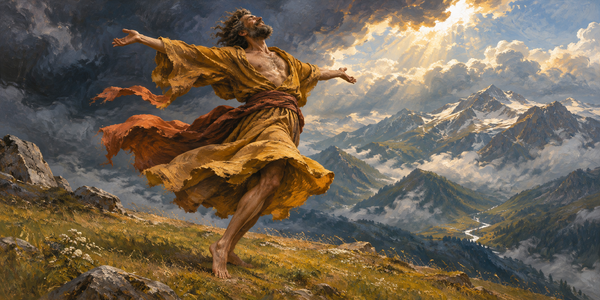
Dance is among the most vivid images of this philosophy. A dancer is not weightless. The dancer possesses a body that meets the earth’s resistance and creates movement through that resistance. Dancing demands balance, practice, attention, and rhythm. It transforms weight into form. When Zarathustra praises lightness, he does not praise thoughtlessness. He celebrates freedom of movement achieved through prolonged mastery of difficulty.
Laughter also has a philosophical role. It can dissolve the self-important seriousness of idols that demand to appear eternal and untouchable. Someone unable to laugh at their own posture risks becoming its prisoner. Yet Nietzschean laughter should not be confused with humiliating the vulnerable. Its deepest significance lies in liberation from the weight of self-worship. It allows us to continue without turning every error into a final sentence.
The relationship between joy and gratitude is especially moving. Eternal recurrence asks us to love life not only when it rewards us. This is joy that has passed through knowledge of pain. It is not naive, because it knows what can be lost. Nor is it cynical, because it refuses to turn loss into the only truth. When a person says yes to existence in this sense, they do not deny tragedy. They recognize that tragedy does not exhaust everything life contains.
Here we find the special beauty of Nietzsche’s style. Philosophical ideas appear not as cold instructions but as forces that can be felt in breathing, movement, voice, and one’s relationship to the world. Readers are not merely invited to agree with a proposition. They are challenged to ask whether their own attitude toward life arises from creative strength or accumulated resentment. It is an uncomfortable but potentially liberating question.
Solitude, Friendship, Disciples, and the Danger of New Idols
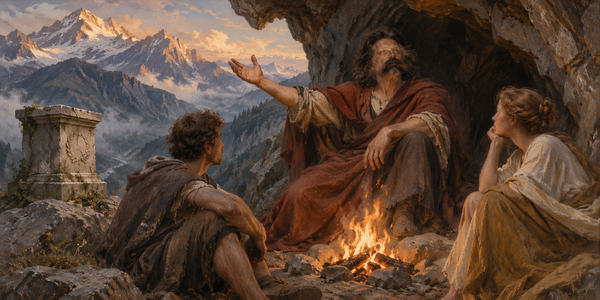
Zarathustra continually moves between solitude and human company. The mountain gives him room to think, but also fills him with the desire to share. Among people he discovers incomprehension, yet also the possibility of offering thought as a gift. This tension is central to the book. Nietzsche does not glorify isolation as an end in itself. He shows that creative independence requires periods of distance from conventional judgments without severing one’s relationship to the human world.
Solitude is necessary when the constant noise of other people’s opinions prevents us from hearing our own questions. But it carries a danger: a person can fall in love with the image of being an exceptional, misunderstood spirit. Zarathustra is not immune to that temptation. He suffers from others’ inability to follow him and from the difficulty of finding suitable companions. That is precisely why his development is more interesting than the story of an infallible prophet. He must learn that independence does not imply superiority in every situation.
Friendship in this philosophical world is not merely mutual reassurance. It includes honesty, resistance, and the possibility that another person will reveal a limitation we cannot see ourselves. A genuine friend is not a mirror that repeats our convictions. A friend can challenge them. This understanding differs from the idea that closeness requires permanent agreement. Sometimes respecting another person means taking them seriously enough not to spare them a difficult conversation.
Zarathustra also has a distinctive relationship with his disciples. In “On the Gift-Giving Virtue,” he urges them to leave him and find themselves. This scene contains a powerful criticism of personality cults. A teacher who wants eternal followers reproduces the dependence supposedly being overcome. Genuine philosophical education should create independent people capable of testing even their most beloved authorities. Otherwise, a teaching about freedom becomes a new form of obedience.
This problem is especially important when reading Nietzsche himself. His style is so memorable that it invites enthusiastic quotation instead of critical understanding. A reader can begin repeating words such as power, overcoming, and Übermensch without connecting them to the difficult work of self-examination. Philosophy then becomes an ornament of vanity. The best way to remain faithful to Nietzsche’s challenge is to refuse to turn Nietzsche into an infallible idol.
The fourth part of the work intensifies these problems through Zarathustra’s encounters with the so-called higher men. They differ from the crowd but do not represent the final ideal. Each carries a form of spiritual exhaustion, disappointment, need for consolation, or attachment to an old role. Among them are figures associated with the religious past, knowledge, repentance, and despair. Their gathering demonstrates that being exceptional in some respect does not automatically mean overcoming dependence on inherited values.
This part also includes the ass festival, a scene exposing humanity’s tendency to create a new object of worship even after destroying an old one. Idolatry is not solely a religious problem. It is a psychological desire to exchange difficult freedom for an easy symbol onto which responsibility can be transferred. We can liberate ourselves from one dogma only to raise another-political, cultural, or personal. Nietzsche insists that we recognize the recurring pattern of dependence.
In the end, Zarathustra does not remain simply the host of the higher men. His task continues beyond them. This marks an important boundary between friendship and a mission to save others. No one can accomplish another person’s transformation in their place. We can help, encourage, argue, and offer an example. But another person’s freedom is not our property. Respecting that boundary is essential whenever grand philosophical ideals threaten to become programs for forcibly correcting humanity.
Why Thus Spoke Zarathustra Still Speaks to Us

Thus Spoke Zarathustra does not offer a final answer to what humanity ought to become. Its strength lies in destroying the comfort of ready-made answers. The Übermensch asks which values we are capable of creating. The last man reveals the cost of reducing life to comfort. The three metamorphoses describe the movement from discipline through liberation to creation. The will to power directs attention toward the forces shaping our judgments. Eternal recurrence places all of this before the hardest test: can we affirm the life we actually live?
These ideas matter in a world offering an endless supply of prepared opinions. Today, a person can instantly obtain an explanation, recommendation, evaluation, or reaction concerning almost any decision. Yet an abundance of answers does not remove the need to choose which values deserve our time. On the contrary, it makes that task more urgent. It is easy to borrow a convincing position. Building a life that bears the consequences of that position is far harder.
Nietzsche reminds us that inherited beliefs must be examined rather than merely accepted or rejected. Criticism is necessary but insufficient. Someone can spend years exposing other people’s errors without creating anything for which they accept personal responsibility. That is why the lion must give way to the child. After liberation comes the more demanding question: what will we do with the freedom we have gained?
In personal life, this means refusing to measure development exclusively through other people’s expectations. Neither praise nor disapproval provides a reliable final measure of an undertaking’s value. We need a capacity for judgment that survives periods without recognition. This is not an invitation to arrogant indifference. Reasonable criticism from others is necessary. Maturity requires distinguishing useful feedback from the fear of losing approval.
In work and creativity, self-overcoming means accepting that mastering a skill is not the end of development. Success brings a risk of stagnation because it reinforces habits that were once fruitful. Sometimes the next step requires abandoning one’s own successful formula. That can be painful because we are not discarding someone else’s mistake but revising our own achievement. Creative fidelity to an undertaking then proves deeper than attachment to an established image of ourselves.
In public life, the book warns against two opposite temptations. One is conformity, which treats every departure from accepted opinion as dangerous. The other is self-appointed superiority, which uses the language of strength to justify contempt for others. Neither obedient dissolution into the crowd nor narcissistic worship of personal exceptionalism fulfills the difficult task of creating values. The philosophical challenge demands independence alongside responsibility for the consequences of action.
The message about our relationship to the past remains especially powerful. No human life is free of missed opportunities, mistaken decisions, and experienced losses. Eternal recurrence offers no magical erasure of these events. It asks whether we can stop fighting what cannot be undone and turn the present into a place of new action. Responsibility does not begin with pretending we have always been right. It begins with recognizing reality and deciding what we will do from here.
Even so, Zarathustra should not be treated as an infallible recipe. Its metaphors can inspire, but they can also be used to excuse cruelty, contempt, or self-deception. Responsible interpretation does not conceal the tensions within the text. Nietzsche exposes herd thinking, yet his own language sometimes tempts readers into an elitist pose. He celebrates freedom while speaking through a character with a prophetic voice. He rejects final guarantees while offering images of extraordinary persuasive power. These tensions do not make the work irrelevant; they are among the reasons it demands careful reading.
The most important result of such reading is not the ability to repeat several impressive phrases. It is a stricter attitude toward our own excuses. When do we call cowardice prudence? When do we disguise envy as moral outrage? When do we prefer the safety of condemning the world to the risk of creating something ourselves? When do we use the past as an explanation that releases us from responsibility in the present? Nietzsche does not let us escape these questions easily.
Ultimately, the Übermensch, eternal recurrence, and self-overcoming are not three separate slogans. Together they form a dramatic philosophy of affirmation. Human beings are unfinished and therefore capable of transformation. Transformation requires creating values instead of living solely by inherited commands. And the worth of those values is tested by our capacity to love real life without demanding that everything difficult be removed from it. This is no promise of easy happiness. It is an invitation to a more courageous, conscious, and creative form of existence.
Zarathustra descends from his mountain because wisdom cannot remain enclosed in solitude. Yet his deepest message is not that we should follow the prophet without question. It is that we must learn to walk on our own feet. Here lies the enduring vitality of the book: it confronts us not with a ready-made image of a perfect human being, but with the demanding joy of humanity as something still capable of becoming more than it was yesterday.
Author: Vasil Stoyanov