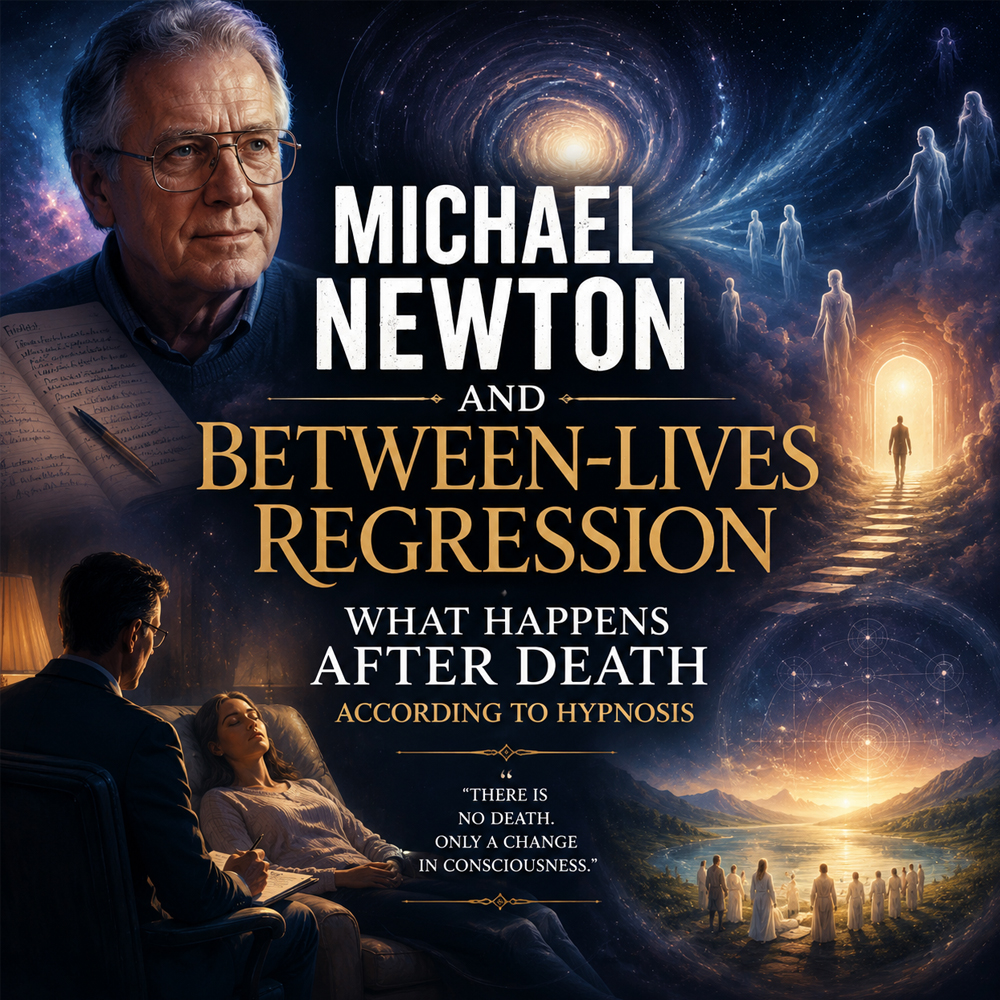
There are countless philosophical, religious, and spiritual doctrines, each offering its own perspective on life after death and the existence of a spiritual realm. If we assume that human beings possess some form of memory related to the afterlife, the very fact that such memories are not accessible to our ordinary consciousness suggests that we must look into the depths of our unconscious nature. According to certain spiritual and hypnotherapeutic traditions, one method through which these deeply buried memories may be accessed is regression, or in other words, hypnosis.
The most well-known hypnotherapist associated with past-life regression and the period between incarnations is Michael Newton. During the twentieth century, he wrote several books exploring different levels of human consciousness and describing a progressive map of events that, according to reports from his hypnosis sessions with clients, take place in the period between the death of the physical body and a new reincarnation. It is important to note from the outset that these ideas are generally regarded as a spiritual and philosophical interpretation rather than a scientifically established model.
The Three Levels of Consciousness According to Michael Newton
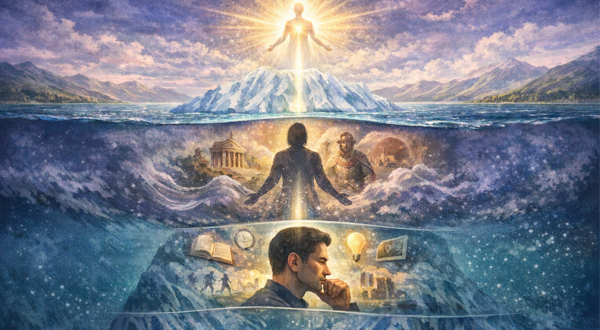
In his theory, Newton describes consciousness as manifesting on three distinct levels.
The first is the conscious mind, which we recognize as the intellect and through which we carry out our thinking processes. This is the level at which we think, analyze, make decisions, create, and categorize the events, people, and objects around us. It forms the foundation of our daily experience and our ability to navigate the physical world.
The second level is the subconscious mind. According to Newton, this is where our memories are stored, including those that might be associated with previous lives. The subconscious is the source of our habits and unconscious patterns of thought and behavior, which are formed through repeated experience – both in this life and, according to his theory, in past lives as well. It serves as a repository of accumulated impressions to which the conscious mind does not always have direct access.
The third level is the superconscious, which Newton presents as the essence that exists beyond memory itself. It is that which, in his view, lies beyond individual memories and experiences, and which clothes itself in the contents of the subconscious mind in order to form a character. It is this character – shaped by the impressions stored in memory and assumed by the deeper essence – that he refers to as the soul.
According to this framework, frequent repetition strengthens certain memories and impressions, gradually transforming them into tendencies that seek expression. These tendencies give qualities to the deeper essence, causing it to develop a character with specific inclinations. The inability to detach from these inclinations, which draw a person toward particular patterns of life, leads to their further reinforcement and, consequently, to rebirth.
When the character of this deeper essence becomes associated with a particular physical body, the tendencies of the soul merge with the emotions and thoughts of that body in a given lifetime, creating a unified personality through which the individual comes to define themselves.
The more strongly we identify with our physical body, the more we identify exclusively with the emotions, feelings, and thoughts of this particular life. According to this theory, this causes us to become blind not only to our own subconscious tendencies, but also to our deeper and more fundamental nature.
What Is Hypnosis in This Context?
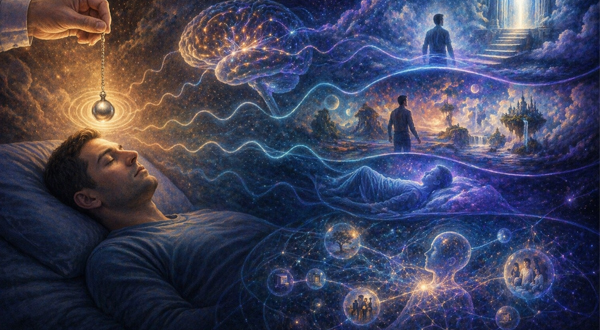
Newton was careful to emphasize that, from his perspective, people under hypnosis are neither dreaming nor hallucinating. It is important, however, to note that this reflects his personal interpretation and understanding of his observations rather than an undisputed scientific consensus.
In his explanations, he stated that when a person enters hypnosis, brainwave activity decreases from the Beta state, which is associated with normal waking consciousness, passes through the intermediate Alpha stage, and reaches various levels within the Theta range. It is this state that he identifies as hypnosis rather than dreaming.
According to Newton’s descriptions, when we sleep, the brain moves beyond the Alpha range and reaches the Delta state, where messages from the brain are processed through the subconscious and find expression in our dreams.
This distinction is central to his entire theory because it forms the basis of his argument that regressive hypnosis provides access to deeper layers of memory rather than merely generating imagined dream-like experiences. From his perspective, the hypnotic state allows individuals to access information stored beyond ordinary conscious awareness, while dreaming represents a different psychological process altogether.
Who is Michael Newton?
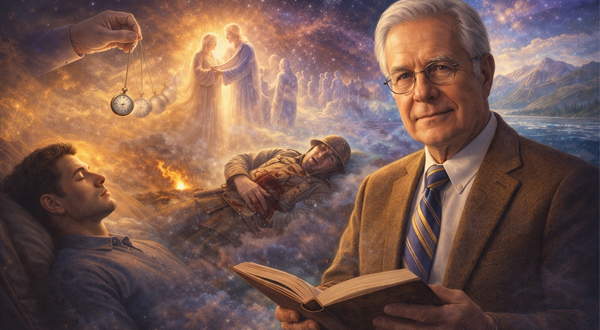
Dr. Michael Duff Newton was an American psychotherapist and hypnotherapist. He held a doctorate in counseling psychology and was a certified hypnotherapist. He was also a member of the American Counseling Association and professional counseling associations. During the early part of his career, Newton adhered to the conventional therapeutic use of hypnosis, largely because he considered himself an atheist. Any patient who requested hypnosis for the purpose of recalling past lives would simply receive a firm “no” as an answer.
The turning point came through a case that would ultimately alter the course of his professional life. One of his patients suffered from persistent pain on the right side of the body, which medical examinations suggested had a psychological rather than a physical origin. Unable to locate the source of this distress within the patient’s childhood memories, Newton instructed the patient under hypnosis to go directly to the origin of the pain.
The patient then began describing himself as a soldier bleeding on a battlefield.
Newton asked him to describe the insignia on his uniform as well as the surrounding environment. In addition to being a psychologist and hypnotherapist, Newton had a strong interest in history. According to his own account, he later compared the patient’s descriptions with preserved records from the First World War. He claimed to have discovered that the soldier the patient described had not only existed, but that the circumstances surrounding the soldier’s death closely matched the details provided during the hypnotic session. It was this experience, according to Newton, that awakened his desire to investigate the possibility of past lives more deeply.
Before long, Newton realized that he could guide patients not only into what they perceived as past-life memories, but also into experiences that they associated with the period between death and a new incarnation.
In one notable case, Newton asked a woman under hypnosis whether there was a group of friends she missed. She replied that she missed her friends deeply and that this was why she felt so lonely on Earth. Confused, Newton asked her where these friends were. After a moment, she answered:
„In my permanent home – and I can see all of them right now.“
Following experiences such as this, Newton began using hypnosis specifically to explore what he referred to as the spiritual world or the afterlife. After decades of research involving thousands of sessions, he developed a model describing the stages that, according to these accounts, occur between death and rebirth.
Newton repeatedly emphasized another point that he considered significant: his clients came from many different cultures, religious backgrounds, and, in some cases, had no religious beliefs at all. In his view, the similarities among their accounts under hypnosis were difficult to explain as mere coincidence.
At the same time, he stressed that everything his clients described about the afterlife should be understood as analogy and symbolism rather than a literal depiction of reality. According to Newton, people cannot adequately describe a non-physical reality in purely literal terms. Such a reality can only be experienced directly. As a result, verbal descriptions inevitably take the form of metaphors, comparisons, and symbolic imagery rather than precise representations of what is actually perceived.
Stage 1 – Leaving the Body
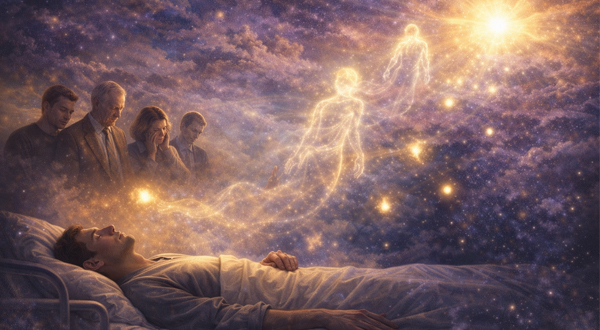
According to the accounts collected by Newton from his patients, once the physical body dies, the soul leaves it and begins to perceive a reality beyond the five senses. Patients frequently describe themselves as “small spheres of light” departing from the body. The sensation of separation is often compared to changing one’s skin or peeling a banana in a single motion.
After leaving the body, the individual reportedly feels liberated from suffering and physical pain. Patients also describe themselves as weightless, floating through space as though suspended in a vacuum where nothing solid exists. Before long, the soul becomes aware of being naturally drawn by an intangible force toward a brilliant, radiant light. Sometimes this light appears to be nearby, while at other times it seems to be located beyond the Earth itself.
According to these descriptions, the soul can resist this attraction if it is unable to accept its own death and wishes to remain longer in this intermediate state. Newton interprets such a desire as a sign of a “young,” or spiritually immature, soul – one that remains strongly attached to someone or something from its physical life.
Patients also report that time is experienced differently in this state. A few minutes there may seem equivalent to several days in the physical world. Some souls, particularly those described as less mature, remain longer because they wish to observe who attends their funeral or to stay connected to earthly events. More mature souls, by contrast, are said to move directly toward the radiant light almost immediately after leaving the body.
As with all of Newton’s work, these descriptions should be understood as part of his hypnotic regression model and spiritual interpretation of consciousness, rather than as scientifically verified evidence of what occurs after death.
Stage 2 – The Journey Toward the Light
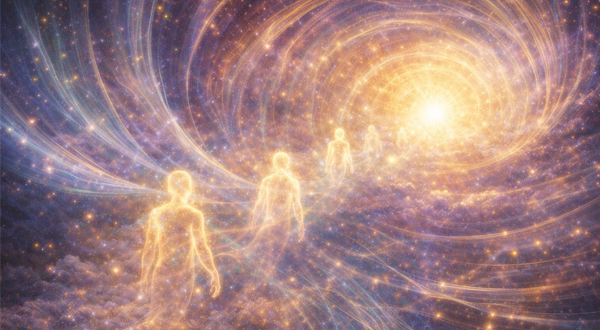
After the soul eventually surrenders to the force drawing it toward the light, it experiences something similar to passing through a tunnel. Some patients clarify that it is not exactly a tunnel, since a tunnel has walls, whereas the experience feels more like being pulled toward a light with nothing else surrounding it. Upon passing into this light, most patients realize that they are not truly dead in the atheistic sense of the word. Instead, they describe this stage as a return home.
Different souls report varying levels of detail after crossing the bright light, depending on what Newton interpreted as their degree of spiritual maturity. The world perceived beyond the light is often described as resembling a layered cake made of luminous strata that appear transparent and slightly distorted. This realm is not solid, although it may initially seem that way. The layers of light are intertwined like thick strands, and everything appears highly symmetrical. There are variations in the thickness and colors of the layers, which move back and forth. Their colors are often described as different shades of white.
Patients also recall hearing various sounds and melodies as they are drawn toward what they perceive as the “correct” layer. Some describe these sounds as vibrations rather than conventional music. At this point, Newton draws an interesting parallel with the ancient Vedas of India, which describe various astral planes – dimensions that serve as an intermediary realm between the physical world and the spiritual world beyond.
As with the rest of Newton’s model, these descriptions represent subjective reports gathered during hypnosis and are presented as spiritual interpretations rather than scientifically verified accounts of an afterlife.
Stage 3 – Entering the Spiritual Realm
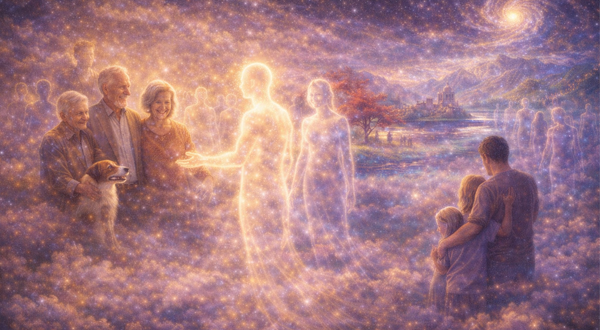
The place to which souls reportedly go after passing through the astral levels is described as immeasurably vast, incredibly peaceful, colorful, and filled with nostalgic vibrations expressed through sounds and scents that correspond to personal memories from physical life. Although what is “seen” there cannot truly be expressed within the language of the physical world, patients often describe similar structures or environments that seem to reflect places which left a profound emotional imprint on them during their earthly existence.
According to these accounts, all souls – except the most spiritually advanced – encounter beings they identify as companions from their soul group or meet their spiritual guide almost immediately upon entering the spiritual realm. Only the least mature souls are said to require the presence of a deceased loved one to welcome them back and help them accept the reality of death more easily.
Patients describe these familiar beings as spheres of light of various colors, capable of communicating telepathically and projecting images directly into the mind. Through this process, they can be perceived as if they possessed a physical form. One of Newton’s patients, for example, reported seeing an uncle to whom she had been deeply attached during her lifetime.
Another intriguing claim that appears repeatedly in regression-hypnosis accounts is that souls in the afterlife may encounter people who have not yet died. This is explained through the idea that a soul can project only a small portion of itself into a physical body on Earth while the remainder of its energy continues to exist in the spiritual realm. According to this concept, it is therefore possible for deceased individuals to encounter loved ones whose earthly lives are still ongoing.
When Newton asked his patients to describe the spiritual world, he often received the answer that everything there consists of energy expressed as light – different shades, intensities, and colors. According to these descriptions, no being possesses a clearly defined physical form. Instead, they appear as faint outlines resembling bodies made of light, translucent to varying degrees.
In one session, a patient was asked how a soul in the spiritual realm could project itself with human characteristics. The patient replied:
“From my energy mass… I simply think about the features I want to project… but I can’t say how I acquired the ability to do that.”
As with the rest of Newton’s work, these descriptions are presented as reports gathered during hypnotic regression sessions and reflect a spiritual model of consciousness rather than a scientifically established account of life after death.
Stage 4 – The Healing Place
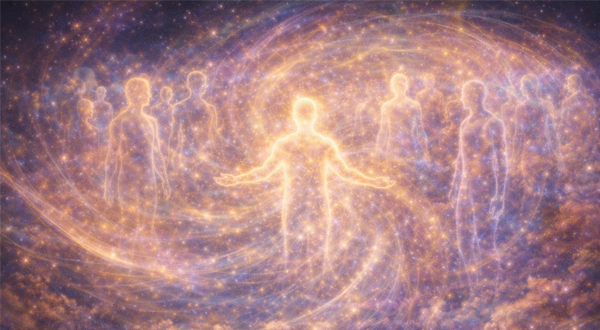
After meeting its spiritual companions and guide, the soul is said to proceed to what Newton’s patients describe as a “healing place.” According to their accounts, this realm possesses an extraordinarily warm, nurturing, and restorative energy that moves around the soul as though it were alive. This energy is believed to cleanse and heal the memories of emotional pain, suffering, and psychological wounds accumulated during physical life.
The feeling of healing is often compared to taking a shower after an extremely exhausting day – a profound sense of relief, renewal, and release. Newton explains that emotions, as they are experienced through the physical body, do not exist in exactly the same way in the spiritual realm. According to his patients, the soul retains only a repository of memories connected to its earthly life.
This repository contains the actions, experiences, and emotions of the individual. Specific memories can be recalled from it, allowing the soul to re-experience something similar to the emotional states associated with those events. In this view, emotions are not constantly present in the afterlife but can be accessed through memory when needed.
As with the rest of Newton’s framework, these descriptions are based on reports from individuals under hypnotic regression and are presented as part of a spiritual and philosophical model rather than as scientifically verified facts about what happens after death.
Stage 5 – The Conversation with the Spiritual Guide
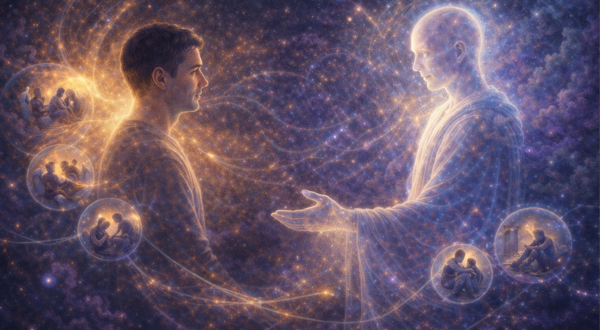
After the soul has been cleansed by this healing energy, it engages in what patients describe as a “conversation” with its spiritual guide about the life it has just completed. According to these accounts, the exchange takes place telepathically rather than through spoken words. Patients report that spiritual guides are often beings who no longer feel the need to continue reincarnating, and whose primary purpose is to assist less mature souls in their growth and development.
Regardless of the mistakes a person may have made during life, these spiritual guides are never described as judgmental. Souls portray them as beings filled with unconditional love, whose sole intention is to encourage learning and growth. During this dialogue, the soul is typically asked whether it is happy or satisfied with the results of the life it has lived, what it could have done better, and whether it carries any regrets.
Following this self-reflection, the soul receives the honest perspective of its guide, whose role is not to condemn but to help it gain insight into its experiences. The purpose of the review is said to be understanding, learning, and spiritual development rather than punishment or reward.
As with all aspects of Newton’s model, these descriptions originate from reports given during hypnotic regression sessions and are presented as part of a spiritual and philosophical framework, not as scientifically established facts about the afterlife.
Stage 6 – The Council and Soul Groups
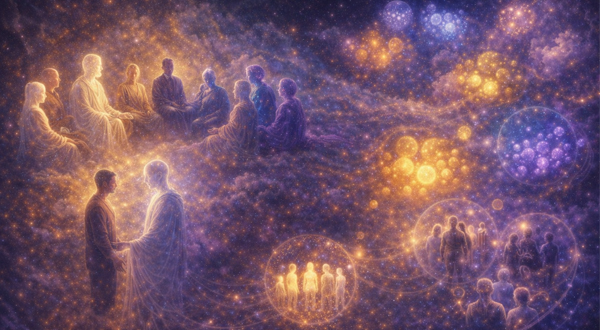
Not long after its conversation with the spiritual guide, the soul is said to meet with a “council” composed of highly evolved beings who, according to Newton’s patients, are even more advanced than the guides themselves. The discussion with this council is described as similar to the one held with the spiritual guide, who is also present during the meeting. After reviewing and analyzing the life that has just ended, the soul proceeds to a place that Newton compares to a “station” or departure point, from which newly returned souls travel back to their spiritual group.
Patients report that while journeying toward their group, they observe other groups of souls appearing as clusters of luminous spheres. Each group functions somewhat like a school class, composed of souls at a similar level of development. According to these accounts, once a group is formed, no new souls can later be added to it. Souls that progress more rapidly toward liberation from the cycle of reincarnation may leave their current group sooner and become part of a newly forming group at a higher level of development.
Newton explains that a soul’s level of maturity is reflected in the intensity and hue of its light. Pure white light is said to represent a “young” soul, while more advanced souls appear with yellow, red, blue, or violet hues, with violet symbolizing the highest degree of spiritual maturity. Patients also state that each soul group has its own distinct area within the spiritual realm and maintains relatively little direct contact with other groups. Despite this separation, the realm itself is often described as unimaginably vast.
When patients were asked whether they felt restricted in their movements, the answer was consistently “no.” Newton describes this region of the afterlife as somewhat resembling a school with different classrooms, where soul groups generally focus on their own development. Although interaction between groups is limited, souls are always aware of the presence of other groups and can communicate with them telepathically if they wish.
According to these accounts, the lack of frequent interaction is not due to rules or barriers but rather because souls intuitively understand that working closely with their own group helps them progress more efficiently. At the same time, Newton emphasizes that it would be misleading to imagine the spiritual world as a rigid school governed by strict regulations. On the contrary, souls from many different groups and levels are said to gather together for a variety of purposes whenever the need arises.
As with the rest of Newton’s framework, these descriptions are based on reports obtained through hypnotic regression and are presented as elements of a spiritual and philosophical model rather than scientifically verified facts about the afterlife.
Stage 7 – Choosing a New Life
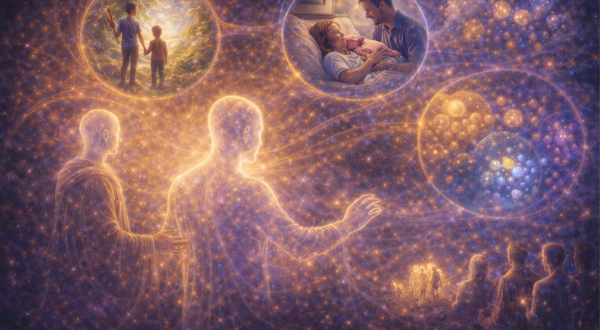
After a certain period of time, younger souls are said to face the task of choosing a new life. According to the descriptions provided by Newton’s patients, this process involves three primary decisions. First, the soul must determine whether it is ready to undertake another physical incarnation. Second, it must decide which lessons it wishes to learn through that life. Finally, it must choose where and with whom it will be born in order to create the best possible circumstances for working on those lessons.
At this stage, the soul reportedly communicates extensively with its spiritual guide and with the soul companions who will participate in its next incarnation. According to these accounts, once a soul becomes highly mature through understanding the nature of physical existence, it no longer feels compelled to reincarnate. For some souls, reaching this stage may require thousands of lifetimes, depending on the pace of their development. Some advanced souls are said to choose reincarnation voluntarily, primarily to assist the growth of others.
After making these decisions, the soul proceeds to a place that patients refer to as “The Ring,” although they insist it is not the only place of its kind. They are generally unable to describe exactly what this Ring looks like or how it feels, but they attempt to describe its purpose and effects. There, the soul is said to review various possibilities for its next life in relation to the lessons it has chosen to pursue. These possibilities take the form of different potential bodies and life circumstances.
According to the accounts, the soul can “observe” significant moments from the probable future of a particular life – events that are likely to occur based on the time period, location, and people associated with that body. In other words, the soul is said to be able to perceive the “karma” connected with a given incarnation. Not only can it review events that appear more or less destined to unfold, but it can also experience them as an observer.
Patients explain that this review is not like watching a movie. Rather, it feels like participating directly in the experience itself. The soul reportedly has access to the perspectives of everyone involved in a particular scene, making it possible to experience the same event through the eyes and emotions of any person present within it.
As with the rest of Newton’s model, these descriptions come from hypnotic regression reports and are presented as part of a spiritual and philosophical interpretation of consciousness rather than as scientifically verified knowledge about reincarnation or the afterlife.
Stage 8 – Preparation for Incarnation
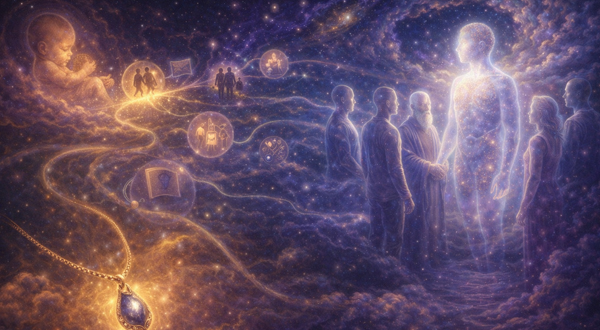
After the soul selects one of the bodies presented as possible incarnations, it is said to have some remaining time to spend with its spiritual guide and soul companions, discussing the chosen life and the events that are likely to unfold within it. According to the patients, once the soul incarnates into the body, it possesses a degree of free will that can potentially alter the course of that life in ways very different from what was originally anticipated. The extent of this freedom is said to depend on the soul’s maturity and level of awareness.
Based on the testimonies of many patients, Newton concluded that a soul’s free will is proportional to its consciousness. Life offers countless possible paths, but in most cases those paths tend to lead toward the same major destinations – significant events or turning points that are part of the body’s intended life experience.
During the final stage of communication with its spiritual guide and companions before incarnation, the soul is said to discuss certain symbols that will later serve as “markers” or “flags” within the upcoming life.
One of Newton’s patients, for example, reported that he had been instructed to remember that if he ever saw a particular necklace, he should make an effort to meet the person wearing it, because that individual was a soul companion who would play an important role in helping him during his lifetime. According to these accounts, souls typically choose symbols that are highly likely to appear because they are connected to events already woven into the probable course of life. In this example, the necklace was chosen because it was naturally linked to an important event in the life of the soul companion, making the likelihood of encountering it very high.
Newton suggested that people often recognize such symbols through intuition. For that reason, it is also possible to overlook them entirely. According to this model, intuition serves as a subtle bridge between the conscious personality and the deeper intentions formed before birth.
After all the details of the upcoming life have been discussed, the soul enters the chosen body and begins a process of synchronization with the brain during the first years of physical life. In Newton’s framework, this gradual adjustment allows the soul’s consciousness to become integrated with the developing nervous system and personality of the new individual.
As with all aspects of Newton’s work, these ideas are derived from reports gathered during hypnotic regression sessions and should be understood as part of a spiritual and philosophical interpretation of consciousness rather than as scientifically verified facts about reincarnation or the afterlife.
Conclusion
Michael Newton’s theory of life-between-lives regression, the afterlife, and the evolution of the soul continues to attract interest among people fascinated by topics such as consciousness, reincarnation, hypnosis, and life after death. Within this framework, philosophical ideas, spiritual interpretations, and accounts reported by patients under hypnotic regression are woven together into a single narrative. For some, these stories are deeply meaningful and inspiring; for others, they remain an intriguing but unverified interpretation of the inner human experience.
For this reason, when presenting such a subject in an article, it is often best approached as a worldview or theoretical framework based on personal accounts and subjective experiences rather than as definitive proof. Viewed in this way, the discussion retains its depth, originality, and emotional impact while remaining more balanced and accessible to a broader audience.
This perspective allows readers to explore the ideas with curiosity and openness, while recognizing the distinction between spiritual interpretation and scientific evidence. Whether one sees Newton’s work as a glimpse into a deeper reality or as a fascinating exploration of the human psyche, it continues to raise profound questions about identity, memory, consciousness, and the possibility of existence beyond physical life.
Author: Vasil Stoyanov