
Introduction to the world of Liezi
Among the great figures of Chinese philosophy are names that have become almost mythical. Most people have heard of Confucius, Lao Tzu, and Zhuangzi, yet few are deeply familiar with the enigmatic Liezi. And yet he is one of the most remarkable figures in the entire history of Daoist thought.
His name is shrouded in legend, and the book that bears his name remains one of the most poetic and, at the same time, one of the most profound works of ancient China. Liezi does not merely speak about the Dao – he seems to live within the very current of the invisible cosmic flow itself.
With him, philosophy does not sound like a system of rules, but rather like the whisper of the wind moving through the mountains.
The story of Liezi is difficult to separate from legend. He is believed to have lived around the 5th century BCE, during the era of the Warring States – a time of political turmoil, constant warfare, and intense spiritual searching. China was fragmented among ambitious rulers relentlessly competing for power, while ordinary people were forced to live amidst uncertainty and suffering.
It is often in such times that great spiritual teachings emerge. When the outer world falls into disorder, people begin searching for an inner foundation.
Daoism arose, in part, as a response to the violence of politics and to the artificial rules and conventions that suffocated the natural flow of human life.
It is often in such times that great spiritual teachings emerge. When the outer world falls into disorder, people begin searching for an inner foundation.
Daoism arose, in part, as a response to the violence of politics and to the artificial rules and conventions that suffocated the natural flow of human life.
Liezi differs from many other philosophers in that he did not seek to impose moral systems or social programs. His attention was directed toward the freedom of consciousness itself. For him, the truly realized person is one who has ceased struggling against life. This does not mean passivity or indifference. Rather, it means complete trust in the natural unfolding of existence. In Liezi’s world, there is no need to constantly prove oneself, to conquer, or to control. The more we attempt to dominate reality, the further we drift from the Dao. True freedom arises not through force, but through harmony with the way things already are.
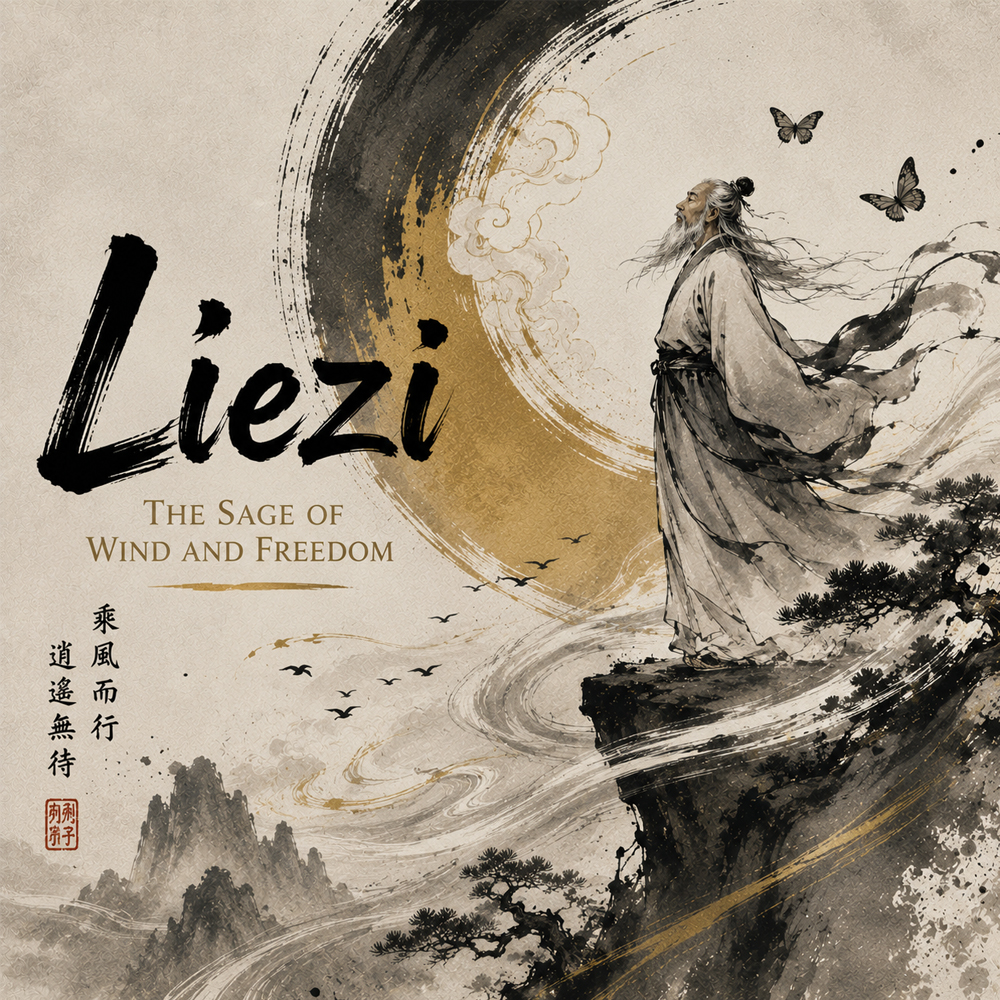
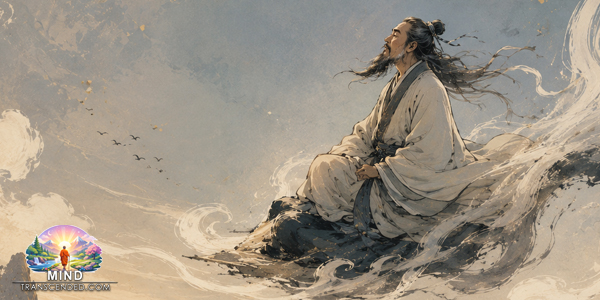
Liezi himself is often portrayed as a wandering sage living far from palaces and marketplaces. The most famous legend about him tells that he could ride the wind.
This should not be understood only in a literal sense. In Daoist symbolism, the wind represents the free spirit – unseen, elusive, and beyond the reach of limitation. To ride the wind is to live in complete harmony with the world, free from fear and attachment.
It is precisely this idea that makes Liezi so different from philosophers who sought to build stable social systems and institutions. He did not wish to reform the world through force or control.
He sought to liberate the human being from within.
The Liezi book and its significance
The work that bears the philosopher’s name is known as the „Liezi“, sometimes translated as „The True Book of Perfect Emptiness“. It is one of the classical texts of Daoism and is often placed alongside the „Tao Te Ching“ of Lao Tzu and the writings of Zhuangzi. Yet its style is distinctly different.
If Lao Tzu speaks in brief and mysterious verses, and Zhuangzi employs paradox and humor, Liezi tells stories. His wisdom unfolds through parables, dialogues, and vivid images that linger in the mind long after they have been read.
The book explores a wide range of themes – the nature of life and death, freedom, knowledge, illusion, and human desire. What is particularly striking is that Liezi never insists that a person must become something extraordinary. On the contrary, he repeatedly demonstrates how destructive ambition can be. In his world, the wisest person often appears completely ordinary, while the most dangerous is the one who believes he already knows everything.
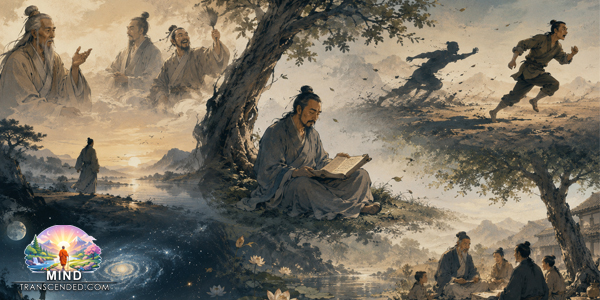
One of the best-known stories in the book tells of a man who became so afraid of losing his shadow that he began running away from it. The faster he ran, the more relentlessly the shadow followed him. Eventually, he collapsed and died from exhaustion, never realizing that if he had simply sat beneath a tree, the shadow would have disappeared on its own.
This is a quintessential Liezi story – simple on the surface, yet rich in symbolism. Human beings often suffer not because of the world itself, but because of their resistance to it. The more forcefully we try to escape fear, pain, or uncertainty, the more persistently they pursue us.
The writings of Liezi are especially valuable because they unite philosophy with profound human sensitivity. There is no cold abstraction in them. Even when discussing the cosmos and infinity, the author remains close to everyday life. He understands human anxieties and does not condemn them.
Instead, he offers another way of seeing – a perspective that is lighter, freer, and quieter.
If Lao Tzu speaks in brief and mysterious verses, and Zhuangzi employs paradox and humor, Liezi tells stories. His wisdom unfolds through parables, dialogues, and vivid images that linger in the mind long after they have been read.
The book explores a wide range of themes – the nature of life and death, freedom, knowledge, illusion, and human desire. What is particularly striking is that Liezi never insists that a person must become something extraordinary. On the contrary, he repeatedly demonstrates how destructive ambition can be. In his world, the wisest person often appears completely ordinary, while the most dangerous is the one who believes he already knows everything.
One of the best-known stories in the book tells of a man who became so afraid of losing his shadow that he began running away from it. The faster he ran, the more relentlessly the shadow followed him. Eventually, he collapsed and died from exhaustion, never realizing that if he had simply sat beneath a tree, the shadow would have disappeared on its own.
This is a quintessential Liezi story – simple on the surface, yet rich in symbolism. Human beings often suffer not because of the world itself, but because of their resistance to it. The more forcefully we try to escape fear, pain, or uncertainty, the more persistently they pursue us.
The writings of Liezi are especially valuable because they unite philosophy with profound human sensitivity. There is no cold abstraction in them. Even when discussing the cosmos and infinity, the author remains close to everyday life. He understands human anxieties and does not condemn them.
Instead, he offers another way of seeing – a perspective that is lighter, freer, and quieter.
The Dao and the natural flow of life
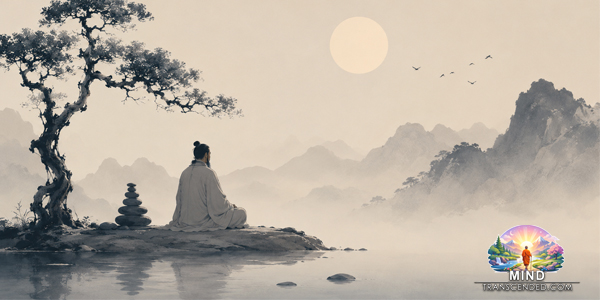
At the heart of Liezi’s teaching stands the „Dao“ – the invisible principle that moves and sustains all existence. The Dao is not a god in the Western sense of the word. It neither punishes nor rewards. It demands no worship. The Dao is the very rhythm of reality itself. Everything arises from it and returns to it. Human beings suffer when they become separated from this natural flow.
Liezi believed that most people live in a state of constant inner struggle. They seek to control their destiny, avoid old age, conquer death, and rise above others. Yet it is precisely this thirst for control that gives birth to anxiety. The tighter we try to grasp life, the more it slips through our fingers.
For this reason, the sage does not attempt to force the world into order. He moves with it.
Here we encounter the central Daoist principle of „wu wei“, often translated as “non-action” or “effortless action.” This does not mean passivity or inactivity. Rather, it refers to action that is free from force, inner tension, and artificiality.
Liezi frequently uses images from nature to illustrate this idea. Water is soft, yet it wears away stone. The wind has no form, yet it passes everywhere. A tree survives because it bends. In each case, strength is found not in resistance, but in harmony with the natural course of things.
Liezi believed that most people live in a state of constant inner struggle. They seek to control their destiny, avoid old age, conquer death, and rise above others. Yet it is precisely this thirst for control that gives birth to anxiety. The tighter we try to grasp life, the more it slips through our fingers.
For this reason, the sage does not attempt to force the world into order. He moves with it.
Here we encounter the central Daoist principle of „wu wei“, often translated as “non-action” or “effortless action.” This does not mean passivity or inactivity. Rather, it refers to action that is free from force, inner tension, and artificiality.
Liezi frequently uses images from nature to illustrate this idea. Water is soft, yet it wears away stone. The wind has no form, yet it passes everywhere. A tree survives because it bends. In each case, strength is found not in resistance, but in harmony with the natural course of things.
One story tells of an old woodcutter who was asked why certain trees in the forest had never been cut down. He pointed to a huge, twisted tree and explained that it was useless as timber, so no one bothered with it. It was precisely its “uselessness” that had allowed it to survive for so long.
Through this story, Liezi critiques a society that evaluates everything solely according to utility and profit. Sometimes the most valuable things are those that appear useless – peace, contemplation, silence, and unstructured time.
This philosophy feels especially relevant today.
Modern life places constant pressure on people to be productive, successful, and visible. Human worth is often measured through money, career achievements, and social status. Liezi would likely say that this is one of the primary causes of the profound inner exhaustion of our age.
When life becomes a competition, the soul gradually loses its ability to breathe.
Through this story, Liezi critiques a society that evaluates everything solely according to utility and profit. Sometimes the most valuable things are those that appear useless – peace, contemplation, silence, and unstructured time.
This philosophy feels especially relevant today.
Modern life places constant pressure on people to be productive, successful, and visible. Human worth is often measured through money, career achievements, and social status. Liezi would likely say that this is one of the primary causes of the profound inner exhaustion of our age.
When life becomes a competition, the soul gradually loses its ability to breathe.
The story of the man who feared death
Among Liezi’s most powerful stories is that of a man obsessed with the fear of death. He sought immortality, visited magicians, drank strange elixirs, and spent his entire life consumed by anxiety. One day, he encountered a sage who asked him why he was so unhappy.
The man replied:
– “I am afraid of losing my life.”
The sage answered:
– “But you have already lost it, because you have never truly lived.”
This brief story contains immense philosophical depth. For Liezi, death is not the greatest problem. The real tragedy is spending one’s life imprisoned by fear.
Anxiety about the future destroys the present. People often postpone joy while waiting for the “right moment,” yet that moment never arrives. They live as though life were merely a rehearsal for something else.
Daoism does not deny death. On the contrary, it accepts it as a natural part of the cosmic cycle. Everything changes. Day becomes night. Summer becomes winter. Birth becomes death.
For Liezi, the problem is not impermanence itself, but our refusal to accept it. Human beings suffer because they try to hold on to what is, by its very nature, temporary.
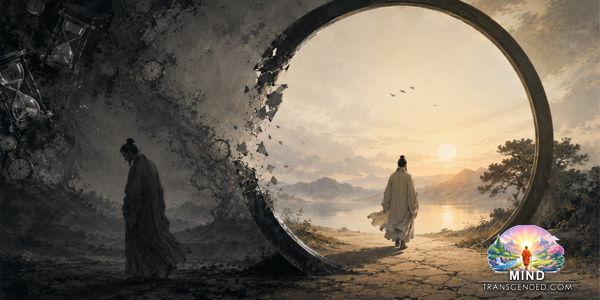
In one of his most beautiful reflections, Liezi suggests that life and death are like dreaming and awakening. While we dream, we take the dream to be reality. When we awaken, we realize that everything within it was fleeting.
In the same way, the sage regards life – not with fear, but with profound serenity.
He knows that everything comes and goes.
Freedom according to Liezi
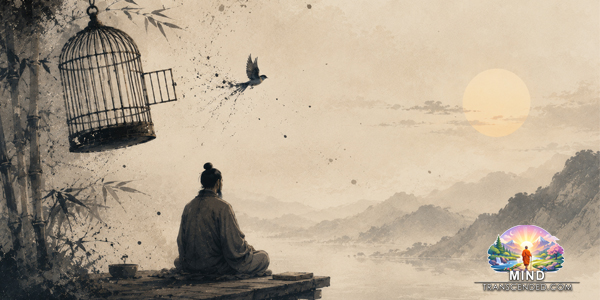
One of the most important themes in Liezi’s teachings is freedom. But this is not political or social freedom in the modern sense. For him, true freedom is an inner state.
A person may live in a palace and still be a slave to their desires. Another may live in poverty and yet be completely free.
Liezi often speaks of people who torment themselves with the opinions of others. They constantly worry about how they appear in the eyes of the world. They seek recognition, respect, and fame. Yet according to the Daoist sage, this is one of the heaviest forms of bondage.
When your sense of worth depends upon the approval of others, you will never know peace.
In one story, a young student asked Liezi how he could become a great man.
The sage replied:
– “Stop trying to be great.”
The student was bewildered.
Yet within this answer lies the very heart of Daoism.
True strength does not arise from the display of strength, but from naturalness. A flower does not strive to be beautiful.
It simply blooms.
This idea remains revolutionary even today.
Modern culture constantly encourages people to build images of themselves, promote themselves, and prove their value. Liezi would likely see this as a tremendous waste of vital energy.
According to him, a person who is in harmony with themselves has no need to convince anyone of their importance.
The story of the drunken man and the cart
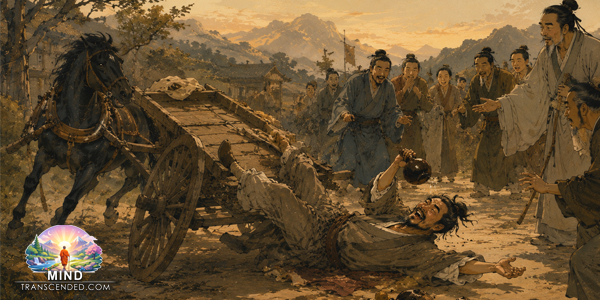
One of Liezi’s most famous parables tells of a drunken man who fell from a cart and survived without serious injury. People were astonished and wondered how such a thing was possible.
Liezi explained that the drunken man had not resisted the fall. His body was completely relaxed, and because of that, the impact did not break him.
This story is often misunderstood as a praise of drunkenness. In reality, it is a metaphor for psychological flexibility.
Human beings suffer most when they become rigid – physically, emotionally, and spiritually. The ego constantly tries to control every situation, to anticipate every outcome, and to protect itself from uncertainty.
But life is unpredictable.
The more rigid we become, the more easily we break.
Liezi explained that the drunken man had not resisted the fall. His body was completely relaxed, and because of that, the impact did not break him.
This story is often misunderstood as a praise of drunkenness. In reality, it is a metaphor for psychological flexibility.
Human beings suffer most when they become rigid – physically, emotionally, and spiritually. The ego constantly tries to control every situation, to anticipate every outcome, and to protect itself from uncertainty.
But life is unpredictable.
The more rigid we become, the more easily we break.
Liezi saw wisdom in the ability to relax into the flow of events. This does not mean becoming irresponsible. It means not waging war against the inevitable.
A storm passes more easily through grass than through stone.
It is often softness, rather than hardness, that proves to be the greatest strength.
This parable carries profound psychological significance as well. Many people today suffer from chronic stress because they try to control everything – the future, their relationships, their careers, and even their own emotions.
Liezi would say that it is precisely this tension that causes inner fracture.
Sometimes salvation does not come through greater effort, but through letting go.
A storm passes more easily through grass than through stone.
It is often softness, rather than hardness, that proves to be the greatest strength.
This parable carries profound psychological significance as well. Many people today suffer from chronic stress because they try to control everything – the future, their relationships, their careers, and even their own emotions.
Liezi would say that it is precisely this tension that causes inner fracture.
Sometimes salvation does not come through greater effort, but through letting go.
Liezi and the illusion of knowledge
In Western culture, knowledge is often regarded as the highest value. The more information a person possesses, the wiser they appear. Liezi, however, challenges this assumption. According to him, excessive intellectualization can distance us from the direct experience of reality itself.
He is not opposed to knowledge as such. The problem arises when a person begins to believe that they fully understand the world. For Liezi, true wisdom includes an awareness of one’s own ignorance. The deeper a person enters into the Dao, the more they realize how inexhaustible reality truly is.
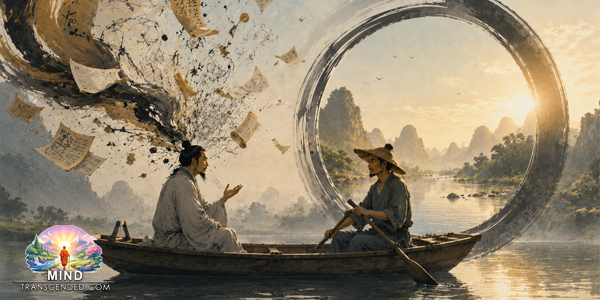
One story tells of a learned scholar who argued with a boatman about the nature of a river. The scholar spoke in sophisticated theories and elaborate concepts, but when the boat began to sink, it became clear that he did not know how to swim.
The boatman then said:
-„You know a great deal about the river, but you do not know how to be in it.“
This is a profoundly important message.
Many people today possess countless facts and vast amounts of information, yet they have lost the ability to live peacefully. Information does not always lead to wisdom. Sometimes it merely increases confusion.
Liezi reminds us that life is not a problem to be solved, but an experience to be lived.
He is not opposed to knowledge as such. The problem arises when a person begins to believe that they fully understand the world. For Liezi, true wisdom includes an awareness of one’s own ignorance. The deeper a person enters into the Dao, the more they realize how inexhaustible reality truly is.
One story tells of a learned scholar who argued with a boatman about the nature of a river. The scholar spoke in sophisticated theories and elaborate concepts, but when the boat began to sink, it became clear that he did not know how to swim.
The boatman then said:
-„You know a great deal about the river, but you do not know how to be in it.“
This is a profoundly important message.
Many people today possess countless facts and vast amounts of information, yet they have lost the ability to live peacefully. Information does not always lead to wisdom. Sometimes it merely increases confusion.
Liezi reminds us that life is not a problem to be solved, but an experience to be lived.
The relationship with Nature
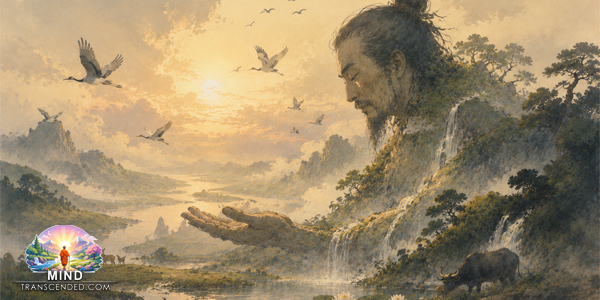
Nature, in Daoism, is not merely the backdrop of human life. It is a teacher.
Liezi continually observed the movements of water, trees, clouds, and animals. In them, he saw expressions of the Dao itself. Nature does not hurry, compete, or feel envy. And yet everything is accomplished.
In one story, Liezi describes watching birds carried by the wind. They did not try to conquer the air. They simply trusted its movement. To him, this was an image of wisdom.
Human beings suffer because they constantly seek to separate themselves from the world rather than merge with it.
The modern world often views nature as a resource to be exploited. The Daoist perspective is the opposite. Nature is not an enemy to be conquered. It is a living harmony of which humanity is only a small part.
When we forget this, destruction begins – both outwardly and inwardly.
Liezi would likely see today’s ecological crisis not merely as a technical problem, but as a spiritual one. Humanity has lost its sense of connection with the whole.
The further we separate ourselves from nature, the further we separate ourselves from our own true nature.
Liezi continually observed the movements of water, trees, clouds, and animals. In them, he saw expressions of the Dao itself. Nature does not hurry, compete, or feel envy. And yet everything is accomplished.
In one story, Liezi describes watching birds carried by the wind. They did not try to conquer the air. They simply trusted its movement. To him, this was an image of wisdom.
Human beings suffer because they constantly seek to separate themselves from the world rather than merge with it.
The modern world often views nature as a resource to be exploited. The Daoist perspective is the opposite. Nature is not an enemy to be conquered. It is a living harmony of which humanity is only a small part.
When we forget this, destruction begins – both outwardly and inwardly.
Liezi would likely see today’s ecological crisis not merely as a technical problem, but as a spiritual one. Humanity has lost its sense of connection with the whole.
The further we separate ourselves from nature, the further we separate ourselves from our own true nature.
Power of simplicity
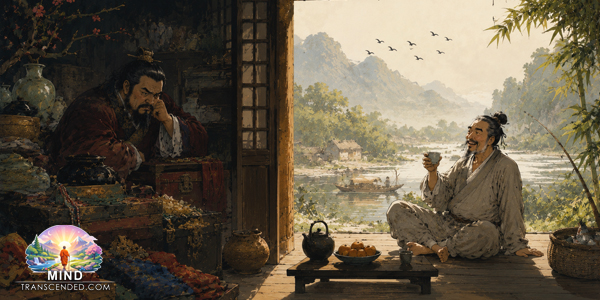
Simplicity is one of the deepest virtues in Liezi’s teachings. Yet this simplicity does not mean poverty or primitiveness. It is the freedom that comes from letting go of what is unnecessary.
The sage does not burden life with endless desires and ambitions. He knows how to find joy in ordinary things.
Liezi tells the story of a man who spent his entire life accumulating wealth, yet never felt satisfied. He lived in constant fear of losing what he possessed. At the same time, a poor fisherman slept peacefully by the river and laughed with his friends.
According to Liezi, the truly wealthy person is not the one who owns much, but the one who needs little.
This idea is especially relevant in an age of consumerism.
Modern economies continually reinforce the feeling that a person is not enough as they are. There is always something more to buy, another status to achieve, another image to construct. Yet the more desires arise, the more restless the mind becomes.
Liezi does not advocate asceticism. He does not claim that pleasure is evil. Rather, he warns that when a person becomes dependent upon pleasure, they lose their inner freedom.
Simplicity is a form of lightness.
It allows life to flow without unnecessary burdens.
The sage does not burden life with endless desires and ambitions. He knows how to find joy in ordinary things.
Liezi tells the story of a man who spent his entire life accumulating wealth, yet never felt satisfied. He lived in constant fear of losing what he possessed. At the same time, a poor fisherman slept peacefully by the river and laughed with his friends.
According to Liezi, the truly wealthy person is not the one who owns much, but the one who needs little.
This idea is especially relevant in an age of consumerism.
Modern economies continually reinforce the feeling that a person is not enough as they are. There is always something more to buy, another status to achieve, another image to construct. Yet the more desires arise, the more restless the mind becomes.
Liezi does not advocate asceticism. He does not claim that pleasure is evil. Rather, he warns that when a person becomes dependent upon pleasure, they lose their inner freedom.
Simplicity is a form of lightness.
It allows life to flow without unnecessary burdens.
Conclusion – Why Liezi matters today
Liezi is a philosopher who speaks quietly, yet his words remain remarkably relevant. In a world filled with noise, anxiety, and constant tension, his teachings sound like an invitation to inner stillness. He offers no formulas for success and makes no promises of power over the world. Instead, he reminds us of something almost forgotten – that human beings are not required to be in a constant struggle.
The Daoism of Liezi is not an escape from life. On the contrary, it is a profound trust in life itself. The sage does not attempt to stop the river; he learns how to flow with it. He does not seek absolute certainty because he understands that change is the very nature of existence. For that reason, he is able to live peacefully.
Liezi’s stories have survived for thousands of years because they address timeless human questions:
How can we live without fear? How can we be truly free? How can we find peace in an unpredictable world?
His answer is not complicated.
Stop forcing life. Return to simplicity. Listen to the silence. Allow the wind to carry you.
Perhaps this is why the legend says that Liezi rode upon the wind – not because he possessed magical powers, but because he understood something that most people forget.
Freedom is not found in controlling the world.
Freedom is found in no longer being its prisoner.
The Daoism of Liezi is not an escape from life. On the contrary, it is a profound trust in life itself. The sage does not attempt to stop the river; he learns how to flow with it. He does not seek absolute certainty because he understands that change is the very nature of existence. For that reason, he is able to live peacefully.
Liezi’s stories have survived for thousands of years because they address timeless human questions:
How can we live without fear? How can we be truly free? How can we find peace in an unpredictable world?
His answer is not complicated.
Stop forcing life. Return to simplicity. Listen to the silence. Allow the wind to carry you.
Perhaps this is why the legend says that Liezi rode upon the wind – not because he possessed magical powers, but because he understood something that most people forget.
Freedom is not found in controlling the world.
Freedom is found in no longer being its prisoner.
Read More:
- Zhuangzi – The Sage of the Free Spirit and the Infinite Tao
- Lao Tzu: The Sage of Tao and the Secret of Eternal Simplicity
- Buddhism, Hinduism, and Taoism – “The Deep Differences Behind the Apparent Similarities”
- Confucianism as a Living Philosophy: The Profound Art of Being Human
Author: Vasil Stoyanov