
The debate over whether Nasreddin actually existed remains unresolved, as there is no reliable information regarding the dates of his birth and death, nor many verified details about his life. At the same time, numerous archaeological findings have been cited as evidence of his historical existence.
Perhaps the most remarkable of these is his tomb, which is truly one of a kind.
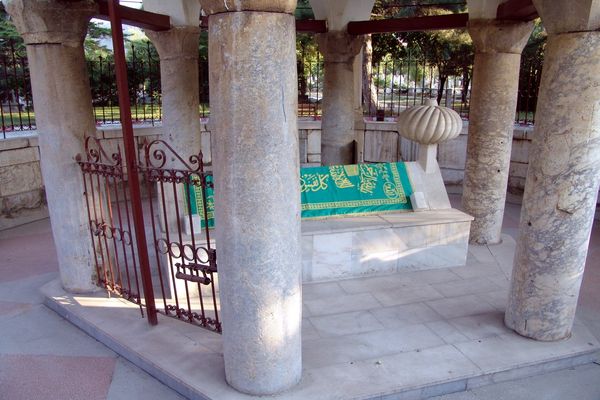
The tomb consists of a gate standing before a coffin. According to one legend, Nasreddin ordered that the key to the gate be thrown into the sea. Another version claims that he requested the key be placed inside the coffin with him.
Nasreddin chose humor as the vehicle for conveying his wisdom, and to this day he remains one of the greatest masters of that art. For him, the idea of “life as a cosmic joke” was not merely a philosophy – it was a reality born of deep insight.
His wish for his tomb to be constructed in this peculiar way was intended to suggest that the key to a person’s inner world should always remain in their own hands, never surrendered to the world. The locked gate symbolizes the fact that nothing can truly touch us unless we choose to unlock the door from within.
In most of the stories, Nasreddin plays the role of the fool, which often leaves readers with the impression that he was simply a witty and entertaining character. Yet according to some traditions, Nasreddin was actually a great sage and mystic who lived among people too proud, stubborn, and spiritually asleep to receive wisdom in a serious form.
“Thank goodness for humor – it allows us to tell the truth.”
That may have been the only way.
The following story attempts to illustrate the tendency of human beings to search for God in the outside world rather than within themselves, simply because the outside world feels more comfortable.
One day, Nasreddin lost the key to his treasure.
Although he searched the road in front of his house and looked around the neighboring homes along the path to the village, he could not find it anywhere.
So he called upon his neighbors to help him search. They looked everywhere – up and down the road, around the houses, and throughout the village – but without success. It was as though the key had vanished into thin air.
Fortunately, after some time, one of the neighbors thought to ask:
“Nasreddin, are you sure you lost the key outside?”
“Oh no,” replied Nasreddin. “I lost it inside. But searching outside is easier. That is why I am out here.”
1. Who Bought Who?
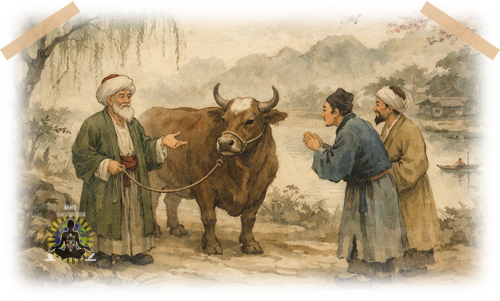
One day, Nasreddin Hodja bought an ox at the market and began leading it back to his barn.
Along the way, he ran into an acquaintance who bombarded him with countless foolish questions:
“Who did you buy that ox from?”
“How much did you pay for it?”
“How old is the animal?”
And so on.
Although reluctantly, Nasreddin answered every question. They eventually parted ways.
But before the Hodja had taken more than a few steps, he encountered another acquaintance, who stopped him and asked:
“So, Effendi, did you buy an ox?”
Nasreddin replied:
“No, I didn’t. The ox bought me. Ask him whatever you want to know.”
2. Salvation
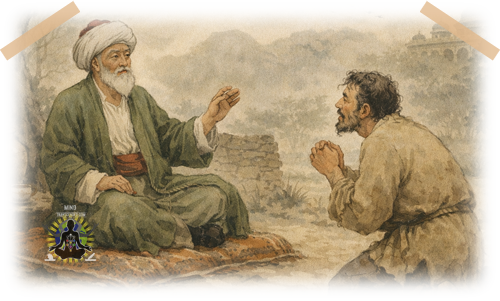
A man who had squandered his inheritance in a very short time went to Nasreddin Hodja and begged him for help.
“Allah, Allah!” he cried. “I have spent everything I had. You are a wise man and surely know how I can set things right!”
Nasreddin Hodja replied:
“In five years, you will have no more worries.”
“Will I be rich again?” the man asked eagerly.
“No,” said the Hodja, “but by then you will have gotten used to being poor.”
3. Nasreddin Hodja and the Traveler
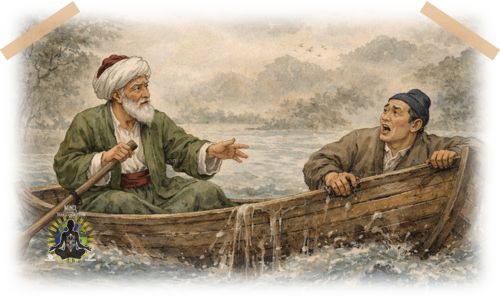
One day, Nasreddin Hodja was ferrying a passenger across a lake.
As they chatted about this and that, Nasreddin happened to make a small grammatical mistake.
The passenger remarked:
“You wear a turban and call yourself a mullah, but have you ever actually studied grammar?”
“Well…” admitted Nasreddin, “I have never devoted much attention to grammar.”
“Then you have wasted half your life!” the passenger scolded him.
A few minutes later, Nasreddin asked the passenger a question of his own:
“Can you swim?”
“No,” replied the passenger.
“In that case,” said Nasreddin Hodja, “you have wasted your entire life, because the boat has a hole in it and we are sinking!”
4. The Bandits
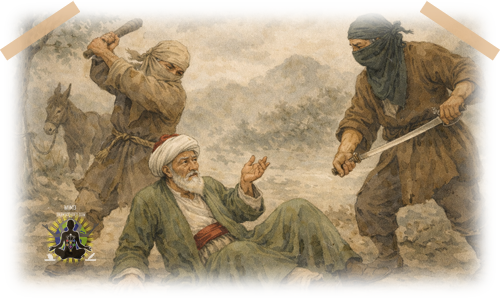
Once, a group of bandits ambushed Nasreddin Hodja on the road.
They took his donkey and his money, then began beating him.
Nasreddin cried out:
“Why are you beating me? Should I have arrived earlier so you wouldn’t have had to wait so long? Or did you find the amount of money I had disappointing?”
5. Guests
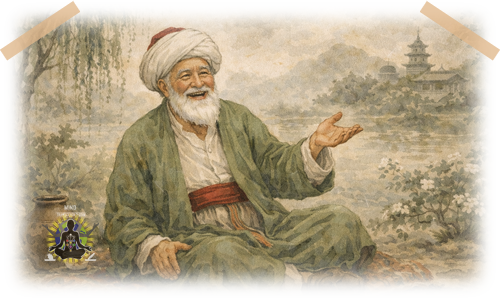
Someone once asked Nasreddin Hodja why he was always smiling.
The Hodja replied:
“Other people come into this world crying, but when I was born, I was laughing.
You know, we are all guests in this world. And when someone goes visiting, do they cry?
No – they smile. And so should we.”
6. Nasreddin on the Market
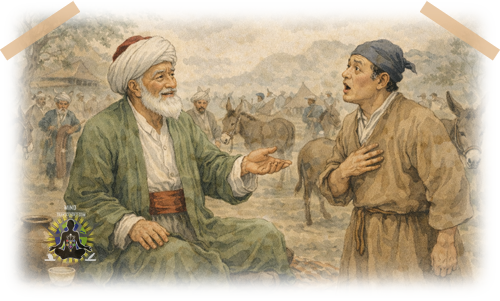
Mullah Nasreddin went to the marketplace to buy a pack animal.
On that particular day, the villagers were buying and selling donkeys.
A man whom Nasreddin met complained:
“This market is full of nothing but peasants and donkeys!”
Nasreddin then asked him:
“Are you a peasant yourself?”
“No, I am not,” replied the man.
“Ah,” said Nasreddin, “then you must be one of the donkeys.”
7. Judgment Day
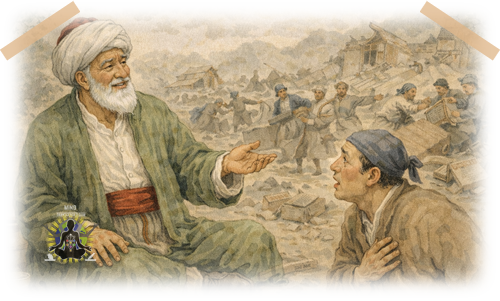
One of Nasreddin Hodja’s neighbors asked him:
“Effendi, you are such a learned man! Can you tell me when Judgment Day will come?”
Nasreddin replied:
“It will come on the day you die.”
“How do you know that?” the man asked.
And Nasreddin explained:
“Because on that day, the arguments over your inheritance will turn the whole world upside down!”
8. Nasreddin and the Thiefs
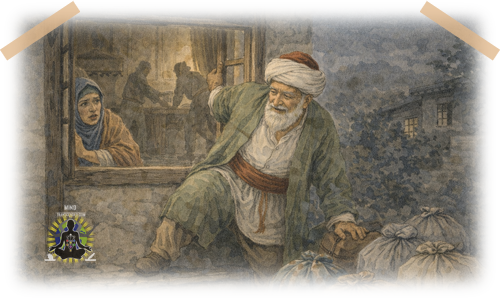
One night, Nasreddin’s wife was awakened by a noise. She looked out the window and said:
“Husband, there are thieves at our house!”
“Are you sure?” asked Nasreddin.
“I am,” she replied. “They have left bundles of goods stolen from other people outside our door, and now they have gone inside to steal our belongings.”
“I will take care of this matter,” Nasreddin assured her.
He got out of bed and began climbing out through the window.
“Are you going to get help?” his wife asked.
“No,” said Nasreddin. “While the thieves are rummaging through our empty house, I am going to steal the bundles they left outside!”
9. Nasreddin and the Beggar
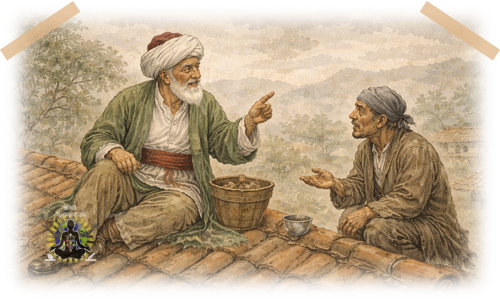
One day, Nasreddin Hodja climbed onto the roof of his house to patch a hole caused by some broken roof tiles. He was making good progress and felt pleased with his work.
Suddenly, he heard a voice call out:
“My respects!”
Looking down, he saw a man in dirty clothes standing below.
“What is it?” Nasreddin asked.
“Come down and I’ll tell you,” the man replied.
Nasreddin was annoyed, but being a kind-hearted man, he set aside his work and carefully climbed down to the ground.
“What do you want?” he asked.
“Would you spare a coin for an old beggar?” the stranger said.
Nasreddin thought for a moment and then replied:
“Come with me.”
He immediately began climbing back up onto the roof. The beggar followed him all the way to the top.
When they were both seated on the ridge of the roof, Nasreddin finally gave his answer:
“No.”
10. Making Yogurt
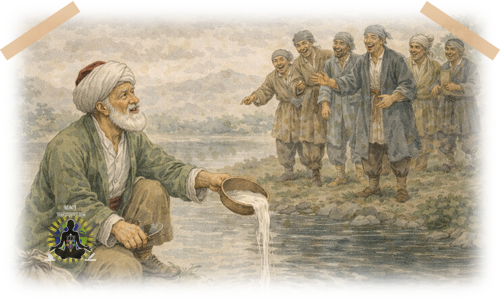
One day, Nasreddin Hodja was washing a bowl at the edge of a lake when he poured the last of his yogurt into the water.
A few villagers decided to make fun of him.
“What are you doing, Hodja?” one of them asked.
“I am culturing the lake,” Nasreddin replied.
“Come now, Hodja, you can’t turn a lake into yogurt!” the man shouted, and everyone burst out laughing.
“Perhaps you’re right,” said Nasreddin Hodja, “but if it does set, just imagine the feast we’ll have!”
11. Conscience in the Market
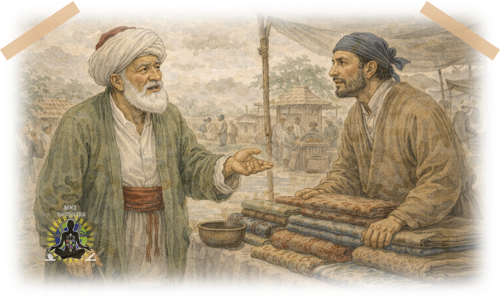
Once, Nasreddin stopped at a market stall and asked how much the cloth for sale cost.
The price seemed outrageously high to him, and the Hodja exclaimed indignantly:
“Hey, my friend, don’t you have any conscience?”
The merchant replied:
“No, Effendi. To tell you the truth, I haven’t heard of anyone selling conscience in this market!”
12. Shallow-minded
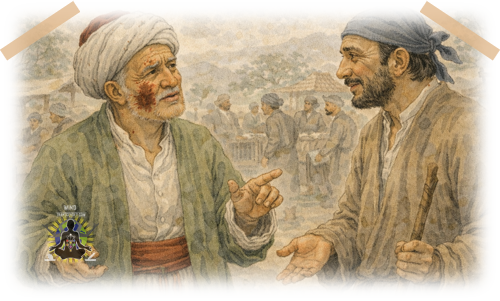
One day, while Nasreddin Hodja was walking through the marketplace, a man stopped him and said thoughtfully:
“Men with long beards are shallow-minded.”
The remark made an impression on Nasreddin.
When he returned home, he decided to shorten his beard by singeing it with a lit candle. Unfortunately, he not only burned off his entire beard, but also scorched his face in the process.
On the next market day, he happened to meet the same man again and said:
“It turns out you were right, my friend! Men with long beards really are shallow-minded!”
13. The Scholar and Nasreddin
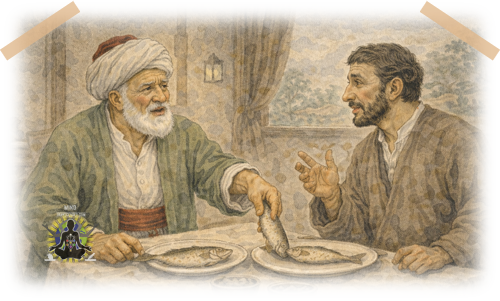
Once, a learned man passing through Nasreddin Hodja’s village asked him to recommend a place for lunch.
Nasreddin gave him a suggestion, and the traveler, eager for conversation, invited the Hodja to join him. Delighted, Mullah Nasreddin accompanied the scholar to a nearby tavern, where they asked what the best dish of the day was.
“Fish! Fresh fish!” replied the innkeeper.
“Bring us two fish,” they ordered.
A little while later, the innkeeper returned with a large platter holding two fish, but one was much smaller than the other.
Without the slightest hesitation, Nasreddin took the larger fish and placed it on his plate.
The learned man stared at him in disbelief. He then launched into a lecture, explaining that Nasreddin had behaved like a complete egotist and that his actions violated the principles of nearly every known moral, religious, and ethical teaching.
Nasreddin listened calmly to the entire speech.
When the scholar had exhausted all of his arguments, the Hodja asked:
“Very well, Effendi, and what would you have done?”
“As a man of conscience,” replied the scholar, “I would have taken the smaller fish for myself.”
“Exactly!” said Nasreddin, placing the smaller fish on the scholar’s plate.
14. The Dervish and Nasreddin
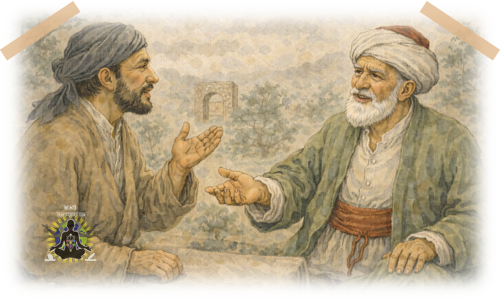
A dervish once confided in Nasreddin:
“I am so absorbed in virtuous intentions that I never think about myself. I think only of others!”
Nasreddin replied:
“As for me, I pay so little attention to myself that I regard myself as a stranger. For that reason, I can think about myself as much as I like!”
15. Nowhere to go
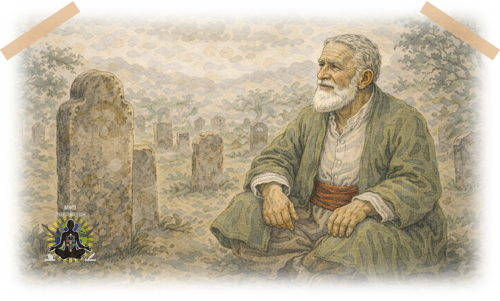
Once, in broad daylight, a thief snatched Nasreddin Hodja’s turban from his head as he was walking down the street and ran away with it.
Nasreddin immediately made his way to the nearby cemetery and settled in to wait.
“What are you doing?” people asked in astonishment. “The thief ran off in a completely different direction!”
“It doesn’t matter,” replied the Hodja calmly. “Wherever he has run off to, sooner or later he will end up here.”
- 10 Sufi Stories About Truth, Ego, and Inner Peace
- 3 Rumi Stories That Guide the Heart Toward God
- 5 Sufi Wisdom Stories That Will Change the Way You See Life
Author: Vasil Stoyanov