
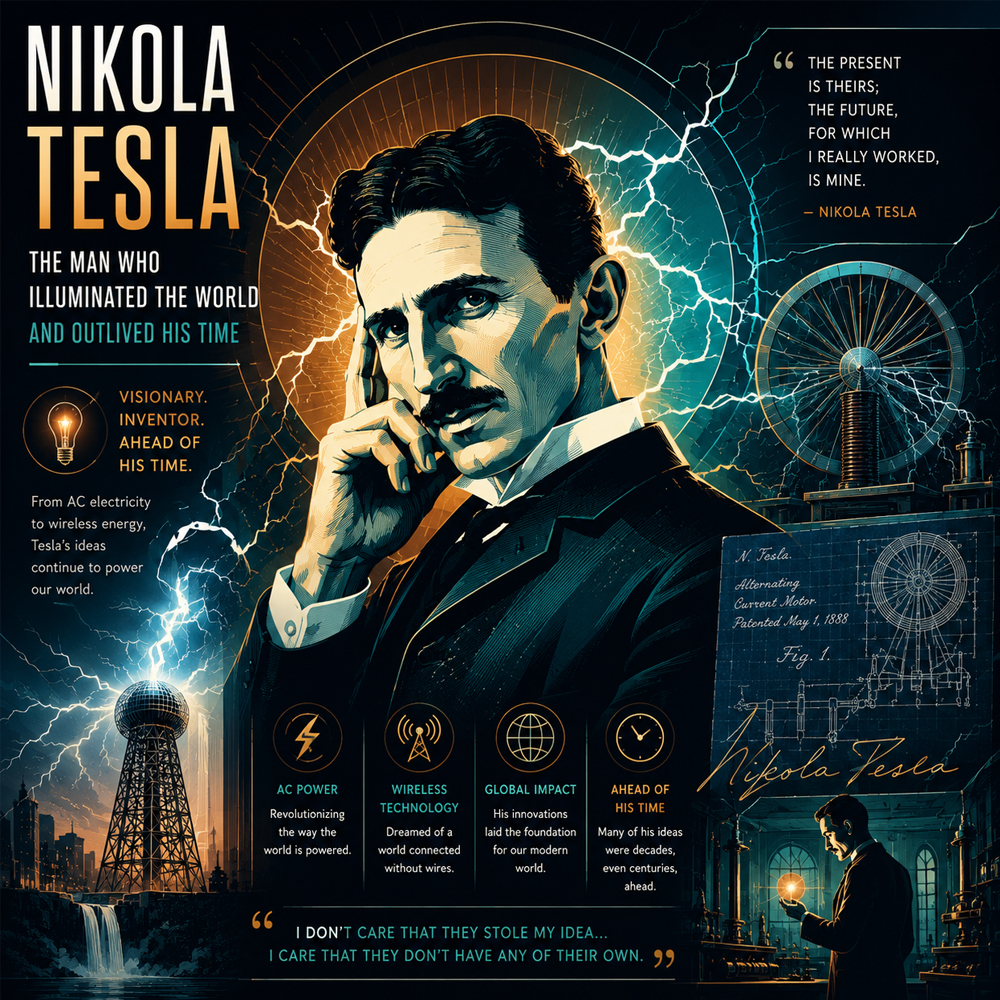
Introduction: The Genius Who Saw the Future
The history of humanity is filled with individuals who changed the world. Yet very few managed to do so as profoundly and comprehensively as Nikola Tesla. He was not merely an inventor, engineer, or scientist. Tesla became a symbol of human imagination, endless curiosity, and the pursuit of knowledge that transcended the limitations of his own era. His ideas not only transformed the technological landscape of the late nineteenth and early twentieth centuries, but they continue to shape our lives today.
Whenever we switch on a light, use an electrical appliance, or charge a smartphone, we rely on principles that are deeply connected to Tesla’s work. Despite this, he rarely received the recognition he deserved during his lifetime. Much of his life was spent struggling for funding, confronting industrial giants, and trying to convince society of ideas that seemed almost fantastical for his time.
His life is a story of extraordinary intellect, but also of loneliness. It is a story of triumphs that changed the world and failures that broke his heart. It is the story of a man who believed that science should serve all humanity rather than the economic interests of a privileged few. More than eight decades after his death, Nikola Tesla remains one of the most inspiring figures in the history of science.
The Childhood of an Extraordinary Boy
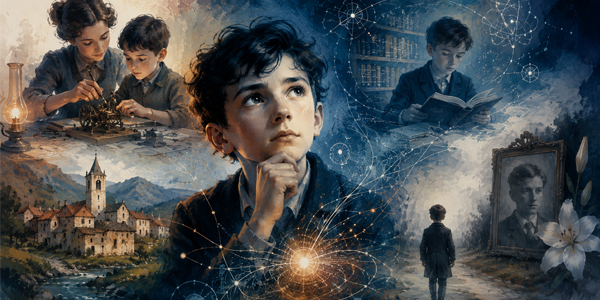
Nikola Tesla was born on July 10, 1856, in the village of Smiljan, then part of the Austrian Empire and now located in Croatia. He was born into a Serbian family. His father, Milutin Tesla, was an Orthodox priest, while his mother, Georgina “Djuka” Tesla, possessed remarkable practical intelligence and an exceptional talent for creating mechanical devices.
Tesla later acknowledged that much of his inventive ability came from his mother. Although she had no formal education, she designed useful household tools and impressed everyone around her with her ingenuity. To young Nikola, she was living proof that creativity and intelligence did not depend on academic degrees.
From an early age, Tesla displayed an astonishing memory. He could memorize entire books and perform complex calculations in his head. His imagination was so vivid that he often saw detailed images and mechanical designs in his mind with photographic clarity. Later in life, he would use this extraordinary ability to design machines entirely in his imagination before ever building them.
His childhood, however, was not free from tragedy. One of the most devastating events was the death of his older brother Dane, whom the family considered exceptionally gifted. The loss left a profound mark on Nikola’s psyche. Many biographers believe that this tragedy fueled his determination to achieve something truly extraordinary.
Education and the Formation of His Scientific Vision
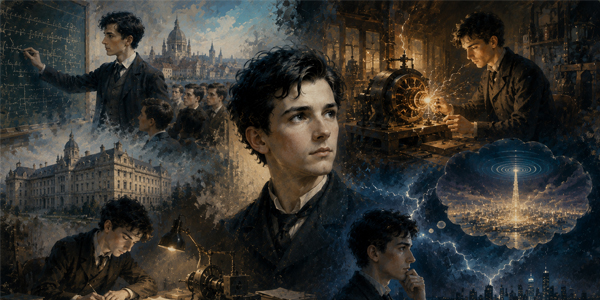
Tesla received an excellent education and showed a deep interest in mathematics and physics from an early age. He studied in Karlovac, where he amazed his teachers with his ability to solve problems at incredible speed. Later, he continued his studies at the Polytechnic Institute in Graz.
It was there that he first encountered electrical machines, which would ultimately define his destiny. While observing the operation of a dynamo machine, he began thinking about the limitations of direct current systems. Most people saw a functioning machine, but Tesla saw an unsolved problem and an opportunity for revolution.
Years of intense study and personal challenges followed. Financial difficulties and health problems prevented him from completing his education in the traditional way. Nevertheless, his knowledge continued to deepen. He was one of those rare individuals who transformed curiosity itself into the driving force behind personal growth.
Even at this stage, one of the defining characteristics of his thinking became evident. While many scientists focused on gradually improving existing technologies, Tesla sought entirely new solutions. He did not simply want to improve the world. He wanted to rethink it.
The Journey to America
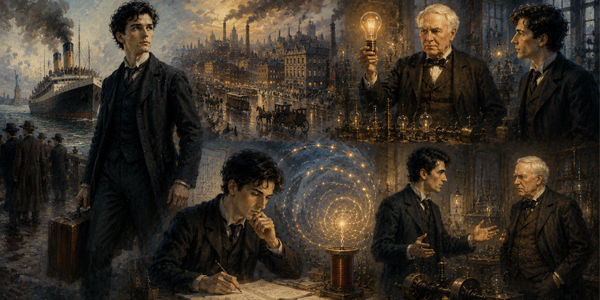
In 1884, Nikola Tesla arrived in the United States. He had very little money in his pocket, but he carried ideas that would eventually change the world. According to a famous story, he arrived with a letter of recommendation addressed to Thomas Edison, stating that the writer knew only two great men: Edison and Tesla.
America at that time was in the midst of the Industrial Revolution. Electricity was beginning to enter everyday life, and companies were competing fiercely for dominance in this emerging industry. For the young scientist, it was a land filled with opportunity.
Tesla began working for Thomas Edison. Initially, the relationship seemed promising. Edison recognized Tesla’s technical abilities, while Tesla believed he had found an environment where his ideas could flourish.
However, it soon became clear that the two men held fundamentally different views on science and engineering. Edison was a practical experimenter who relied heavily on trial and error. Tesla was a visionary who preferred theoretical understanding and precise scientific reasoning. This clash of personalities would become one of the most famous scientific rivalries in history.
The War of the Currents
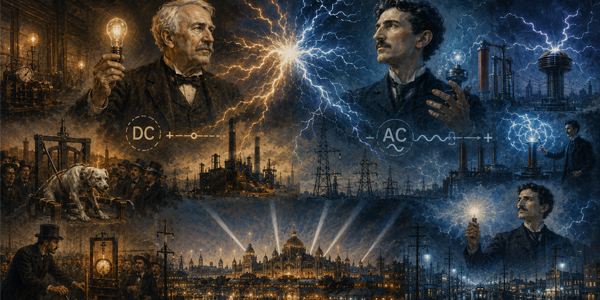
One of the most significant technological conflicts in history was the so-called “War of the Currents.” At its core was a simple but crucial question: what type of electricity would power the future – direct current or alternating current?
Edison championed direct current. While effective over short distances, it suffered from serious limitations. Energy losses were substantial, and numerous power stations were required to serve large areas.
Tesla proposed a radically different approach. His alternating current system allowed electricity to be transmitted over vast distances with far fewer losses. This meant that a single power plant could supply energy to entire regions.
The scientific advantages of alternating current were enormous. Through the use of transformers, voltage could be increased for transmission and reduced for safe consumption. This made electricity more efficient, practical, and affordable.
Edison responded with an aggressive campaign against Tesla’s system. Public demonstrations were organized in which animals were electrocuted using alternating current to portray the technology as dangerous. Despite these efforts, scientific evidence ultimately proved stronger than propaganda.
The decisive victory came when George Westinghouse’s company, using Tesla’s patents, won the contract to illuminate the 1893 World’s Columbian Exposition in Chicago. The world witnessed the power of alternating current, and the future became unmistakably clear.
The Revolution of Alternating Current
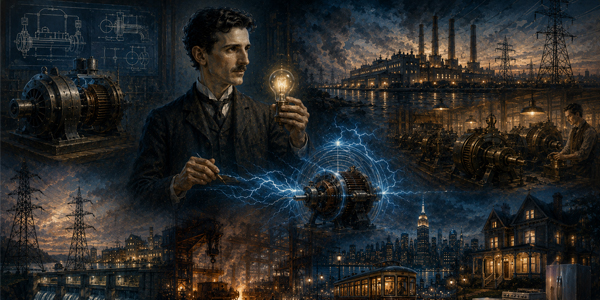
Tesla’s greatest contribution was undoubtedly the development of systems for generating, transmitting, and utilizing alternating current. Today, nearly the entire global electrical infrastructure is based on this principle.
His polyphase induction motor represented a true engineering breakthrough. Instead of relying on complicated mechanical arrangements, it used a rotating magnetic field. This innovation enabled the creation of machines that were more reliable, efficient, and powerful.
Modern industry would be unimaginable without these technologies. Factories, transportation systems, household appliances, and electrical grids all depend on concepts Tesla developed in the nineteenth century.
What makes his achievements even more remarkable is that many of his ideas were completed long before society fully understood their importance. This is one reason why Tesla is often described as a man ahead of his time.
When we look at illuminated cities, massive industrial complexes, and electrified societies today, we are witnessing Tesla’s legacy in action. His victory in the War of the Currents was not merely a scientific success. It was one of the defining events in the creation of modern civilization.
The Tesla Coil and the Dream of Wireless Energy
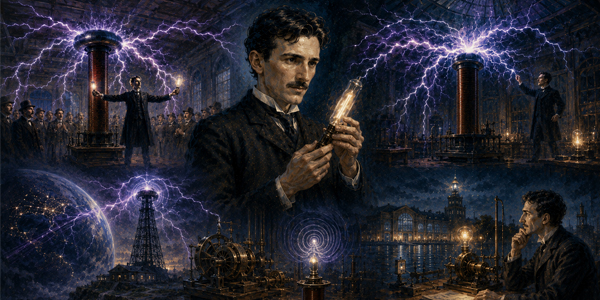
Among Tesla’s most famous inventions is the Tesla coil. This device generates high-frequency electrical discharges and has become one of the most recognizable symbols of his genius.
The Tesla coil made it possible to produce extremely high voltages. Tesla’s demonstrations were so spectacular that many people viewed him almost as a magician. Lightning-like discharges surrounded him, lamps glowed without wires, and audiences watched in amazement.
Yet behind the spectacle lay a serious scientific purpose. Tesla believed that electrical energy could be transmitted wirelessly across great distances. This vision captivated him for decades.
Although he never fully realized this dream, his research laid the groundwork for numerous future technologies. Wireless charging, radio communication, and many modern systems rely on principles connected to his experiments.
Even today, scientists continue to explore more efficient methods of wireless energy transmission. This ongoing research demonstrates just how far ahead Tesla was thinking. His ideas continue to inspire innovation more than a century after they were first conceived.
Contributions to Radio Technology
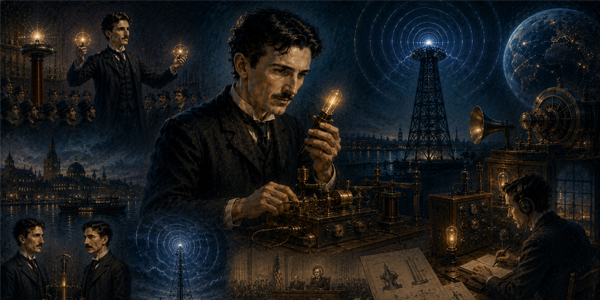
For many years, the invention of radio was primarily associated with Guglielmo Marconi. Historical evidence, however, reveals that Tesla’s contribution was fundamental.
Long before Marconi demonstrated his systems, Tesla had already developed several key technologies necessary for wireless signal transmission. His patents contained essential principles without which radio communication would not have been possible.
In 1943, the Supreme Court of the United States recognized the priority of certain Tesla patents. Although the decision came after his death, it represented an important historical acknowledgment of his work.
His research into radio waves once again demonstrated his ability to connect different scientific disciplines. To Tesla, electricity, magnetism, and communication were all parts of a larger unified picture.
In a sense, every radio, television, mobile phone, and wireless network carries a piece of Nikola Tesla’s legacy.
Tesla and the Prediction of Future Technologies
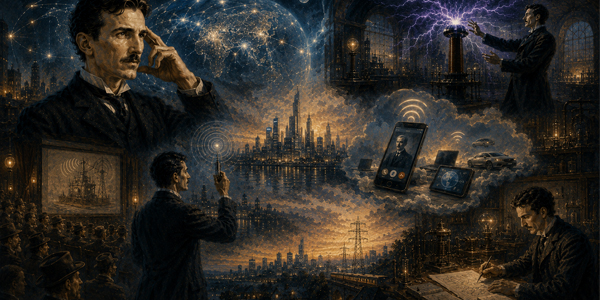
One reason Tesla continues to fascinate people is his remarkable ability to anticipate the future. In interviews and lectures, he described devices that bear a striking resemblance to modern smartphones.
He envisioned a world in which people could communicate instantly regardless of distance. He imagined portable devices capable of transmitting voices, images, and information across the globe.
During his lifetime, such ideas sounded almost unbelievable. Today, they are part of everyday life for billions of people. For this reason, many historians regard Tesla not only as an inventor but also as one of the greatest futurists in history.
His vision of technology was never limited to individual devices. He was deeply interested in how scientific progress would transform society itself. In this respect, his thinking remains astonishingly modern.
Tesla believed that technological advancement should improve life for all people. This conviction remains one of the most inspiring aspects of his legacy.
Wardenclyffe and His Greatest Failure
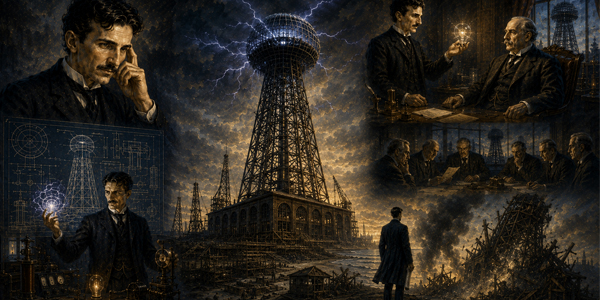
Among all of Tesla’s projects, the Wardenclyffe Tower was perhaps the most ambitious. It was conceived as a global system for wireless communication and energy transmission.
The project initially received financial support from banker J. P. Morgan. At first, everything seemed promising. A massive tower was constructed on Long Island, intended to become the center of a new technological era.
Over time, however, costs increased and investors began losing confidence. When it became clear that Tesla envisioned not only communication but also the free transmission of energy, financial support weakened even further.
The project was never completed. The tower remains a symbol of one of Tesla’s greatest dreams and one of the most painful disappointments of his life.
Many historians view the failure of Wardenclyffe as a clash between idealism and economic reality. Tesla thought in terms of humanity’s collective future, while investors focused on profitability. This conflict defined much of the final chapter of his career.
The Final Years and the Loneliness of a Genius
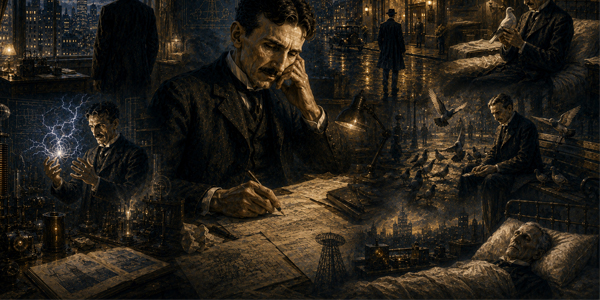
As Tesla grew older, his financial difficulties became increasingly severe. Despite his worldwide fame, he gradually lost influence within scientific and industrial circles.
He spent much of his later life living in hotels and accumulating debt. Although he continued working on new ideas, many remained unrealized due to a lack of funding. The world that had once been captivated by his demonstrations had shifted its attention elsewhere.
Tesla never married or started a family. He believed that scientific work required complete dedication. Nevertheless, he often spoke about his appreciation for beauty, nature, and human kindness.
In his final years, he developed a special affection for pigeons, which he fed daily in New York City. To many, this seemed eccentric. To Tesla, however, these birds represented companionship and peace in an increasingly lonely life.
On January 7, 1943, Nikola Tesla died alone in his hotel room at the age of eighty-six. The world lost one of the greatest minds it had ever known.
Tesla’s Quotes and Philosophy
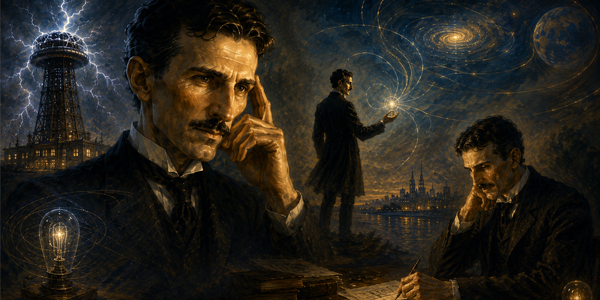
Nikola Tesla left behind not only inventions and patents but also many inspiring reflections. One of his most famous quotes states: “The present is theirs; the future, for which I really worked, is mine.”
These words reveal his deep conviction that many of his ideas would not be understood immediately. History has shown how accurate he was. Decades after his death, society began to appreciate the true scale of his contributions.
Another well-known quote attributed to him is: “If you want to find the secrets of the universe, think in terms of energy, frequency, and vibration.” This statement reflects his desire to understand nature as a unified system in which everything is interconnected.
Tesla frequently emphasized the importance of imagination. He believed that every great discovery begins as an idea in someone’s mind. For him, science was not the opposite of dreaming but its highest expression.
His words continue to inspire scientists, engineers, entrepreneurs, and visionaries around the world. They reveal a man who sought not merely to study reality but to look beyond its boundaries.
What Great Scientists Thought About Nikola Tesla
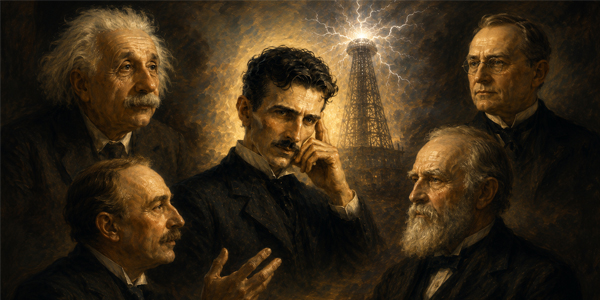
Over the years, many scientists and intellectuals expressed admiration for Tesla. Among them was Albert Einstein, who is often associated with the famous remark, “I don’t know, ask Nikola Tesla,” when supposedly asked what it felt like to be the smartest man in the world. Although the authenticity of this quote remains debated, its popularity reflects the immense respect people have for Tesla’s intellect.
Robert Underwood Johnson described Tesla as a man with an almost supernatural mind. He frequently highlighted Tesla’s ability to visualize complex machines without the need for drawings or blueprints.
Lord Kelvin also held Tesla’s work in high regard, particularly his contributions to electrical systems. Recognition from scientists of such stature is especially meaningful because it came from individuals who fully understood the complexity of his achievements.
Many modern engineers consider Tesla one of the most influential figures in technological history. The reason lies not only in the number of patents he held but also in the fact that many of them laid the foundations for entire industries.
Today, Tesla’s name has become synonymous with innovation, creativity, bold thinking, and the courage to challenge conventional limits.
Why Nikola Tesla Remains Immortal
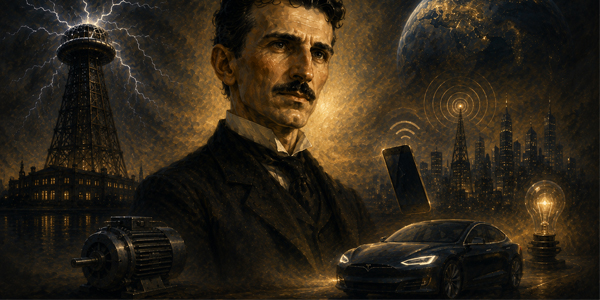
Few scientists have left such a broad and enduring legacy. Some transform a single field of knowledge. Tesla transformed many. From electrical engineering and radio communication to electric motors and futuristic concepts of global connectivity, his influence surrounds us everywhere.
What makes his story so compelling is the combination of extraordinary success and profound human tragedy. He reached heights that most people can only dream of, yet he also endured disappointment, loneliness, and financial hardship.
Despite everything, he never lost faith in science. Until his final days, he continued to work, dream, and search for new solutions. This unwavering dedication has made his life a source of inspiration for generations of researchers and innovators.
Today, Nikola Tesla is more than a historical figure. He is a symbol of human potential. He represents the ability to look beyond the horizon and create a future that does not yet exist.
Conclusion
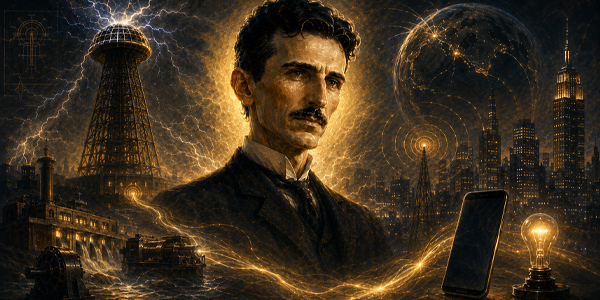
Nikola Tesla was one of those rare individuals who altered the course of history. His discoveries form the foundation of the modern electrical world, and his ideas continue to inspire technological progress today. He demonstrated that true advancement begins with imagination, courage, and the willingness to challenge accepted truths.
His life was marked by both magnificent victories and painful defeats. Yet this combination is precisely what makes him so human and so relatable. Tesla reminds us that genius does not guarantee an easy life, but it can become a force capable of transforming the world forever.
When we look at modern civilization, we see traces of his work everywhere – in electrical grids, communication systems, motors, and the very concept of a globally connected world. Although he left this world more than eighty years ago, his spirit lives on in every spark of electricity that lights the darkness.
Nikola Tesla did more than create technologies. He demonstrated what the human mind can achieve when it refuses to accept the limits of what is considered possible. That is why his name will forever remain among the greatest names in the history of humanity.
Read morе:
- The Genius of Albert Einstein: Understanding the Special Theory of Relativity
- Einstein’s General Theory of Relativity: How Gravity Shapes Space, Time, and the Universe
- Quantum Field Theory – Does Anything Truly Exist?
- The Big Bang and the Different Theories About the End of the Universe
Author: Vasil Stoyanov