
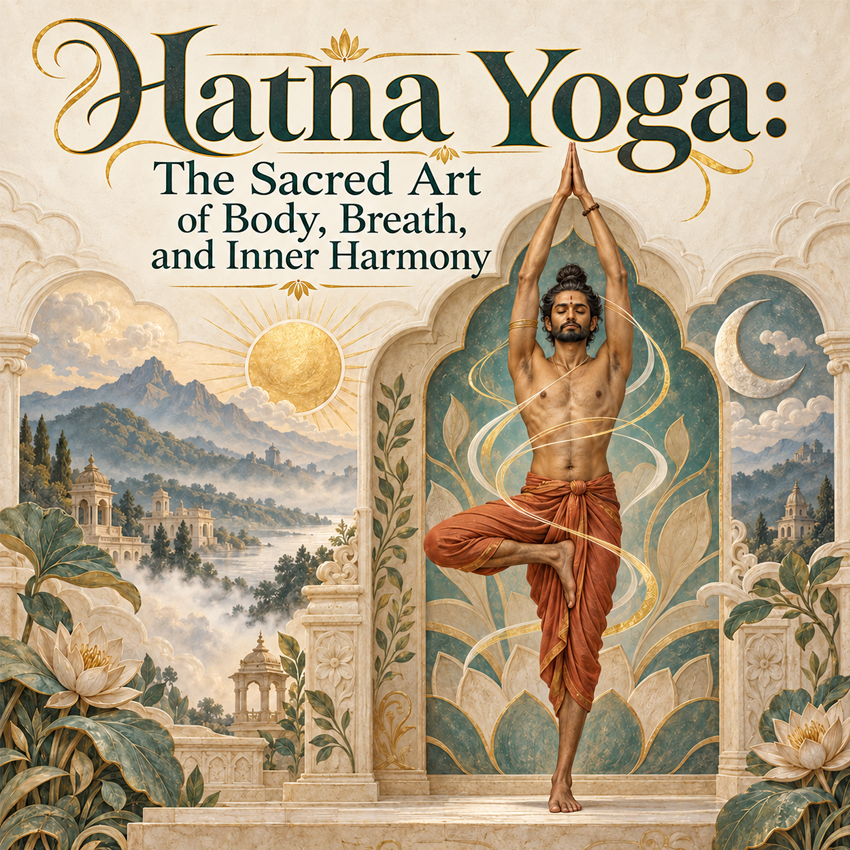
There are spiritual traditions that seek to transcend the body, and others that discover within it a doorway to the deepest dimensions of human existence. Hatha Yoga belongs to the latter. It is an art of presence in which movement acquires meaning, breath becomes an object of attentive exploration, and stillness reveals a power of its own. Its beauty does not reside in spectacular flexibility but in its extraordinary respect for the human being as a whole.
For centuries, practitioners in India developed methods of working with posture, breathing, the senses, and concentration. They created a discipline in which the body was not merely a vessel for spiritual life. It became a place of training, observation, and transformation. Historical Hatha Yoga is richer and more complex than today’s familiar image of gentle exercise. Its texts describe ascetic ideals, meditative aims, and particular understandings of vital processes. Contemporary practice inherits part of this wealth and develops it in new forms.
This article is a tribute to Hatha Yoga as a great human achievement. It explores its history and philosophy and presents selected asanas through golden illustrations woven naturally into the narrative. The illustrations are schematic, intended for orientation and aesthetic appreciation rather than as substitutes for instruction from a qualified teacher.
What Does Hatha Yoga Really Mean?
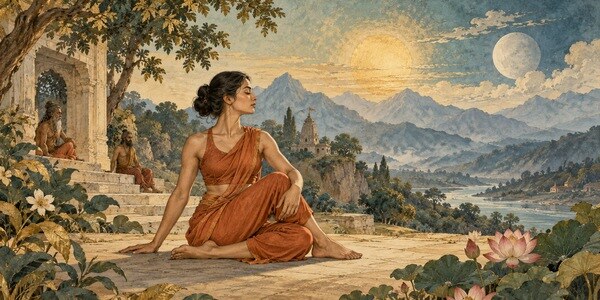
The word hatha has a history that cannot be reduced to the popular explanation of joining the sun and the moon. In Sanskrit, it is associated with force, effort, and persistence. In certain later traditional interpretations, the syllables ha and tha are symbolically associated with the sun and moon. This is a compelling image of balance, but it is not a universal historical etymology.
Hatha Yoga refers to a family of practices that developed in medieval India and were associated with different religious and ascetic communities. These included traditions linked to the Nath yogis and settings influenced by Tantra. Their principal techniques encompassed bodily postures, regulation of breathing, specific bodily gestures and locks, and cleansing procedures. In historical sources, these methods served aims far more ambitious than physical fitness.
The magnificence of Hatha Yoga lies in its practical determination. It does not remain content with abstract reflections on peace. It places a concrete task before the practitioner: assume a posture, observe the breath, encounter impatience, and cultivate steadiness without harshness. It is a philosophy studied not only through intellect but through the full attention of a living body.
Historical Roots: From Ascetic Discipline to the Great Texts
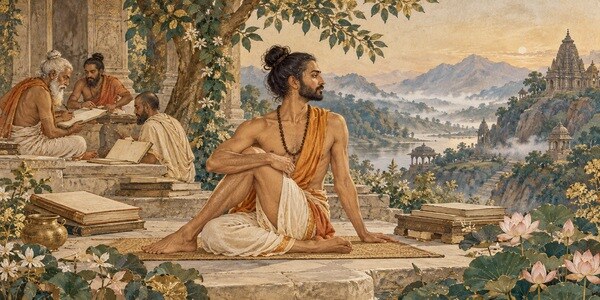
The history of Hatha Yoga took shape over centuries. Early evidence for particular techniques appears in medieval Sanskrit works, while later compositions systematized and expanded them. The Hatha Yoga Pradipika, compiled in the fifteenth century and associated with Svatmarama, is among the most influential texts. It presents asanas, pranayama, mudras, and meditative goals within an integrated spiritual discipline.
Other significant works include the Shiva Samhita and the Gheranda Samhita. They are not identical in either their content or the organization of their practices. These differences show that Hatha Yoga was never a single, unchanging textbook. Its history is one of exchange, reinterpretation, and development. Different communities employed shared concepts while assigning them their own emphases and meanings.
In these works, physical practice is closely related to the idea of spiritual liberation. The body is described through a particular traditional physiology, including concepts such as prana, nadis, and other features of the subtle body. These belong to historical spiritual systems; they are not anatomical structures established by contemporary medicine. Understanding them in their own context means taking the sources seriously without presenting them as modern scientific discoveries.
What is especially impressive is the way Hatha Yoga transforms the attitude toward embodiment. Where some ascetic perspectives view the body primarily as a limitation, Hatha traditions develop ways for it to participate in the path toward contemplation. Not as an object of vanity, but as a field of concentrated effort. This is one of the boldest ideas in the history of spiritual practice.
The Body Is Not an Enemy: The Dignity of Embodied Consciousness
Modern people often experience their bodies as projects that must constantly be improved. The body is expected to look a certain way, perform more tasks, and conceal fatigue. Hatha Yoga offers a different perspective. The body is not a display arranged for the approval of others. It is the immediate place in which life unfolds, and therefore deserves attention, patience, and care.
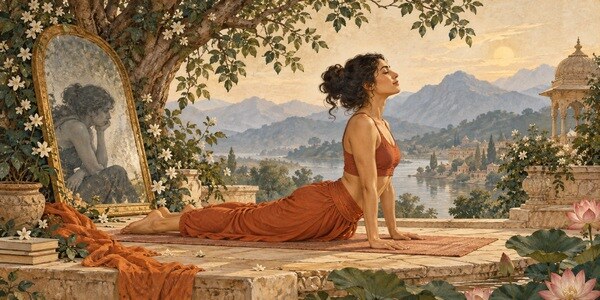
In an asana, the practitioner encounters not only muscles and joints but also the habits of the mind. The desire to achieve everything immediately, fear of appearing incapable, comparison with others, and irritation at limitations all become visible. An ordinary posture becomes a mirror. It reveals the way a person responds to difficulty.
This is why good practice does not require violence toward the body. Consistency and attention matter more than display. A posture performed within a comfortable range, accompanied by steady breathing, can be more valuable than a complicated shape achieved through pain. The spirit of Hatha Yoga reveals itself in conscious effort, not reckless attempts to overcome every boundary.
Tadasana: The Grandeur of Simply Standing
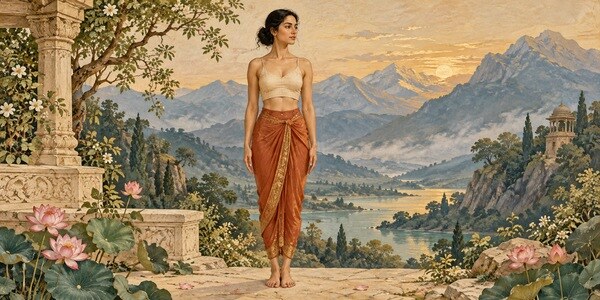
Tadasana, Mountain Pose, looks almost too simple to be considered a practice. A person stands upright. The feet are stable, the knees remain free of excessive locking, the spine lengthens naturally, and the shoulders relax. Yet this simplicity reveals one of yoga’s most valuable lessons: presence does not depend on the complexity of movement.
To practice, stand with your feet hip-width apart, or closer together if comfortable. Distribute your weight evenly, relax the shoulders, and direct your gaze forward. Do not force the chest outward or hold the breath. Remain for several easy breaths, noticing your contact with the ground and the body’s natural alignment.
Tadasana is a particularly beautiful symbol of inner dignity. A mountain does not strive to impress the sky. It simply stands. In the same way, this posture teaches that steadiness is not rigidity but the ability to be present without unnecessary tension. In contemporary systems of postural yoga, it provides a foundation for many standing asanas; its exact form and teaching role belong to the evolution of modern practice.
Vrikshasana: The Lesson of the Tree
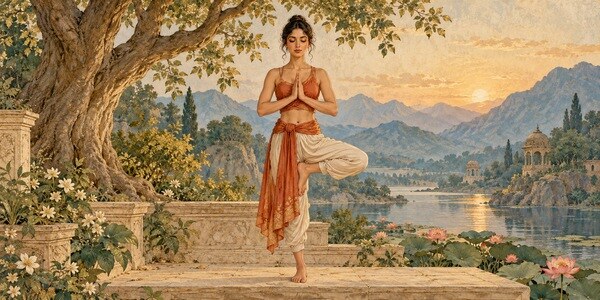
A tree is one of nature’s most beautiful images of balance. Its roots remain in the earth while its branches reach toward the light. Vrikshasana, Tree Pose, transforms that image into an exercise in attention. Standing on one leg requires continuous small adjustments, not perfectly motionless achievement. Balance reveals itself as a living process.
Begin in a stable standing position. Shift your weight onto one leg, keeping its knee softly unlocked. Place the other foot against the inside of the ankle or calf; if comfortable, position it higher against the inner thigh, but never directly against the knee joint. Bring your palms together in front of the chest or raise your arms if your balance permits. Rest your gaze on a fixed point and breathe naturally.
For beginners, support from a wall is a sensible choice. There is no need to hold the posture for a long time. A few easy breathing cycles are sufficient before changing sides. If you lose your balance, return to the starting position without irritation. That return is itself part of the exercise.
Vrikshasana teaches that balance is not the absence of movement but the capacity for continual adjustment. The less we struggle against natural fluctuations, the more clearly we understand them. This modest practice contains remarkable philosophical depth: stability and flexibility are not opposites but mutually necessary qualities.
Baddha Konasana: Openness Without Force
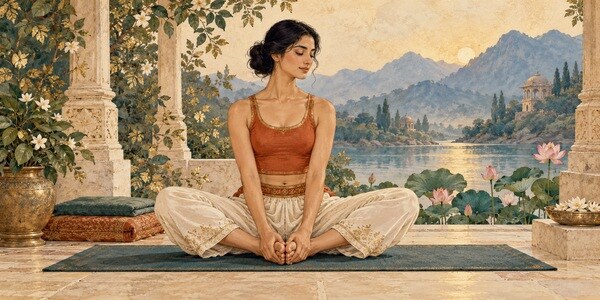
Baddha Konasana, known as Butterfly Pose or Bound Angle Pose, is a seated asana in which the soles of the feet meet and the knees relax outward. Its shape recalls open wings, but its true value does not depend on how close the knees come to the floor. It is an exercise in attentive care for the hip joints and in accepting the natural differences among human bodies.
Sit on a mat, placing a folded blanket beneath your pelvis if needed. Bring the soles of your feet together and allow your knees to move outward. Keep the spine naturally lengthened without forcing the lower back into an exaggerated arch. If the hips are sensitive, support the thighs with cushions or yoga blocks. Do not press the knees toward the floor with your hands.
Remain briefly and notice where tension arises. The distinction between a mild stretch and pain matters; pain is a signal to reduce the range or stop. Hip or knee problems call for individual assessment. This asana is not a competition in openness.
Its symbolic message is beautiful: genuine openness cannot be forced. The body does not flourish when compelled to imitate someone else’s shape. It responds to patience, repetition, and respect for its own structure. This wisdom reaches far beyond the mat.
Bhujangasana: The Awakening of the Cobra
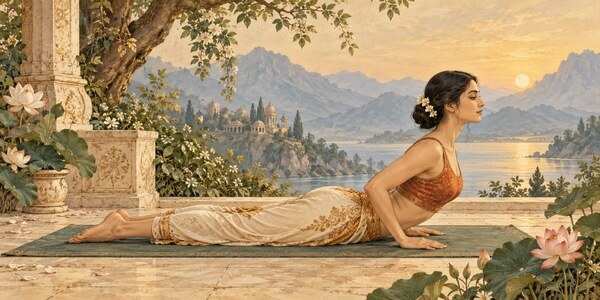
Bhujangasana, Cobra Pose, is among the most recognizable asanas in contemporary practice. From a position lying on the stomach, the upper body rises through attentive work of the back and support from the arms. The movement creates a sense of lifting and opening across the front of the body. Its name evokes a cobra raising its head, but the practice does not demand an extreme spinal backbend.
Lie on your stomach with your legs extending behind you and your palms near the lower ribs. As you inhale, gently raise the head and chest, using the back muscles moderately rather than pushing the body high with the hands. Keep the elbows near the torso, the shoulders away from the ears, and the pelvis on the mat. Look forward and slightly downward without excessively bending the neck.
A low variation is entirely sufficient. Stop if you feel compression or pain in the lower back. With certain spinal conditions, recent surgery, or pregnancy, this posture can be unsuitable and requires individualized guidance. The quality of movement matters more than the height of the lift.
There is something majestic in the image of the cobra. It does not rise through a chaotic thrust but through gradual unfolding. In the same way, Hatha Yoga cultivates strength that never abandons attention. The practice teaches that confidence can be quiet and awakening gradual.
Shavasana: The Art of Doing Nothing Unnecessary
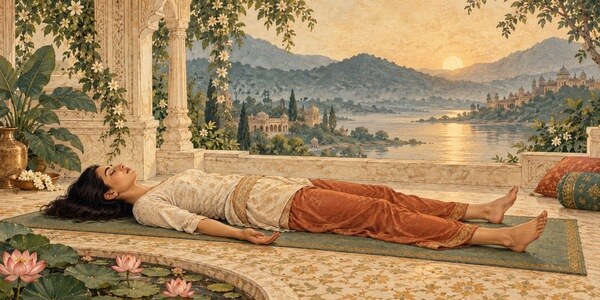
Shavasana, the resting posture performed lying down, often concludes contemporary yoga sessions. At first glance it seems the easiest of all: a person lies on the back and relaxes. Yet for a mind accustomed to endlessly producing tasks, this rest can be surprisingly difficult. It asks us to stop proving, achieving, and controlling every sensation.
Lie comfortably on your back, allowing the arms to rest slightly away from the torso and the palms to relax. Let the legs settle at a comfortable distance apart. If the lower back feels strained, place a cushion beneath the knees; if lying on the back is unsuitable, choose a comfortable side-lying position. Close your eyes only if doing so feels peaceful. Allow breathing to proceed naturally and gradually release unnecessary muscular effort.
Shavasana is not a test of your ability to empty the mind. Thoughts can continue to appear. The practice is not to turn each one into another task. A few minutes of conscious rest can create a clear conclusion to physical practice and help the transition back into daily activities.
This posture reveals one of yoga’s most beautiful contrasts: effort is followed by release, movement by stillness. Neither is less worthy than the other. We learn not only how to act but how to stop unnecessary action. It is a skill that the modern world needs profoundly.
Pranayama: Breath as an Object of Contemplation
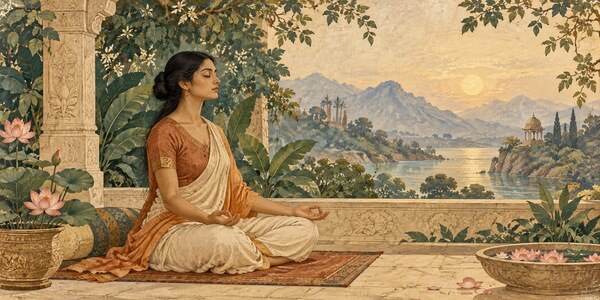
If asanas are the visible language of Hatha Yoga, breath is its quiet rhythm. In traditional texts, pranayama encompasses different techniques of breathing regulation, sometimes involving retention and complex ratios between breathing phases. These methods belong to spiritual conceptions of prana and the relationship between breath and consciousness. Traditional prana should not automatically be equated with oxygen or with a measurable physical energy.
For beginners, the most accessible practice is simply calm observation. Sit comfortably, supporting the back if necessary. Feel the natural inhalation and exhalation without forcing them to become longer. Notice the movement of the chest and abdomen, along with any pauses that occur spontaneously. When attention wanders, return to breathing without irritation.
This modest practice possesses a profound beauty. Breath does not require us to manufacture a special state. It reminds us that life is already taking place. Its rhythm connects action and rest, effort and release. Attentive observation transforms something ordinary into a source of wonder.
Intensive breathing exercises, prolonged retention, and forceful techniques are unsuitable for unsupervised experimentation. Cardiovascular, pulmonary, or other health conditions require professional guidance. Genuine respect for Hatha Yoga includes respect for the practitioner’s safety.
Mudras, Bandhas, and the Language of Traditional Physiology
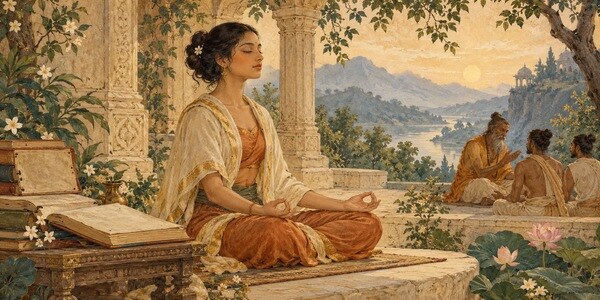
Historical Hatha Yoga is not limited to asanas and gentle breathing. Its texts describe mudras and bandhas: specific techniques involving bodily positions, muscular actions, and work with breath. Traditional explanations connect them with ideas of vital currents, internal channels, and spiritual transformation. Different works do not organize these practices in exactly the same way.
In popular modern presentations, these concepts are often transformed into promises of instantly unlocking hidden energy. Such language does not contribute to serious understanding. Mudras and bandhas belong to specific historical practices, some of which are intensive and require competent supervision. Their spiritual significance should be studied through the sources, while physiological claims must be evaluated according to scientific evidence.
The beauty of Hatha Yoga needs no sensational explanation. It is impressive enough that people spent centuries investigating the relationship between posture, breath, attention, and experience with such dedication. This heritage deserves deep study, not hurried conversion into a mystical advertising slogan.
Modern Hatha Yoga: Continuity and Transformation
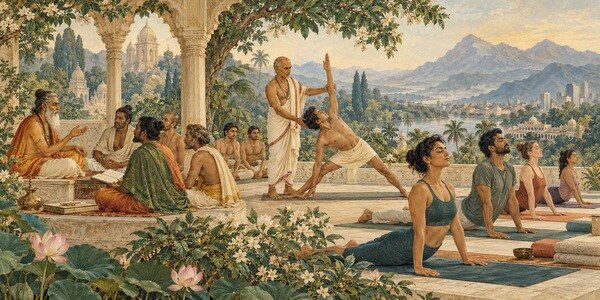
The Hatha Yoga encountered in today’s studios is the result of a long history of change. During the nineteenth and twentieth centuries, Indian yogic traditions interacted with new educational models, physical culture, and international movements. Teachers such as Tirumalai Krishnamacharya and his students contributed to the development of influential forms of postural yoga. Contemporary classes frequently combine asanas, breath awareness, and relaxation in ways that do not entirely match the structures of medieval texts.
This distinction matters because historical truth is not the enemy of admiration. The tradition is alive precisely because it has developed. Modern methods can be valuable and inspiring without being described as unchanged since antiquity. Medieval sources can be studied respectfully without mechanically transferring every technique into contemporary life.
Especially valuable is the opportunity to reconnect physical practice with yoga’s wider questions. How do we respond to our own limitations? Can we cultivate persistence without cruelty toward ourselves? What happens to attention when we stop comparing ourselves with others? Such questions transform a session from a sequence of movements into a discipline of presence.
A Short, Attentive Sequence for Beginners
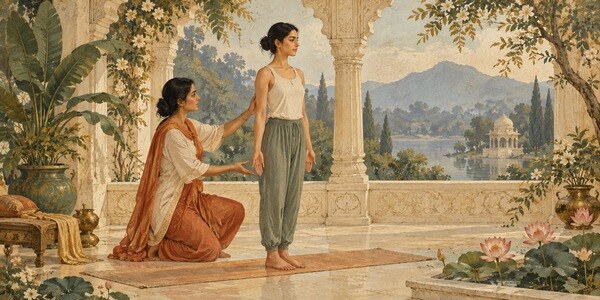
The asanas presented here can be linked into a brief modern practice that moves gradually from standing to sitting and rest. Begin with several calm breathing cycles in Tadasana. Feel the support beneath your feet and allow the shoulders to relax. Continue with Vrikshasana, balancing briefly on each leg and using a wall if needed.
Sit comfortably for Baddha Konasana, without pressing the knees or pursuing a wide range of movement. If your body permits and no contraindications apply, move into a gentle, low Bhujangasana without forcing the lower back. Finish with Shavasana or another comfortable resting position. Allow time between exercises to change position and observe the breath.
This sequence is not an ancient ritual and does not claim to represent the complete historical system of Hatha Yoga. It is a contemporary, accessible introduction to several fundamental principles: steadiness, balance, openness, attentive effort, and release. Duration should be determined by individual comfort rather than by the need to achieve a particular result.
With injuries, pain, pregnancy, balance problems, or chronic illness, it is sensible to adapt the practice with the help of a qualified professional. Do not continue any movement that causes pain, dizziness, or difficulty breathing. Yoga is not a medical treatment and does not replace professional care. Attention to these boundaries is part of mature practice, not a retreat from its ideals.
The Greatest Beauty of Hatha Yoga Is Inner Freedom
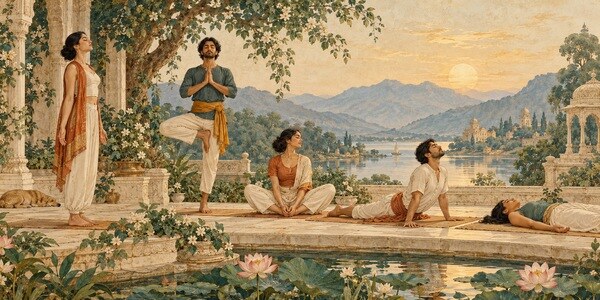
After exploring the history, philosophy, and several asanas, the essence of Hatha Yoga comes into view. Its power is not measured by the height of a backbend, the length of a balance, or the complexity of a posture. It reveals itself in the quality of attention: the ability to remain steady without becoming rigid, to be open without forcing ourselves, and to make an effort without turning effort into an end in itself.
In Tadasana we see the dignity of simple presence. In Vrikshasana we discover balance as continual return. In Baddha Konasana we learn openness without force. In Bhujangasana we experience gradual rising, while in Shavasana we understand that rest, too, requires an art. These images are contemporary teaching interpretations of the asanas, but their human significance is immediate.
Hatha Yoga deserves admiration because it transformed ordinary human actions-standing, sitting, breathing, moving, and resting-into occasions for profound exploration. It reminds us that spiritual searching does not have to be an escape from the body or everyday life. It can begin exactly where we are, with one conscious breath and one attentive movement.
The most precious gift of this tradition is not a promise of perfection but an invitation to wholeness. No one needs to be an exceptional athlete to discover meaning in yoga. It is enough to approach practice with respect, consistency, and a willingness to listen. Then the body ceases to be an object of constant judgment and becomes an ally of consciousness. And the simplest movement can become a quiet testimony to the beauty of human life.
Author: Vasil Stoyanov