
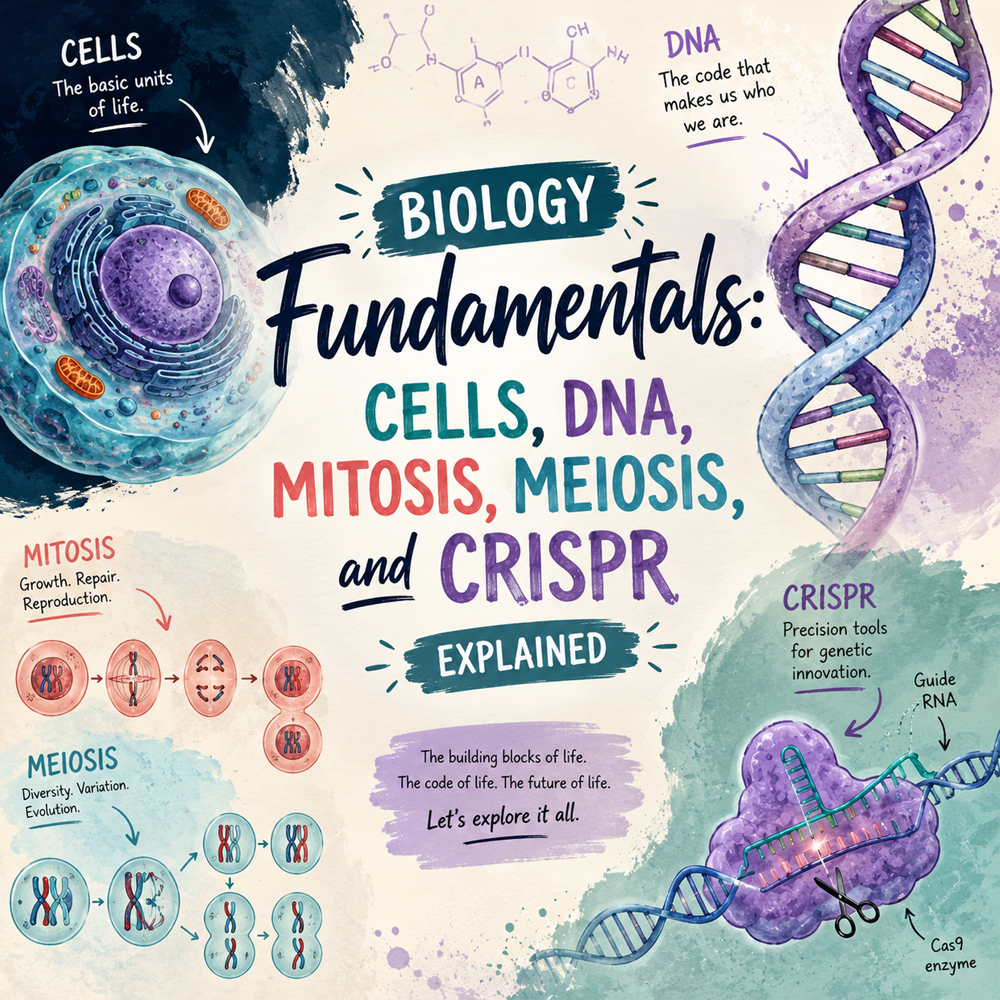
Biology is the science of life in the universe we inhabit. It reveals the beauty of the vast diversity of living organisms and the harmony that exists among them. It shows us how, on a deeper level, all organisms participate in a great cycle of life, and how every living being depends, directly or indirectly, on every other.
A deeper study of biology can lead a person to see themselves as an extraordinarily complex being. This awakening of understanding about the human body reveals the other side of the cosmic perspective – the notion that a human being is “just a grain of sand” in the vastness of the universe.
While this may be objectively true, each human being is also an entire universe in their own right, no less complex, within which remarkable processes unfold among the trillions of cells that make up the body. In this sense, biology can become a key to understanding our place in the cycle of life, appreciating the importance of every organism, recognizing the intelligence inherent within ourselves, and cultivating the perspective that all living beings exist as part of one indivisible whole.
Chemistry – The Foundation of Biology
Biology is fundamentally based on chemical elements, as the interactions between them give rise to both organic and inorganic matter, as well as all the processes and functions that biology seeks to understand.
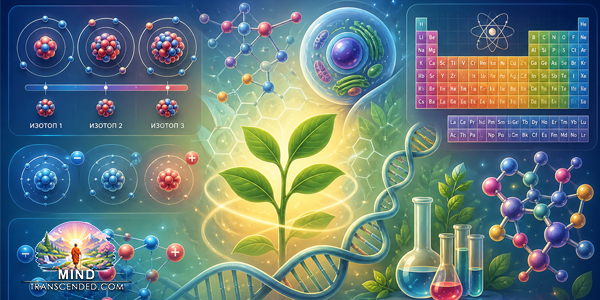
Chemical elements are different types of atoms. Atoms can vary in the number of neutrons they contain, forming isotopes, or in the number of electrons they possess, forming ions.
Isotopes are atoms whose nuclei contain the same number of protons but different numbers of neutrons. Since each chemical element is defined by its number of protons, changing the number of neutrons does not alter the element itself – it simply creates a different isotope of that element.
Different elements have a specific and unique number of protons in their nuclei. When the number of neutrons differs from the number of protons, the atom is referred to as an isotope of that element.
Ions are atoms that contain either more or fewer electrons than protons. They can carry either a positive or a negative electrical charge. If the number of electrons exceeds the number of protons, the atom becomes negatively charged because the negatively charged particles outweigh the positively charged ones. Conversely, if there are fewer electrons than protons, the atom becomes positively charged.
This is how ions interact and form chemical bonds: negatively charged ions are attracted to positively charged ions.
Protons carry a positive electrical charge, while electrons carry a negative charge. Neutral atoms contain equal numbers of protons and electrons, causing their charges to balance one another. Neutrons, as their name suggests, have no electrical charge and are therefore electrically neutral.
The elements found in the periodic table are different types of atoms that make up all matter around us. The greater the number of protons and neutrons within an atom, the greater its atomic mass. Each element in the periodic table is assigned an atomic number, which corresponds to the number of protons in its nucleus.
Different elements can combine to form molecules and compounds. The difference between a molecule and a compound is that a molecule consists of two or more atoms that may belong to the same element or to different elements. Compounds, on the other hand, are molecules composed of atoms from two or more different chemical elements.
The Smallest Organism
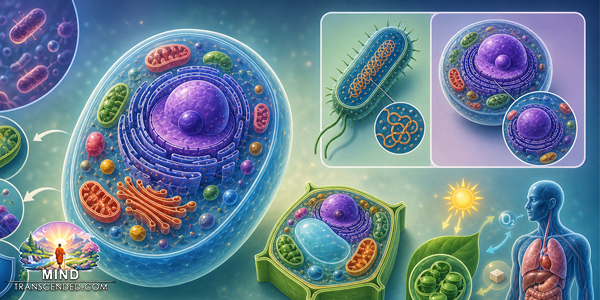
The cell is considered the smallest unit of life. Although there are particles far smaller than a cell, it is regarded as the smallest living entity because it can independently perform the functions necessary to sustain its own existence. These functions include:
- Converting nutrients into usable energy
- Removing waste products and toxins
- Defending itself against viruses and other threats
- Carrying out many other processes essential to life
There are two main types of cells: prokaryotic cells and eukaryotic cells. The primary difference between them is that in prokaryotic cells, such as bacteria, the genetic material contained within DNA is not enclosed within a nucleus separate from the cytoplasm. Instead, it is located directly within the cell’s cytoplasm. Another key distinction is that prokaryotic cells lack membrane-bound organelles, such as a nucleus and mitochondria.
Just as the human body contains organs that perform specific functions necessary for survival, cells contain specialized structures known as organelles. These organelles carry out the essential tasks required to maintain cellular life. For example, mitochondria, found in human and other animal cells, convert energy stored in nutrients into a usable form that powers cellular activities. Plant cells contain chloroplasts, organelles that capture energy from sunlight and use it to produce organic compounds through photosynthesis.
In this way, organelles serve as the cell’s internal machinery, enabling it to perform the countless processes required for life.
Cell Division
Cells can divide in two primary ways: mitosis and meiosis.
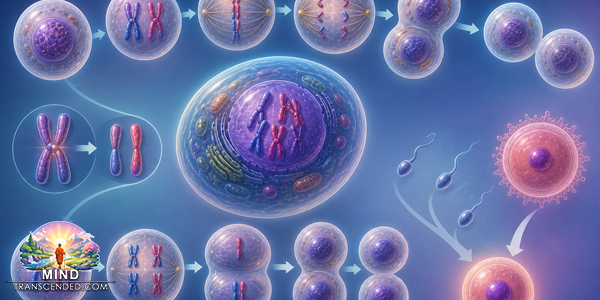
Before cell division begins, the genetic material contained within DNA is organized into a more compact form known as chromosomes. In humans, this genetic material is distributed across 46 chromosomes. You can think of the genetic material as a library, while the chromosomes are the books within it, each containing information about different characteristics of the organism.
After DNA replication occurs prior to cell division, each chromosome consists of two identical structures called sister chromatids. Each chromatid contains the same genetic information. During cell division, these chromatids separate, ensuring that each newly formed cell receives a complete set of genetic material.
At a later stage of division, the sister chromatids are pulled apart and each becomes an individual chromosome. As a result, every newly formed human cell receives 46 chromosomes – a complete copy of the genetic information.
This process is known as mitosis, a form of cell division that produces an identical copy of the original cell. Mitosis is essential for the maintenance and survival of multicellular organisms. For example, if your cells were unable to create identical copies of themselves, a wound on your skin could not heal through the formation of new cells to replace damaged tissue.
The second major form of cell division is called meiosis. In this process, cells are produced with only half the normal number of chromosomes. In humans, this means that the resulting cells contain 23 chromosomes rather than 46. These specialized reproductive cells are known as gametes.
Each biological sex produces a single type of gamete. In males, the gametes are sperm cells, while in females they are egg cells (ova). When a sperm cell and an egg cell unite during fertilization, each contributes half of the genetic material required to create a complete human genome. Together, they form a cell containing the full set of 46 chromosomes.
This newly formed cell is called a zygote – the very first cell from which every human being begins their development.
DNA
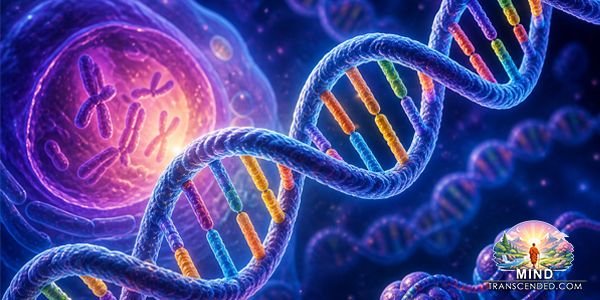
The genetic material contained within the DNA double helix is encoded through the arrangement of four nucleotides.
Each nucleotide contains a nitrogenous base. These four bases are adenine, thymine, guanine, and cytosine, commonly represented by the letters A, T, G, and C.
DNA consists of two strands twisted around one another to form the well-known double helix structure. Along each strand are the nucleotides, which pair with complementary nucleotides on the opposite strand according to specific rules. Guanine (G) always pairs with cytosine (C), while adenine (A) always pairs with thymine (T).
These precise pairing rules allow DNA to store, replicate, and transmit genetic information with remarkable accuracy, forming the molecular foundation of heredity and life itself.
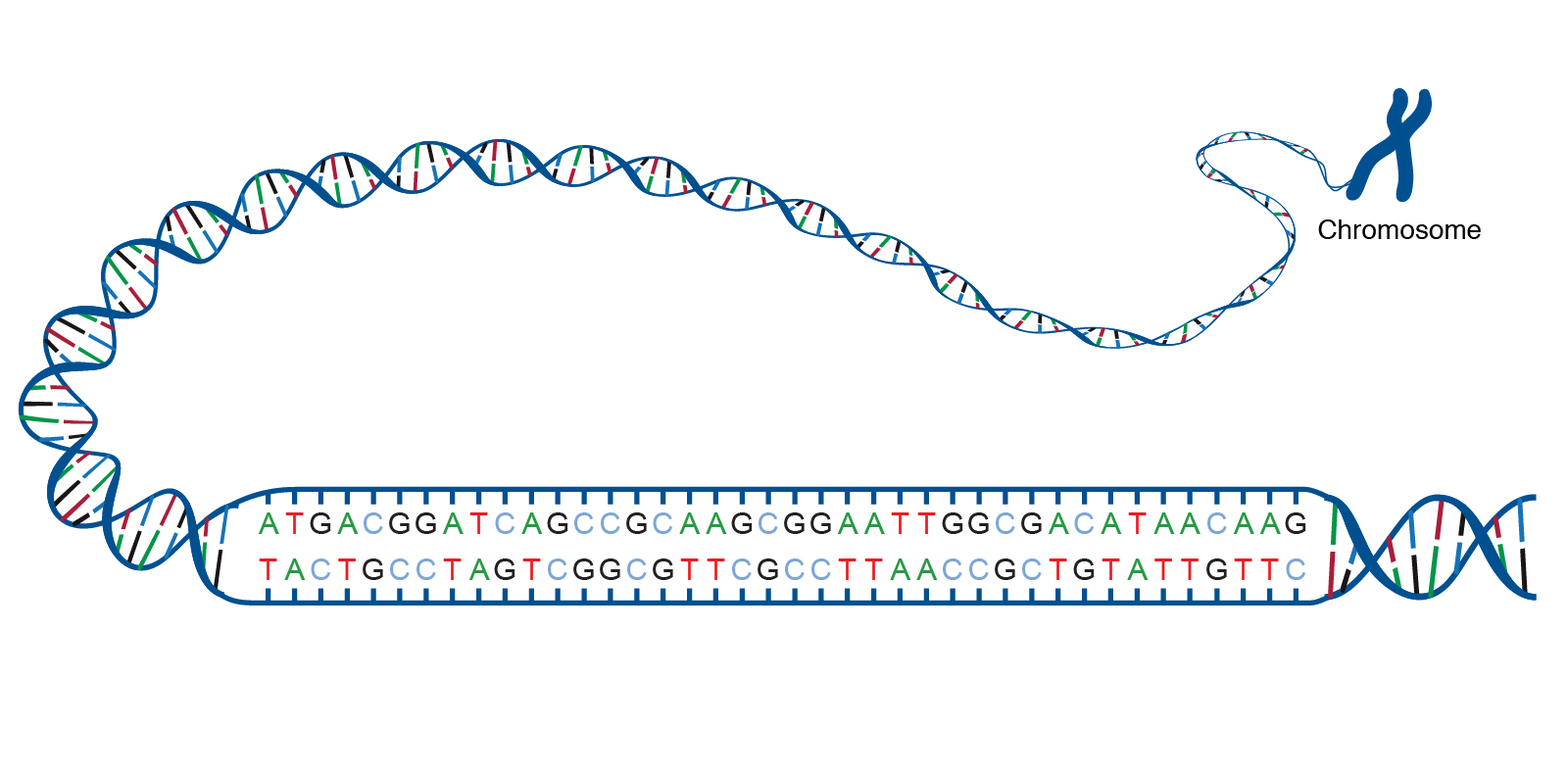
The sequence of nucleotides contains the instructions required to build every part of your body and to regulate the countless functions performed by your cells.
Different combinations of nucleotides in specific regions of DNA influence many of your physical characteristics, including your height, eye color, hair color, skin pigmentation, and even your predisposition to certain diseases.
In short, this genetic sequence contains the blueprint that makes you who you are.
CRISPR
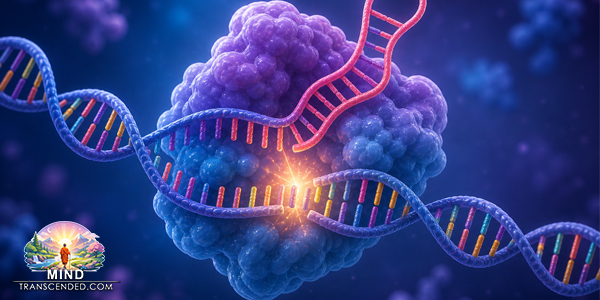
Some bacteria have evolved mechanisms that allow them to defend themselves against viral invaders. When certain bacteria survive a viral infection, they retain small fragments of the virus’s genetic sequence within their own DNA.
As a result, bacterial DNA contains a genetic archive of viruses the bacterium has previously encountered. This archive is known as CRISPR.
When the bacterium is attacked again by a virus, it uses this archive to produce an RNA molecule carrying a genetic sequence that matches the invading virus. This RNA molecule is then associated with a protein called Cas9 and serves as a guide.
Cas9 uses the guide RNA to compare the stored genetic sequence with the genetic material of the invading virus. If a matching sequence is found, the protein cuts the viral genetic material, helping the bacterium neutralize the infection.
Scientists later discovered that Cas9 does not inherently care what genetic sequence the guide RNA contains. This means that researchers can design guide RNA molecules to target virtually any desired DNA sequence.
As a result, it became possible to introduce a guide RNA designed to recognize a mutation responsible for a genetic disease, together with the Cas9 protein.
The Cas9 protein then searches the cell’s DNA for a matching sequence. Once it finds the target, it cuts the DNA at that specific location.
When a cell detects damage to its DNA, it attempts to repair it. If a DNA template containing a corrected version of the sequence is also present, the cell can use that template to repair the damaged region and replace the faulty genetic information.
In principle, this approach can eliminate disease-causing mutations, making CRISPR-Cas9 one of the most significant breakthroughs in modern biology and genetic engineering.
To modify a specific sequence within the human genome, researchers generally require three key components: the Cas9 protein, a guide RNA that directs Cas9 to the target sequence, and a DNA template containing the desired genetic sequence to be inserted during repair.
This technology has opened the possibility of editing virtually any region of the human genome. Potential applications include the treatment of genetic disorders, the correction of inherited mutations, new approaches to cancer therapy, treatments for infectious diseases, and potentially even interventions related to aging and longevity.
However, many of these possibilities remain the subject of ongoing scientific research and are accompanied by significant technical challenges, safety considerations, and ethical questions that continue to be actively debated.
Read More:
- Why the Brain Searches for Meaning in Everything – The Scientific Explanation
- How Social Media Changes the Brain: Dopamine, Attention, and the Collapse of the Inner World
- How Consciousness Emerged: Why Humans Developed It and What It Means
- Inside the Human Connectome Project: Revealing the Brain’s Hidden Connections
- Free Will or Determinism: Do We Have Real Choice According to Physics and Neuroscience?
Author: Vasil Stoyanov