
A state can possess fertile lands, a vast army, and ancient traditions, yet still collapse under the weight of its internal contradictions. When rules are applied according to a ruler’s personal sympathies, when powerful families receive exemptions, and when officials conceal their failures, the law gradually loses its force. For the Chinese philosopher Han Fei, this was not merely a moral failing. It was a direct road to political disaster.
Han Fei ranks among the sharpest and most uncompromising thinkers of ancient China. His philosophy does not promise that virtue alone will transform society. It examines power as a system of interests, incentives, institutions, and control. Instead of asking what the perfect human being should be like, Han Fei concentrates on a far more uncomfortable question: how should a state be governed when it is populated by ordinary people pursuing their own goals?
His answer is associated with Chinese Legalism, a tradition that places clear standards, predictable rewards and punishments, administrative competence, and the ruler’s strong position at the center of government. This teaching combines remarkable political insight with dangerous possibilities for abuse. It reveals why institutions cannot depend on good intentions alone, but also why order deprived of moral limits can easily become an instrument of fear.
China Before Unification: A World Where Weak States Could Not Survive
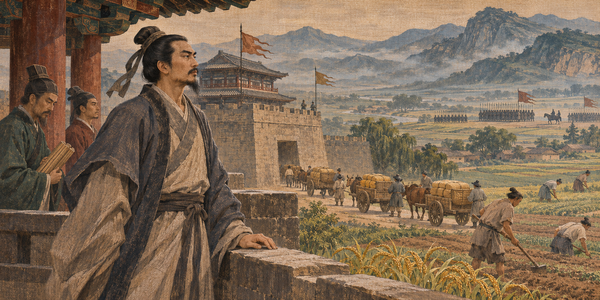
Han Fei lived in the third century BCE, during the final phase of the Warring States period. China’s political landscape was divided among rival states that fought prolonged wars, built enormous armies, and continually refined the administration of their territories. Under these circumstances, the organization of the state became a matter of importance far beyond philosophical debate.
Agricultural revenues determined how many soldiers could be supported. Reliable administration decided whether orders reached the provinces. The selection of capable officials affected supply systems, construction, and defense. A state governed through family favors and court intrigue lost its advantage over its neighbors, even when it possessed greater natural wealth.
Han Fei belonged to the ruling lineage of the state of Han, one of the weaker kingdoms in this fiercely competitive political world. According to traditional accounts, he studied under the philosopher Xunzi, who developed a Confucian theory of human nature, education, and the need for deliberately established social norms. Another figure associated with this intellectual environment was Li Si, who would become an influential minister of the state of Qin.
Han Fei understood the problems of government as more than abstract subjects. His writings repeatedly feature corrupt advisers, incompetent officials, hypocritical courtiers, and rulers unable to distinguish genuine achievement from flattery. Behind these portraits lies the conviction that a political system must be designed so that personal weaknesses do not destroy public order.
His own fate was tragic. His ideas attracted the attention of the ruler of Qin, but his stay in that state ended in accusations, imprisonment, and death in 233 BCE. The traditional account connects his downfall with court intrigue and rivalry, including the role of Li Si. The historical details come from later sources and require careful distinction from their literary presentation. The irony remains striking: a thinker who analyzed the dangers of court intrigue became its victim.
What Is Legalism, and Why Can Its Name Be Misleading?
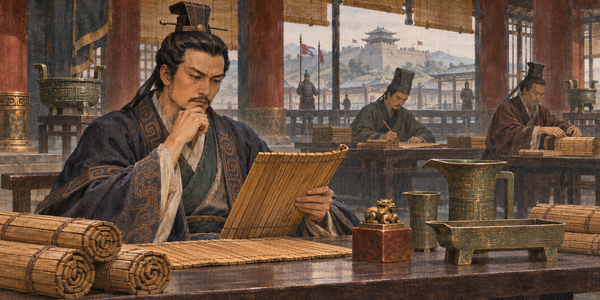
In the West, Han Fei’s philosophy is usually called “Legalism,” but this term should not be understood as an ancient equivalent of the modern rule of law. In a contemporary constitutional system, law also limits the power of rulers, protects fundamental rights, and allows independent judicial oversight. In classical Chinese Legalism, rules serve primarily to strengthen state administration and produce predictable behavior among subjects and officials.
The tradition associated with Han Fei brings together ideas from several thinkers and reformers. Shang Yang emphasizes strict rules, administrative reforms, and the encouragement of agriculture and military merit. Shen Buhai develops techniques for supervising officials and comparing their official promises with actual results. Shen Dao draws attention to the power arising from the ruler’s position itself. Han Fei combines these approaches into one of the most influential theoretical systems of the age.
Three concepts are especially important: fa, shu, and shi. The first refers to publicly established standards, rules, and methods of evaluation. The second concerns the administrative techniques through which the ruler supervises the bureaucracy. The third denotes the advantage of power arising from the political position one occupies.
These elements work together. Clear rules establish what is expected. Administrative techniques make it possible to determine whether those expectations have been fulfilled. The position of power provides the capacity to enforce decisions. Without rules, government becomes arbitrary; without supervision, officials can manipulate information; without effective authority, commands remain empty words.
Legalism responds to the historical challenge of governing large, warring, and increasingly complex states. Its strength lies in recognizing that good organization requires more than personal charisma. Its weakness lies in its willingness to subordinate moral and human considerations to the interests of political stability.
Fa: Clear Rules Against Arbitrariness and Personal Privilege
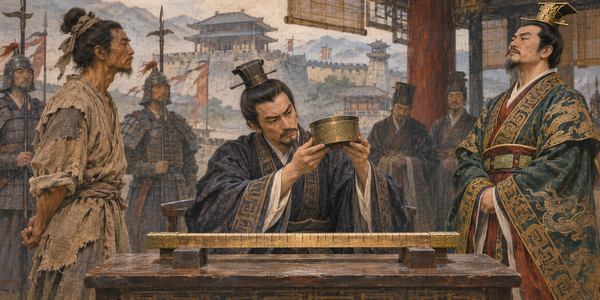
General standards stand at the center of Legalist government. They must be sufficiently clear for people to understand which actions are required and what consequences follow from breaking the rules. Han Fei opposes a situation in which the same offense is severely punished when committed by an ordinary subject but forgiven when committed by an influential aristocrat.
Here his philosophy sounds surprisingly modern. When rules are unpredictable, people begin seeking personal protection instead of fulfilling common obligations. What matters is no longer the work they perform, but their proximity to the powerful. The system rewards the ability to win favor rather than genuine merit.
This problem is particularly destructive in administration. If two officials carry equal responsibility but one is protected from punishment because of family connections, the others lose confidence in the established order. Before long, fulfilling duties becomes a secondary concern, while the main effort goes toward cultivating useful personal relationships.
Han Fei insists that rules must be more important than the ruler’s passing preferences. This does not, however, mean that he defends modern equality before an independent law. The ruler remains the source of supreme political authority. His system seeks to limit arbitrariness among subordinates and make the machinery of government more effective, not to establish equality between the state and the citizen.
That difference is essential. Predictability is valuable, but it does not by itself make a rule just. Consistently enforcing an unjust law can create order without creating a good society. The Legalist idea of clear standards reveals the importance of institutional consistency, but leaves open the question of who determines the content of the rules and how they can be challenged.
Shu: The Art of Governing Those Who Govern
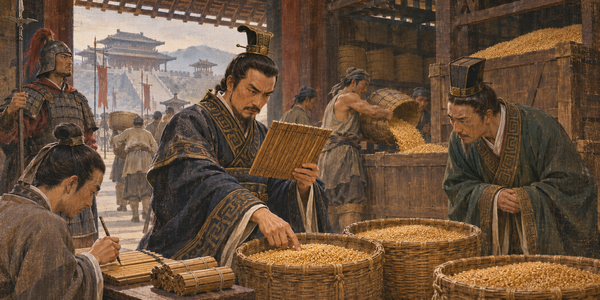
For Han Fei, danger to the state comes not only from external enemies. It also lies within its own administration. Ministers possess information, control the execution of orders, and can present their successes or failures in ways convenient to themselves. A ruler who relies solely on personal sympathy and impressive promises becomes dependent on the very people he is supposed to supervise.
The concept of shu refers to administrative techniques designed to reduce this risk. Particularly important among them is comparing assigned tasks with actual performance. An official should not be rewarded for persuasive speeches, but for results that correspond to the responsibility entrusted to him.
This idea is often described through the relationship between “names” and “realities”: between a title, promise, or declared competence and what has actually been accomplished. An official who promises to increase harvest yields must be evaluated according to agricultural results. A military commander who accepts a specific assignment cannot replace an account of its completion with general assurances of loyalty.
A similar principle is familiar in modern organizations. Good administration requires clear responsibilities, verifiable results, and safeguards against concealing mistakes. But in Han Fei’s thought, this logic is combined with profound distrust of ministers’ independent power. The ruler must control access to decisions and prevent subordinates from building independent centers of influence.
Here the darker side of Legalist insight becomes visible. Supervision can protect institutions from corruption, but when it turns into permanent suspicion, it suffocates initiative and honest discussion. Officials begin to fear mistakes more than they strive for useful decisions. A system can become exceptionally well organized for reporting while remaining incapable of hearing an unpleasant truth.
Shi: The Power of Office and the Problem of the Weak Ruler
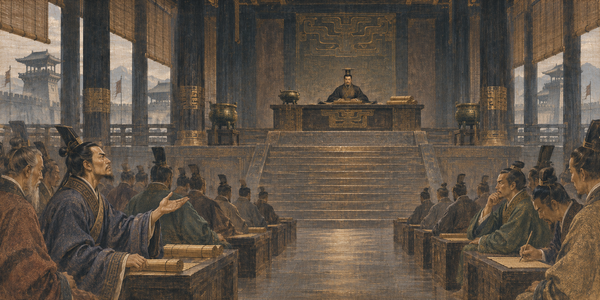
The third important element of Legalist thought is shi: the power that arises from political position. Unlike philosophies that place primary emphasis on a ruler’s personal virtue, this approach understands power as an institutional advantage. Even someone of limited ability can exercise enormous influence when occupying a position from which binding commands are issued.
Han Fei accepts that stable government must not depend on the rare appearance of an exceptional sage. The state must function even when the ruler possesses no remarkable moral or intellectual gifts. This is precisely why rules, supervision, and the position of authority itself are so important.
This is a sober observation about political reality. History does not provide every generation with perfect rulers. Institutions must be able to limit the mistakes of ordinary human beings. Yet the Legalist solution places enormous power in the hands of a single center without developing an equivalent system of independent oversight over it.
The power of office also explains why personal charisma is no reliable substitute for functioning institutions. A charismatic leader may inspire people for a short period, but after that leader departs, procedures, the distribution of responsibilities, and the ability to transfer power remain. Han Fei clearly recognizes this need for structure.
The question his philosophy does not convincingly resolve from a modern perspective is how to prevent abuse by the supreme ruler himself. When the entire system serves to strengthen his position, justice depends on the goals he chooses to pursue. Institutional efficiency and moral legitimacy are not the same thing.
Rewards, Punishments, and Human Nature
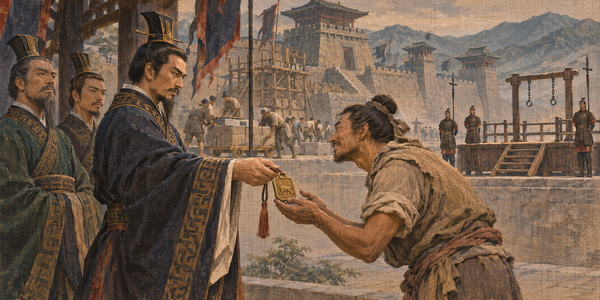
Han Fei does not build his political theory on the expectation that most people will voluntarily sacrifice their interests for the common good. He accepts that the pursuit of advantage and the desire to avoid harm are powerful motives for behavior. The state must account for these motives rather than pretend they do not exist.
This explains the great importance of rewards and punishments. Well-organized government encourages actions that serve the state’s goals and penalizes violations. Predictable consequences are intended to make fulfilling one’s duties more advantageous than neglecting them.
In the ancient state, this logic was connected with military service, agriculture, and administrative discipline. Political authority sought to direct individual effort toward increasing production and strengthening defense. The result was a society in which the political system rewarded measurable contributions to the tasks it established.
The problem begins when incentives displace every other reason for action. Someone who obeys a rule solely out of fear does not necessarily understand why it is just. An official who works only for a reward may neglect important tasks if they are not counted by the evaluation system. Severe punishments can impose discipline, but they can also encourage the concealment of information when admitting a mistake carries excessive risk.
Modern psychology and organizational practice show that human behavior depends on many motives: material interests, belonging, professional pride, conscience, trust, and the search for meaning. Han Fei reveals the importance of incentives with impressive clarity, but his political system places excessive weight on coercion and control.
This does not invalidate his central warning. A society that relies only on appeals to virtue, without establishing consequences for abuses, leaves honest people unprotected. The question is how discipline can be combined with human dignity and fair limits on power.
Han Fei Versus Confucius and Mozi: Three Answers to One Crisis
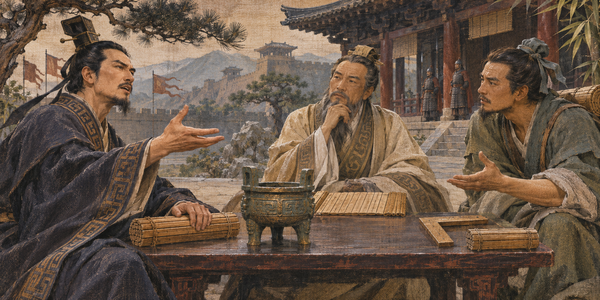
Chinese philosophy of this era is not a collection of isolated teachings. Different schools debate the same social problems: warfare, corruption, inequality, disorder, and the responsibilities of rulers. This is why the comparison between Confucius, Mozi, and Han Fei is so revealing.
The Confucian tradition places moral education and the example of the worthy ruler at its center. If a person develops the right attitude toward parents, community, and state, social relationships will rest on respect and a sense of duty. Ritual and education are not external decoration, but means of building character.
Mozi criticizes favoritism, extravagance, and wars of conquest. His principle of impartial care insists that the interests of strangers also carry moral weight. Good government must provide genuine benefit to people and assign responsibility according to ability.
Han Fei is more distrustful of moral appeals. For him, the social system must work even when people are selfish, envious, or inclined to abuse their positions. Rules and administrative supervision are necessary precisely because personal virtue cannot be guaranteed.
Their differences do not mean that one thinker simply defends good and another evil. Each identifies a real problem. Confucius sees the need for moral character. Mozi insists that justice must extend beyond family and political boundaries. Han Fei shows why institutions fail when they are governed through promises, sympathies, and privileges.
The most important lesson of their debate is that society needs both moral principles and reliable institutions. Virtue without rules may be powerless against abuse. Rules without justice can serve oppression. And care for people, without the ability to organize, struggles to become a lasting social practice.
The Unification of China and Legalism’s Difficult Legacy
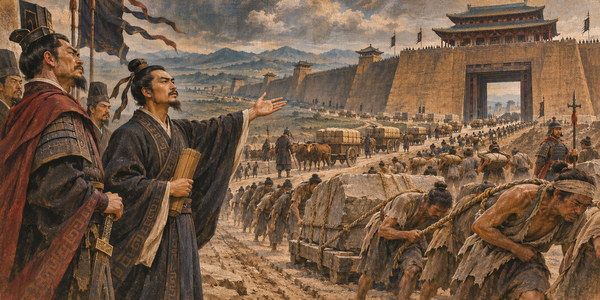
In 221 BCE, the state of Qin defeated its remaining rivals and achieved the first imperial unification of China. Reforms associated with the Legalist tradition contributed to the development of centralized government, military organization, and administrative standards. Qin’s rise demonstrated how powerful a state could become when it consistently mobilized its resources.
Yet the history of the Qin dynasty also revealed the limits of government through harsh coercion. Enormous construction projects, heavy labor obligations, repressive measures, and political tensions generated discontent. After the death of the First Emperor, the dynasty rapidly lost power and collapsed in 206 BCE.
It would be an oversimplification to reduce every cause of that collapse to a single philosophical school. Military, economic, administrative, and dynastic factors operated simultaneously. Nevertheless, Qin’s fate remains important in evaluating Legalism: a state can become exceptionally effective at enforcing decisions while failing to build lasting public loyalty.
Later Chinese dynasties often presented Confucianism as the foundation of official political morality, while preserving many administrative practices reminiscent of Legalist ideas. Han Fei’s legacy therefore did not disappear with the fall of Qin. It continued to shape how the state organized its bureaucracy, supervised responsibilities, and used formal rules.
This historical development highlights a permanent dilemma. Government needs order, but order is not sufficient for legitimacy. A strong administration can protect the population, or it can subject people to unbearable demands. What matters is not only whether the state can impose its will, but whether that will deserves obedience.
Law, Personal Justice, and the Road to Bushido
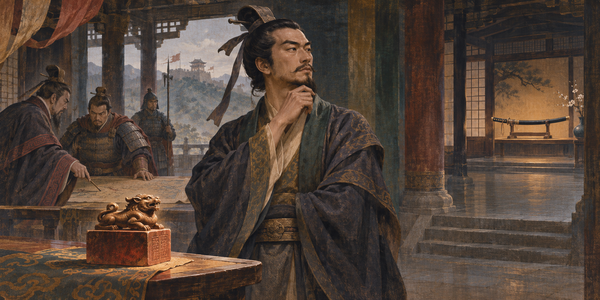
The deepest tension in Han Fei’s political philosophy appears where personal convictions about justice come into conflict with the established order. Law provides a common framework without which society can easily turn into a struggle between private powers. Yet human conscience does not always accept that every legally authorized decision is morally right.
This dilemma runs through different cultures and eras. In the Japanese samurai tradition, for example, loyalty to one’s lord, personal honor, duty, and justice can come into painful conflict. Historical understandings of bushido did not constitute a single, unchanging code; they developed over the centuries and received different interpretations. This is precisely why the conflict between obedience and personal moral choice matters so much to understanding them.
The story of the Forty-Seven Ronin is one of the most famous examples. After the death of their lord, a group of samurai took revenge on the man they held responsible for his humiliation and downfall. Their action became a symbol of loyalty, but at the same time violated the established order and confronted the authorities with a difficult question: can personal duty justify an act prohibited by law?
From the standpoint of strict Legalist thinking, such an exception is dangerous. If everyone defines justice according to personal loyalty and pain, the common order dissolves into competing private claims. From the standpoint of samurai loyalty, however, refusing to act can appear to be a betrayal of duty and honor.
There is no easy agreement between these positions. Law must restrain private violence, but law itself remains subject to moral judgment. Loyalty can express nobility, but it can also become an excuse for destructive actions. State order protects the community, but loses moral weight when it demands unconditional obedience without the possibility of justice.
Han Fei leaves us with a severe but necessary warning: good intentions cannot replace functioning rules. The story of the ronin adds the other half of the question: rules cannot exhaust the full complexity of human honor, loyalty, and conscience. Between these two poles stands one of political philosophy’s hardest tasks-to build an order that does not destroy justice, and to defend a justice that does not destroy life in common.
If we had to judge the ronin’s actions, how much weight should we give to their loyalty to their lord, and how much to their violation of the law?
Author: Vasil Stoyanov