Sadhguru’s early life
His education unfolded without any particularly dramatic events, yet he never fully fit within the boundaries of the academic system. He learned more from life itself, from his experiences, and from the questions that arose within him. This tendency toward independent inquiry became one of the defining characteristics of his personality. Rather than accepting truths handed down by others, he felt compelled to discover his own.
During his teenage years, Sadhguru began practicing yoga – not as a spiritual path, but primarily as a form of physical exercise. Nevertheless, the practice gradually started opening doors to deeper experiences. His body became more than a vehicle for movement; it became an instrument of awareness. What makes his early life so significant is not merely the fact that he would later become a spiritual teacher, but that nothing in those early years seemed to point toward such a destiny. He was a man who forged his own path without a predetermined map. It is precisely this absence of predestination that makes his story so human and inspiring.
Business ventures and the мeeting with Vijji
Before becoming a spiritual leader, Sadhguru was a successful entrepreneur. In his early twenties, he launched several businesses, including ventures in construction and poultry farming. His approach to business was never purely mechanical – he viewed it as a game, a field for the expression of intelligence, creativity, and involvement with life itself. For him, success was not a matter of accumulating wealth, but of how fully one could participate in life.
This period of his life often remains overshadowed by his later spiritual work, yet it is exceptionally important. It reveals that Sadhguru was not a recluse detached from reality, but a man deeply engaged with the world. This gave him a unique perspective that would later allow him to speak both to spiritual seekers and to people immersed in the material aspects of life.
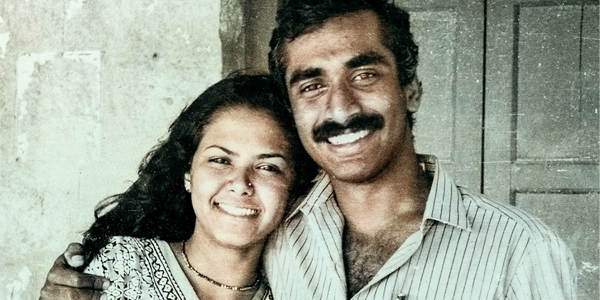
It was during this period that he met Vijji – the woman who would play a pivotal role in his life. Their relationship was far from an ordinary love story. According to Sadhguru’s own accounts, he recognized her on a very deep level, as though she were somehow familiar to him from long before. Their connection was intense, yet at the same time remarkably natural.
Vijji is often described as a woman of extraordinary sensitivity and spiritual depth. She was not merely a supportive partner; she actively participated in both Sadhguru’s inner journey and his outward mission. Together, they shared more than a life – they shared a vision.
This stage of Sadhguru’s life illustrates a balance between the material and the spiritual. He did not reject the world; he participated in it fully while, at the same time, preparing for something far greater.
Enlightenment and memories of past live
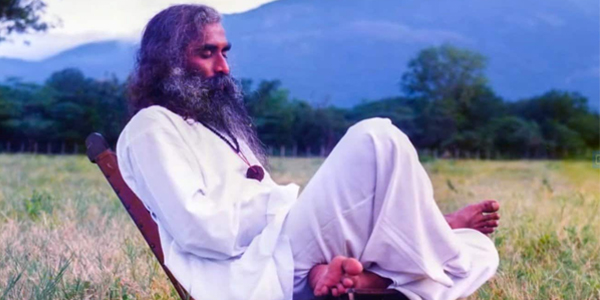
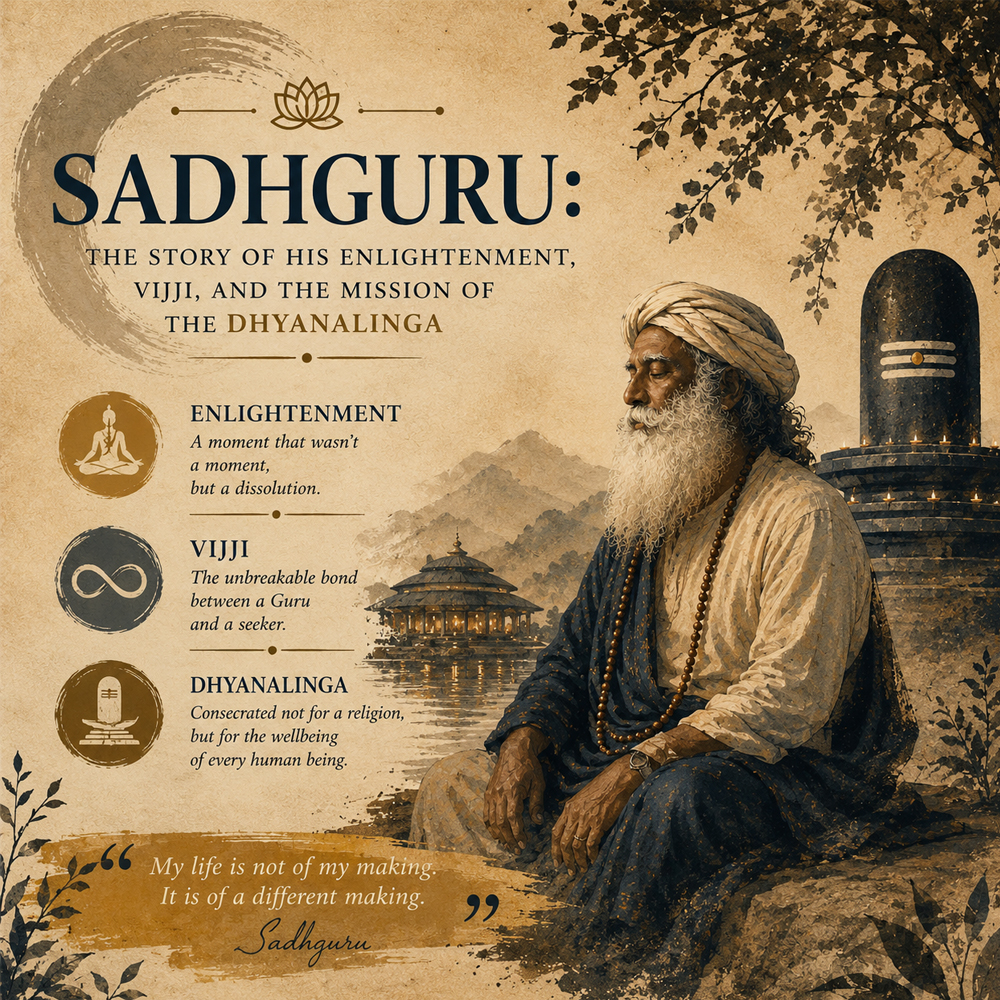
The defining turning point in Sadhguru’s life came in 1982, when he experienced what he would later describe as complete enlightenment. This occurred on Chamundi Hill in Mysore. Without any deliberate preparation or expectation, he entered a state in which the boundaries between himself and the world simply disappeared. What seemed like a brief moment stretched into hours, yet its impact would remain with him forever.
He has described the experience as a dissolution of personal identity and a merging with everything that exists. It was not an intellectual realization, nor the result of philosophical reasoning. It was a direct and overwhelming experience of unity. From that moment onward, the course of his life changed completely.
Following this experience, Sadhguru says that memories of previous lifetimes began to arise within him. According to his accounts, he recalled multiple incarnations, including one in which he had lived as a spiritual teacher who was unable to complete a particular mission. These memories did not appear to him as fragmented visions or random impressions, but as a coherent thread connected to his present life.
Especially significant was his relationship with a guru from one of those past lives – a figure whom Sadhguru regards as central to his spiritual evolution. This connection was not merely symbolic or psychological in his experience; it was a living reality.
Very little is known about this guru, largely because Sadhguru has rarely spoken about him publicly. On the few occasions when he has mentioned him, however, the subject has often evoked a remarkable depth of emotion. Beneath his usually composed demeanor, there appeared a sense of profound devotion and reverence.
Sadhguru came to feel that his present life was the continuation of an unfinished task – a responsibility he had consciously taken upon himself because it had been the dream of his guru. This sense of mission became the driving force behind everything that followed.
What is striking is that enlightenment did not lead him away from the world. It did not inspire withdrawal, isolation, or indifference. Instead, it drew him into deeper engagement with life. The experience did not end in transcendence alone; it became the foundation for action. From that point forward, his life was no longer centered on personal fulfillment, but on the completion of a purpose he believed had been carried across lifetimes.
The Dhyanalinga Mission and Vijji’s Mahasamadhi
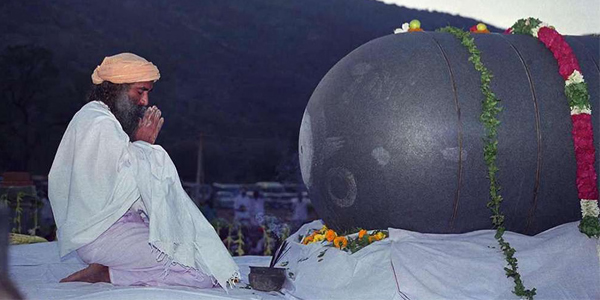
One of the most significant missions of Sadhguru’s life has been the creation of the Dhyanalinga – a consecrated energy form that, according to his teachings, embodies the full spectrum of the seven chakras. For Sadhguru, this was never merely an architectural or religious project. It was a spiritual undertaking that demanded immense dedication, sacrifice, and mastery of yogic processes.
The foundation through which this vision began to take shape was the Isha Foundation. Over the years, the project encountered numerous obstacles, both external and internal. The consecration of the Dhyanalinga was described by Sadhguru as the culmination of lifetimes of work and as the fulfillment of a mission that had remained incomplete in the past.
It was during this larger process that one of the most profound and controversial events in his life took place – the Mahasamadhi of Vijji.
According to Sadhguru’s account, Vijji consciously left her body during an intense spiritual process. Within certain yogic traditions, Mahasamadhi is regarded as the highest form of death: a conscious and deliberate exit from the physical body by a realized being. Such claims lie outside the scope of conventional scientific verification and are understood within the framework of yogic spirituality.
Sadhguru has explained that Vijji left her body through the energy of the Anahata chakra – the heart center – using what he described as the extraordinary intensity of her emotions and devotion to generate the necessary force for such a departure. Those present at the event reportedly observed unusual physical signs around the area of her chest after her passing.
In later talks, Sadhguru stated that after death Vijji came under the guidance of a great being who completed her liberation, enabling her to dissolve entirely into the Absolute and transcend the cycle of birth and death altogether. This understanding forms part of Sadhguru’s spiritual interpretation of the event and reflects the metaphysical worldview of the yogic tradition.
For those around him, Vijji’s departure was a deeply emotional and painful moment. Yet Sadhguru has consistently spoken of it not as a tragedy, but as an extraordinary culmination of a spiritual journey. Despite the personal loss, he continued his work with even greater determination.
After years of effort, the Dhyanalinga was finally consecrated and completed. Today it stands as one of the central features of the Isha Yoga Center. According to its supporters, it serves as a powerful meditative space where people of all backgrounds – regardless of religion, nationality, or belief system – can sit in silence and experience a profound sense of inner stillness.
For Sadhguru, the completion of the Dhyanalinga represented far more than the end of a project. It was the fulfillment of a mission he believed had been carried across lifetimes, a vision that demanded everything from those who participated in it, and one that continues to shape the work of the Isha Foundation to this day.
Тhe early years as a guru and the founding of the Isha Yoga Center
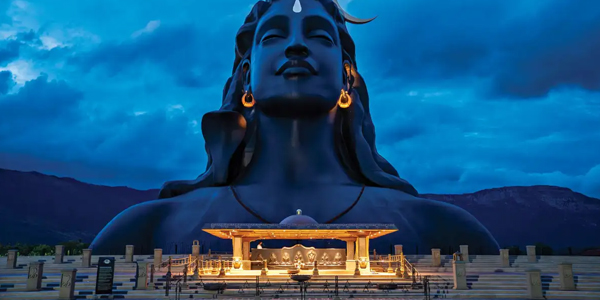
After his enlightenment, Sadhguru began teaching, but not as a traditional teacher. His style is direct, often provocative, yet always focused on experience rather than theory. He does not demand belief; instead, he offers tools. The creation of the Isha Yoga Center was a natural continuation of this mission. The center became a place of transformation, where people from different cultures come to explore their inner world. The early years were not easy. Resources were scarce, support was limited, but the vision was clear. Gradually, the community grew, and his teachings reached an ever-increasing number of people.
What sets Sadhguru apart is his ability to combine ancient wisdom with modern language. He speaks about inner transformation, but also about leadership, success, and responsibility.
His Contributions to Nature and the World
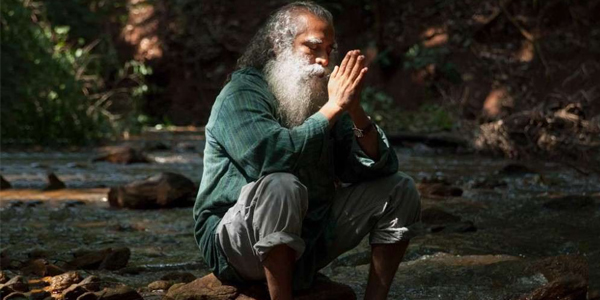
In recent decades, Sadhguru has become not only a spiritual teacher but also a global environmental activist. He has led initiatives such as:
-
Rally for Rivers (2017) – one of the largest environmental mobilizations in the world led by a single individual. The campaign reached more than 160 million people and gathered millions of signatures in support of river conservation. Sadhguru traveled over 9,000 kilometers across India in just 30 days.
-
Cauvery Calling (2019) – a project aimed at revitalizing the Cauvery River through the planting of billions of trees. The initiative set a goal of planting 2.42 billion trees and involved millions of farmers. It is considered one of the largest agroforestry and ecological restoration projects in the world.
-
Save Soil (2022) – a global movement focused on raising awareness about soil degradation and promoting policies for soil health. The campaign reached more than 3.9 billion people worldwide. Sadhguru rode a motorcycle alone from London to India – approximately 30,000 kilometers – meeting heads of state and policymakers in dozens of countries, including Bulgaria. It became one of the largest global movements for soil conservation ever led by a spiritual leader.
These initiatives demonstrate his commitment to the well-being of the planet. He uses his influence to draw attention to environmental challenges, yet his approach remains distinctive – he seeks not to blame, but to inspire. For him, the state of the external world is a reflection of the inner state of human beings.
Sadhguru frequently emphasizes that genuine change begins within. Without inner clarity, external action remains limited. This philosophy has made him a bridge between spirituality and practical life. Today, he continues to travel, speak, and inspire millions of people around the world. His story is more than a biography – it is a journey from an ordinary man to a figure who has influenced the way countless people perceive life itself.
Mysticism, occultism and supernatural
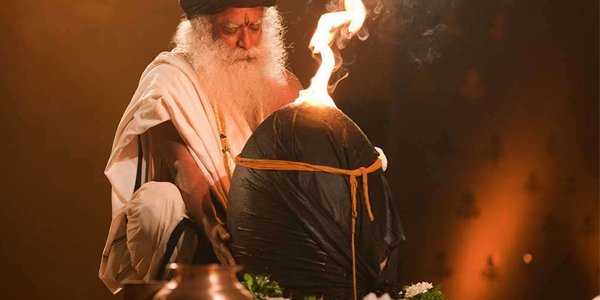
Beyond the simple biography – which covers only a very small and surface-level part of who he is – Sadhguru is surrounded by an aura of mystery, wisdom, and mysticism. The stories surrounding the consecration of the Dhyanalinga are filled with what many would describe as the “supernatural.” From accounts of non-physical beings to descriptions of generating and manipulating subtle energies, this period represents perhaps the most esoteric and occult chapter of his life.
In his early years as a spiritual teacher, Sadhguru appears markedly different from the public figure known today. By his own account, his focus on completing the Dhyanalinga was absolute. He has stated on numerous occasions that the consecration of the Dhyanalinga was the one mission he was determined to accomplish before leaving this world.
Following the completion of the Dhyanalinga, his physical condition reportedly deteriorated dramatically. According to Sadhguru’s own descriptions of that period, the consecration process had placed such an immense strain on his system that his health began to decline severely. He has spoken of his “energy body” being damaged to such an extent that the physical body soon followed. At the time, doctors who examined him reportedly gave him a grave prognosis and believed that his chances of survival were extremely limited.
Sadhguru has maintained that he was ultimately able to recover to a significant degree through intensive inner processes and practices. He has also expressed deep gratitude toward a number of close individuals around him, describing them as people whose dedication and willingness to support him played an essential role during that difficult period.
Whether viewed through the lens of mysticism or skepticism, this chapter remains one of the most intriguing aspects of Sadhguru’s life story. It reveals a man who, according to his own narrative, was willing to push himself to extraordinary limits in pursuit of a spiritual vision he believed transcended his personal well-being. For many of his followers, these events symbolize the immense price paid to bring the Dhyanalinga into existence; for others, they remain part of the enduring mystery that surrounds one of the most influential spiritual figures of the modern era.
Read More:
- Yoga: Karma, Life, Death, and Rebirth
- Shiva – The First Yogi and Guru, the Originator of Spirituality
- The Life of Jiddu Krishnamurti and His Legacy to Humanity