
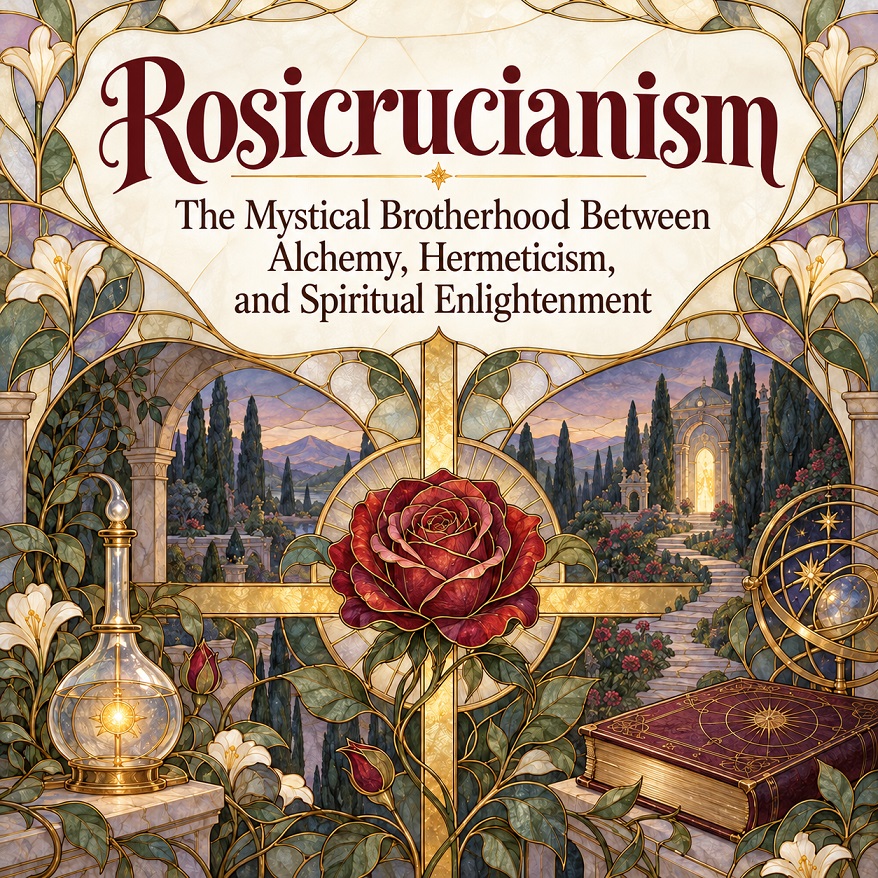
At the beginning of the seventeenth century, Europe received a message that seemed to emerge from an invisible library. It spoke of a brotherhood whose members understood the secrets of nature, healed without payment, concealed their membership, and awaited a great renewal of the world. At the center of the narrative stood a man called Christian Rosenkreuz. He traveled eastward, encountered sages, returned to Europe, and founded a community charged with preserving knowledge until the appointed hour. When his tomb was discovered more than a century later, the brothers found an extraordinary chamber filled with symbols, books, and the promise that what had been hidden would finally be revealed.
This story transformed the European imagination. Scholars debated whether the brotherhood existed. Theologians recognized a call for religious reform. Alchemists discovered familiar images of transformation, while spiritual seekers saw the suggestion of invisible guardians of wisdom operating behind the visible course of history. Over the following centuries, the name Rosenkreuz became a symbol of secret initiation, of the relationship between humanity and the cosmos, and of the conviction that authentic knowledge must transform the person who possesses it.
Yet Rosicrucianism cannot be understood either by accepting its legends uncritically or by dismissing their power. Its history has many layers: actual printed manifestos, literary mysteries, Christian spirituality, alchemical imagery, Hermetic philosophy, documented societies, and later occult interpretations. Understanding it requires distinguishing what the earliest texts narrate, what historical evidence confirms, and what generations of readers subsequently imagined. The mystery of the Rose and Cross emerges precisely where these three worlds meet.
Europe on the Brink of Upheaval: The World in Which the Legend Appeared
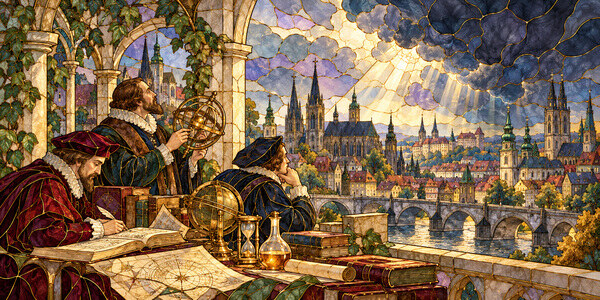
To understand why the Rosicrucian manifestos provoked such intense reactions, we must return to the beginning of the seventeenth century. Europe was marked by religious tension, political rivalries, and profound intellectual change. The Reformation and Counter-Reformation had reshaped society, while disputes over religious truth divided principalities, universities, and families. The Thirty Years’ War, beginning in 1618, would devastate much of Central Europe. Meanwhile, astronomy, medicine, and natural philosophy were challenging inherited authorities.
It was a world in which prophecies, mathematical calculations, biblical interpretation, and alchemical treatises coexisted. Scholars did not always separate science from theology as we do today. One thinker could study celestial movements, reflect on divine providence, and investigate the hidden properties of metals. The idea of renewing all knowledge seemed attainable to many intellectuals; indeed, it became one of the great aspirations of the age. Against this background, the call for a universal reformation of divine and human affairs acquired extraordinary force.
In the German territories, certain intellectual circles combined Lutheran devotion, apocalyptic expectation, interest in Paracelsus, and alchemical symbolism. Some believed established institutions had lost their spiritual vitality and that humanity required a new union of knowledge, morality, and faith. The Rosicrucian texts did not appear in a vacuum. They gave dramatic form to hopes, anxieties, and reforming ambitions that already existed.
That is why the mysterious brotherhood was so compelling. It promised not simply another school but a community that had preserved what society had forgotten. Its members embodied the ideal scholar, the devout healer, and the initiate who understood nature’s hidden order. The manifestos supplied this dream with a name, a founder, and a history sufficiently detailed to appear credible yet sufficiently mysterious to generate endless questions.
Fama Fraternitatis: The Message That Stirred Europe
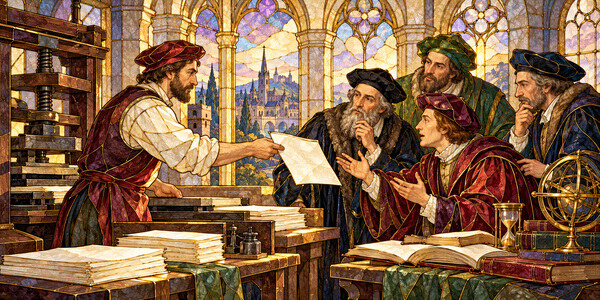
In 1614, a text known as Fama Fraternitatis, or “The Fame of the Brotherhood,” was printed in Kassel. It presented the history of a secret community addressing the scholars and rulers of Europe. The manifesto called for a renewal of knowledge and narrated the life of the brotherhood’s founder. Although it contained names, journeys, and rules, it cannot be treated as an ordinary biography. It is a programmatic work in which literary storytelling and religious-philosophical appeal are inseparable.
Its central figure is Brother C.R., subsequently identified as Christian Rosenkreuz. He is portrayed as someone who begins a life of study and travel at an early age. His search takes him beyond the familiar European world, where he encounters sages and studies knowledge not fully possessed by Western scholars. Upon returning, he attempts to share what he has learned but encounters incomprehension. He therefore gathers a small circle of companions and establishes the brotherhood.
The manifesto is more than a legend about the past. It addresses its readers’ present and invites them to participate in renewal. Here lies a striking paradox: a secret community seeks a public response. If the brothers are invisible, how can they be found? If their knowledge is concealed, why announce it in a printed book? This paradox triggered a wave of responses. Authors published letters to the brotherhood, offered their services, defended its ideals, or warned against deception.
Printing transformed the mystery into a European intellectual phenomenon. Readers did not need to encounter an actual Rosicrucian to participate in the debate. The suggestion that a community possessed superior knowledge began to function as a cultural force. From the outset, Rosicrucian history unfolded both in books and in the public imagination.
Christian Rosenkreuz’s Journey: The East as a Land of Wisdom
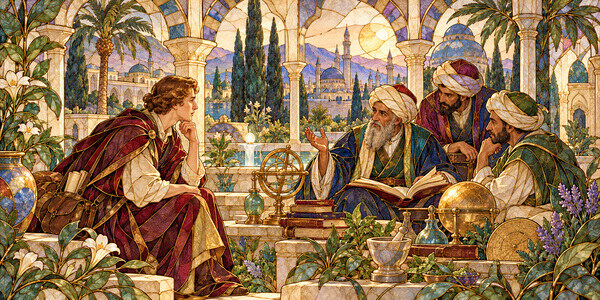
According to the Fama Fraternitatis, the young Rosenkreuz sets out on a pilgrimage, but his path changes. He reaches places associated with the Middle East and North Africa, encountering scholars and sages. Among the famous locations in the narrative is Damcar, a city that cannot simply be identified beyond dispute with a specific historical center. Within the story, it represents wisdom preserved far from European conflicts and limitations.
The journey has profound symbolic meaning. The initiate leaves the familiar world, undergoes trials, receives new understanding, and returns to transform his community. This pattern appears in religious lives, chivalric romances, and myths of spiritual seeking. Rosenkreuz travels not merely to accumulate information but to be transformed by encounters with another intellectual and spiritual environment. The East becomes a literary landscape where the fragmented parts of knowledge can be reunited.
An essential historical distinction remains. No reliable independent documents confirm this journey as a biographical fact about an actual founder. It belongs to the manifesto’s narrative. At the same time, medieval and early modern Europe genuinely received substantial philosophical, medical, mathematical, and alchemical knowledge through Arabic-speaking intellectual cultures. The legend draws upon the real prestige of this learning to create the image of a person who transcends the limitations of his own society.
The deepest motif is the return. Had Rosenkreuz remained among the sages, his journey would have been a story of private enlightenment. Instead, he returns to Europe. Knowledge must become service rather than an ornament of an exceptional mind. Later Rosicrucian interpretations preserve this ideal: the genuine initiate is not simply someone who knows more, but someone who employs knowledge in the pursuit of moral and social renewal.
The Six Rules of the Brotherhood: Secrecy, Service, and Discipline
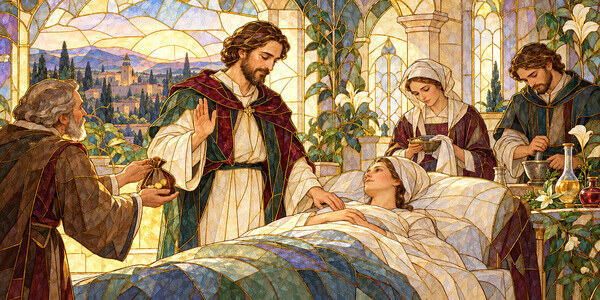
In the account of the brotherhood’s foundation, its members accept six rules. The best-known requires them to heal the sick without payment. Others concern ordinary clothing, identification as members, annual meetings, choosing a successor, and the period during which the fraternity must remain concealed. These rules give the legend the appearance of an institutional charter while also defining the moral ideal of a Rosicrucian initiate.
The prohibition against profiting from healing is particularly significant. In an age when medicine and alchemy were connected with the search for universal remedies, this principle carried strong ethical meaning. The brothers were supposed to possess extraordinary abilities without using them for personal enrichment. Power over nature was subordinated to service. The legend suggests that knowledge loses its purpose when separated from moral refinement.
The rule concerning ordinary dress is equally revealing. Members were not to advertise themselves through splendid insignia or displays of power. They were to live among others without turning their membership into a public spectacle. Thus emerged the image of the invisible brotherhood: present within society but not identifiable through outward distinction. This invisibility later nourished fantasies about secret networks, although the literary motif does not establish that such networks existed.
The remaining rules emphasize continuity and community. Initiates must not hoard knowledge but arrange for its transmission. Annual meetings imply that the fraternity is not a collection of isolated miracle workers but a disciplined community united by a purpose. The six rules are therefore most valuable as an ethical portrait rather than verified evidence of an actual organization. They unite the scholar, healer, and Christian reformer in a single ideal figure.
The Seven-Sided Tomb: The Manifesto’s Greatest Mystery
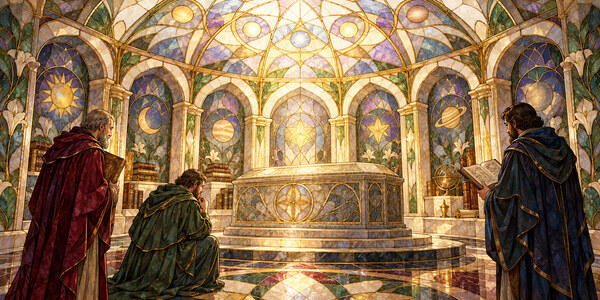
The most memorable episode of the Fama Fraternitatis is the discovery of the founder’s tomb. After a long interval, the brothers encounter a hidden chamber containing traces of the past and promises of future knowledge. At the heart of the narrative stands a mysterious seven-sided vault, illuminated in an extraordinary manner and filled with symbolic inscriptions and objects. Within it lies the body of Rosenkreuz, described as preserved, together with books and records associated with the brotherhood.
The legend employs architecture as a philosophical language. The seven-sided chamber evokes the significance of seven in European astrological, religious, and symbolic culture. It may suggest the planets of traditional astrology, cosmic order, and completion. Yet caution is necessary: later interpretations do not necessarily reveal the original authors’ intentions. The chamber is an artistically constructed mystery whose details create an impression of concealed cosmic harmony.
Particularly powerful is the opening of what had been sealed. A tomb is ordinarily a place of death, but here it becomes the source of a new beginning. The founder is absent and yet present through his books, rules, and symbols. His body witnesses to the past, while his writings address the future. The chamber is therefore more than a burial place. It represents knowledge awaiting the historical moment of its revelation.
This episode helps explain the legend’s endurance. It combines the excitement of discovering a hidden room with religious imagery of resurrection and alchemical transformation. Historians have not independently verified a tomb of Christian Rosenkreuz corresponding to the description. That does not diminish the narrative’s literary force. It demonstrates how an imagined architecture can become a lasting symbol of spiritual exploration.
Confessio Fraternitatis: Revelation as a Program of Renewal

In 1615, the second major Rosicrucian manifesto appeared: Confessio Fraternitatis, or “The Confession of the Brotherhood.” It developed themes of religious, moral, and intellectual reform. Whereas the Fama draws readers in through the founder’s story, the Confessio speaks more insistently about the brotherhood’s mission and the need to understand the divine order. Apocalyptic expectations, criticism of prevailing errors, and confidence in the restoration of knowledge appear together.
The text does not portray secret knowledge as arbitrary power enabling domination. Within its religious framework, true understanding is inseparable from divine order and moral responsibility. This matters because later popular portrayals often remove the original Christian setting and replace it with the idea of a universal magical school. The earliest manifestos, however, belong to a particular early modern religious environment and cannot be understood apart from it.
The promise of reform has two dimensions. First, it assumes that forgotten or lost knowledge must be recovered. Second, it requires transformation within the individual. If scholars are blinded by pride and society divided by hostility, accumulating information will not be enough. The purpose of seeking knowledge must itself change. The manifesto consequently connects spiritual enlightenment with responsibility toward the wider community.
This distinguishes the Rosicrucian writings from an ordinary tale of miracle workers. They contain a cultural and political imagination: the vision of a world in which learning, religious sincerity, and human well-being reinforce one another. The practical realization of that vision remains debatable, but its historical significance is clear. The manifestos contributed to Europe’s wider conversation about how knowledge should change and who should govern its use.
The Chymical Wedding of Christian Rosenkreuz: Seven Days of Trial
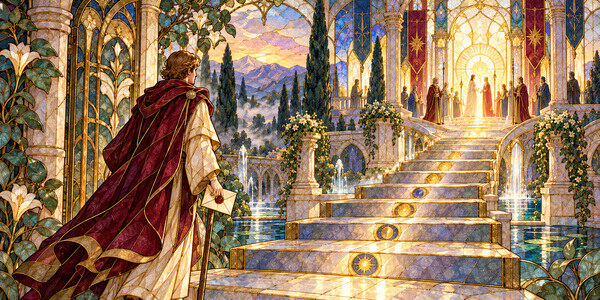
In 1616, Chymische Hochzeit Christiani Rosencreutz-The Chymical Wedding of Christian Rosenkreuz-was published. Its form differs from the first two manifestos. It is an allegorical narrative arranged across seven days, during which the protagonist receives an invitation, undertakes a journey, confronts trials, and witnesses mysterious ceremonies associated with alchemical transformation. Its world is populated by symbolic figures, courtly spaces, and ritual actions that resist any single definitive interpretation.
At the beginning, the hero receives an extraordinary invitation. The path opening before him offers no easy reward. Entry into the mystery demands discernment, testing, and humility. Later scenes introduce the weighing of worthiness, death and restoration, separation and union. The wedding is far more than a social ceremony: it is a symbolic stage upon which the transformation of opposites is enacted.
The work’s alchemical vocabulary does not mean every described action is an instruction for a laboratory experiment. It draws on alchemical imagery to narrate moral and spiritual trials. The reader experiences confusion, expectation, and revelation alongside the hero. The symbols’ openness permits religious, philosophical, literary, and alchemical readings.
The work is associated with Johann Valentin Andreae, who later described it as a youthful composition. This connection is one of the most important foundations for historical study of early Rosicrucianism. The authorship of the other manifestos and the role of Andreae’s intellectual circle remain subjects of scholarly examination. Identifying a literary author does not make the Chymical Wedding insignificant. Rather, it shows that allegory can have profound cultural consequences without being a literal record of a secret ceremony.
The Rose and the Cross: A Symbol That Unites Opposites

The name Rosenkreuz combines the German words for rose and cross. This union generated one of the richest symbolic traditions in European esotericism. In Christianity, the cross may signify suffering, salvation, and sacrifice. The rose evokes beauty, unfolding, love, and secrecy. Brought together, they form a symbol capable of many readings: spiritual transformation through trial, the meeting of earthly and heavenly realities, and the unfolding of humanity’s inner nature.
No single interpretation of the Rose and Cross is obligatory for every historical Rosicrucian movement. The early texts, later fraternities, and modern occult schools employ different symbolic systems. Some connect the cross with material existence and human suffering and the rose with spiritual awakening. Others emphasize Christian mystery or the union of complementary principles. Such meanings must be understood as interpretations arising within particular traditions.
The symbol is especially powerful because it does not portray enlightenment as escape from human existence. The rose does not bloom apart from the cross. Beauty and hardship meet within one image. Philosophically, this can suggest that transformation does not require denying difficulty but changing our relationship to it. This is a contemporary interpretation of the symbol, not the historically established exclusive meaning of the first manifestos.
The rose’s mystery also has a literary dimension. European culture has repeatedly associated the flower with silence, love, and transience. The cross is among its most recognizable religious signs. Their union allows Rosicrucianism to speak both the language of Christian spirituality and that of broader symbolism. This flexibility explains why the image continues to be reinterpreted by different movements.
Alchemy of the Soul: Death, Purification, and Rebirth
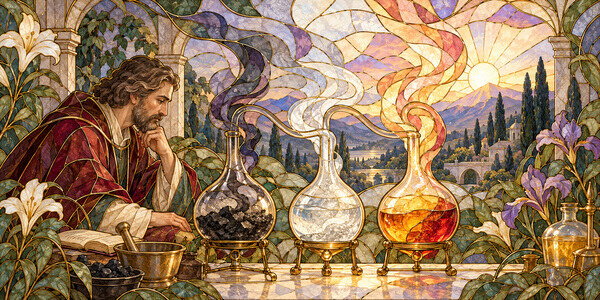
Alchemy is among the strongest influences on the Rosicrucian imagination. In the early modern world, it was not merely a mystical metaphor. Alchemists studied substances, performed operations, and developed theories of material change. Yet alchemical texts also employed an elaborate symbolic language in which dissolution, purification, and union acquired religious and philosophical significance. The Chymical Wedding draws upon this layered intellectual world.
In later esoteric interpretations, alchemical work frequently becomes an image of inner development. Blackening, associated in certain traditions with nigredo, signifies the dissolution of an earlier form. Whitening, or albedo, is interpreted as purification, while reddening, or rubedo, signifies completion. This sequence is familiar in modern symbolic literature, but it is not a universal law followed by every historical alchemist. Alchemical works differ considerably in their structures and terminology.
Read spiritually, the death of the old self does not mean physical destruction. It means relinquishing restrictive ideas about oneself. Purification represents discipline and a reassessment of motives. Rebirth becomes an image of a more integrated relationship with life. Alchemical storytelling thus dramatizes human maturation. It provides a symbolic vocabulary for difficult experiences rather than laboratory proof of spiritual forces.
Within Rosicrucian interpretation, alchemy also has a moral dimension. Producing precious metal is not enough; the seeker must overcome greed, pride, and vanity. In certain movements, the philosopher’s stone becomes a symbol of the perfection sought within the human being. One of the fraternity’s most enduring themes appears here: knowledge that leaves character unchanged remains incomplete.
Hermeticism and the Secret Language of Correspondences

The Rosicrucian texts emerged in a culture where Hermetic philosophy enjoyed considerable prestige. Writings attributed to Hermes Trismegistus presented humanity as inseparable from the understanding of cosmic order. Renaissance thinkers adopted aspects of these ideas and combined them with Platonism, Christian theology, and natural philosophy. The Rosicrucian imagination inherited an interest in correspondences among the human being, nature, and the divine.
The concepts of microcosm and macrocosm are particularly important. Humanity is regarded as a small world reflecting principles of the greater cosmos. Symbolically, this invites a relationship between inner development and the study of nature. If reality is ordered, knowledge should uncover not only isolated facts but the relationships among them. This aspiration toward unity appealed strongly to early modern reformers of learning.
We must nevertheless distinguish philosophical analogy from demonstrated natural law. Historical authors often linked planets, metals, organs, and moral qualities within elaborate systems. Such schemes are significant for intellectual history but do not become scientifically verified merely because they are symbolically coherent. Serious study preserves the beauty of Hermetic language without turning every analogy into a physical fact.
Hermeticism also contributes to the image of the initiate as an interpreter of nature. The world is not seen as a chaotic collection of objects but as a space filled with meaning. In this sense, Rosicrucian mysticism is not merely the secret of a fraternity; it is a way of reading. Nature becomes a book, and human life a text awaiting interpretation. This is a powerful philosophical metaphor whose value does not depend upon accepting every cosmological proposition of its historical setting.
Paracelsus and the Physician as Spiritual Reformer
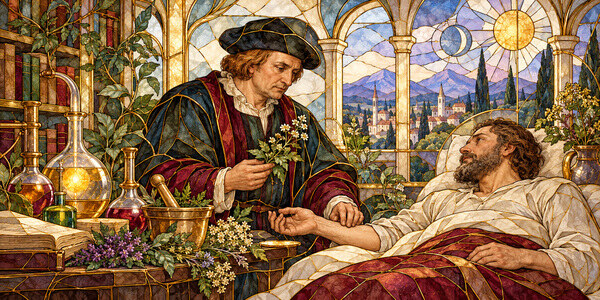
Paracelsus, the sixteenth-century physician, alchemist, and natural philosopher, occupies an important place among the intellectual influences on early Rosicrucian culture. He criticized established medical authorities and argued for investigating nature and the human body more directly. His works developed distinctive theories of substances, disease, and the relationship between humanity and the cosmos. Paracelsian ideas circulated widely and influenced later religious and alchemical authors.
The Rosicrucian manifestos present healing as a fundamental duty. This corresponds to the ideal of the physician who serves others rather than using knowledge to display superiority. In the early modern context, medicine, alchemy, and religious ethics could be understood as aspects of a shared task. The sick person was not merely a mechanism requiring repair but a being situated within a wider natural and spiritual order.
This historical worldview must not be confused with modern medicine. Certain Paracelsian ideas contributed to the development of chemical approaches to treatment, but many of his cosmological and medical claims do not agree with contemporary scientific knowledge. Nor does the legend of universal healers prove the existence of miraculous remedies. Its enduring philosophical power lies in the ethical principle that knowledge matters when it alleviates suffering.
In this image, the physician is more than a professional. He must unite skill, responsibility, and humility. For early Rosicrucian writers, the renewal of the world is not simply a matter of possessing the right books. It demands practical care for others. The ideal of healing thus becomes a bridge between mystical philosophy and the ordinary human need for help.
Johann Valentin Andreae: The Man Behind a Great Mystery
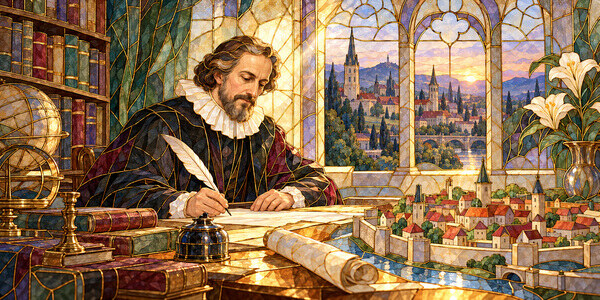
Johann Valentin Andreae is a key figure in the study of early Rosicrucianism. Born in 1586, he belonged to the Protestant intellectual culture of the German territories. His interests included theology, education, moral reform, and literary experimentation. His connection to the Chymical Wedding is well documented, while his wider intellectual circle is important for understanding the environment in which the Rosicrucian manifestos appeared.
Andreae used literary forms to address serious social and religious questions. His writings reveal an interest in ideal communities, education, and moral renewal. This makes it possible to read Rosicrucian history not only as mystical legend but also as part of early modern projects of reform. A secret brotherhood can function as a literary instrument for criticizing existing institutions and presenting an alternative social ideal.
Historians continue to discuss the precise authorship of the first two manifestos and the roles of different individuals connected with intellectual circles around Tübingen. It would be inaccurate to assign all the writings unconditionally to one author, just as it would be unjustified to assume an ancient secret organization stood behind them. The evidence permits us to trace networks of ideas, people, and publications; it does not license filling every gap with invention.
Here the mystery becomes more profound. If a literary work inspires real movements, what matters more historically: whether its fictional founder lived or the consequences of the story? Rosicrucianism shows that a legend can generate institutions, reshape spiritual vocabulary, and become an emblem of an age. This does not turn the legend into factual biography, but it makes the legend a historical force.
The Invisible Brothers and the Rosicrucian Furor

Following publication of the manifestos came a period frequently described as the Rosicrucian furor. Across European cities, responses, defenses, accusations, and attempts to contact the fraternity appeared. Some writers believed invisible sages were genuinely active in society. Others regarded the texts as literary mystification or dangerous religious deviation. The absence of visible representatives intensified the controversy: no one could easily verify membership in an organization defined by its concealment.
Paris became the setting of one of the best-known episodes in later accounts of the Rosicrucian excitement. In 1623, notices and posters associated with the alleged presence of the brothers circulated. They promised extraordinary knowledge and created the impression that an invisible fraternity had entered urban life. Reactions ranged from curiosity and anxiety to satire. This episode is valuable not as proof of a supernatural organization but as evidence of the myth’s public influence.
The invisible brothers became a surface onto which different groups projected their hopes and fears. To some they were ideal reformers possessing the knowledge required for renewal. To others they threatened the established order. Still others adopted their name to lend authority to new teachings. In this process Rosicrucianism began to develop independently of its earliest texts. It became not only the story told by the Fama, but also the history of the reactions that story generated.
This phenomenon reveals a persistent mechanism of cultural imagination. When society experiences uncertainty, the idea of a hidden center of knowledge becomes especially attractive. It promises that chaos has an explanation and that someone understands the entire design. Historical analysis must not turn this psychological attraction into evidence of secret control over political or intellectual events. The Rosicrucian furor is principally a history of ideas, anxieties, and expectations.
Rosicrucians and Freemasonry: The Meeting of Symbolic Worlds
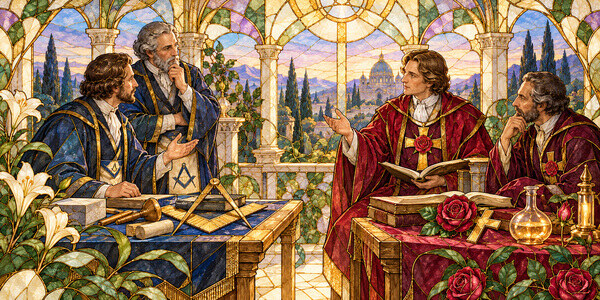
Popular literature often portrays Rosicrucianism and Freemasonry as two expressions of a single ancient organization. Their historical relationship is more complicated. Modern speculative Freemasonry developed through particular institutions in the early modern period, while the Rosicrucian manifestos emerged in a different literary and religious setting. Genuine symbolic and organizational connections subsequently developed, but these do not demonstrate a shared prehistoric origin.
During the eighteenth century, various Masonic systems incorporated degrees and rituals employing Rosicrucian imagery. The Knight Rose Croix degree is especially well known in certain Masonic traditions. In other contexts, the rose and cross were associated with Christian symbolism, alchemical transformation, or moral perfection. These examples show how an influential myth could be incorporated into a new ritual structure. They do not mean every Freemason was a Rosicrucian or that every Rosicrucian organization descended from Freemasonry.
The distinction between symbolic influence and institutional succession is crucial. An organization can borrow a name, image, or ritual motif without inheriting another group’s membership and constitution. The same applies to claims of ancient Egyptian, Templar, or classical origins. Such claims often belong to an organization’s internal mythology and should be treated accordingly unless supported by independent historical documents.
Nevertheless, the encounter between Rosicrucianism and Freemasonry is significant. It shows how European initiatory culture developed an elaborate language of symbols, degrees, and moral trials. Participants used these forms to understand themselves as moving from ignorance toward insight. Historians can examine this symbolism respectfully without accepting every legendary genealogy literally.
The Gold and Rosy Cross of the Eighteenth Century
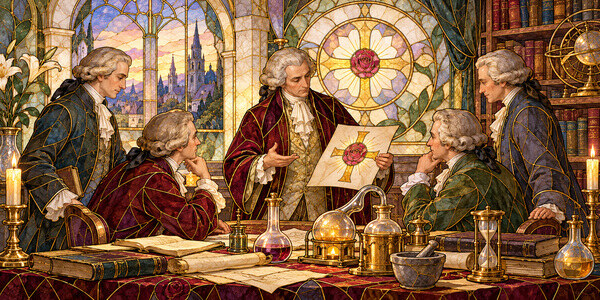
During the eighteenth century, societies associated with the names Gold and Rosy Cross developed in the German territories. They constitute an important chapter in the history of documented Rosicrucian organizations. Unlike the elusive brotherhood of the first manifestos, these societies left more evidence concerning structures, degrees, membership, and ritual interests. They combined Christian spirituality, alchemical symbolism, and organizational forms characteristic of their age.
Some circles cultivated practical alchemy, while others emphasized ritual and moral dimensions. Internal degrees created an image of gradual advancement toward knowledge. Participants were expected to undertake training and demonstrate readiness for deeper understanding. This arrangement had both educational and social functions: it structured membership, established authority, and sustained the sense of belonging to a distinctive spiritual path.
Connections with Masonic environments were important, but they did not make every organization identical. Different groups employed related names and symbols in different regions and periods. Some were religiously conservative; others developed their own philosophical systems. Historical accuracy requires discussion of specific societies rather than a single fraternity supposedly operating continuously throughout Europe.
These organizations demonstrate how literary legend gradually became social practice. The myth of Christian Rosenkreuz supplied the language of community, while actual members built institutions around it. Symbols consequently acquired new functions. They no longer merely narrated a hidden past; they also defined relationships among people in the present.
Rosicrucianism in the Nineteenth Century: The Occult Revival

European spiritual culture underwent further transformations during the nineteenth century. Occult societies developed, comparative religious interests expanded, and symbols of alchemy, Kabbalah, and Hermeticism gained new prominence. Rosicrucianism became an important point of reference in this revival. Authors and organizations adopted the Rose and Cross as a sign of initiation, inner knowledge, and spiritual discipline.
In England, the Societas Rosicruciana in Anglia was founded in 1867. With Masonic connections, it cultivated interest in Rosicrucian symbolism and esoteric study. It belonged to the particular Victorian culture of learned societies and ritual associations. Its history can be investigated through institutional evidence and should not be confused with the legendary brotherhood of the early seventeenth century. The distinction helps explain how the name Rosenkreuz acquired a new organizational life.
Different Rosicrucian currents also emerged in France and elsewhere in Europe, connected with the occult revival. Some emphasized ceremonial magic, others Christian mysticism, art, or philosophical symbolism. Their teachings, structures, and relationships with religion differed. Shared imagery does not erase those distinctions. Instead, it demonstrates how far a symbol can travel after becoming detached from its original literary setting.
During this period Rosicrucianism was increasingly presented as a universal path of spiritual development. Some authors linked its ideas with Kabbalah, astrology, tarot, and other mystical traditions. These syntheses are characteristic of modern occultism and must not automatically be attributed to the authors of the first manifestos. The movement’s history becomes a history of continuous reinterpretation.
The Golden Dawn and the Legacy of the Rose and Cross
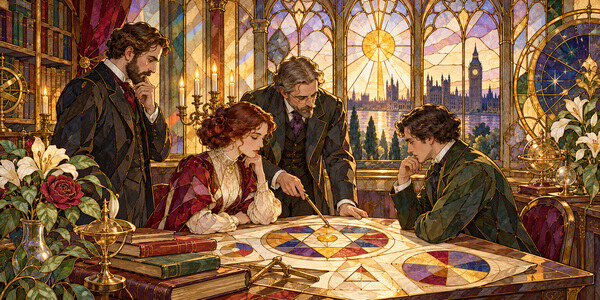
The Hermetic Order of the Golden Dawn, founded in late nineteenth-century Britain, was among the best-known occult societies of the modern era. Its system combined Hermetic philosophy, Kabbalistic interpretations, astrology, alchemical symbolism, and ceremonial practices. Rosicrucian imagery occupied an important place in aspects of its symbolic world, but the order was not simply a continuation of the fraternity described in the manifestos.
The Golden Dawn developed an elaborate system of grades in which symbolic trials and rituals were intended to reflect a process of inner training. Within this system, the rose and cross could represent human transformation and relationships between levels of reality. These interpretations belong to the specific occult environment of the nineteenth century. They are historically important, but they do not automatically reveal the original meaning of every Rosicrucian text.
Writers, artists, and occult authors associated with the order influenced modern culture. This shows that esoteric societies do not exist solely within closed ritual environments. Their symbols enter literature, visual art, and the wider imagination. The Golden Dawn illustrates this cultural circulation rather than proving uninterrupted secret control over European spirituality.
Modern Rosicrucian Organizations: Different Paths Under One Name
During the twentieth century, numerous organizations adopted the Rosicrucian name, each with its own history and teachings. Among the best known are the Ancient Mystical Order Rosae Crucis, or AMORC, and the Rosicrucian Fellowship associated with Max Heindel. These developed in modern contexts and established different programs of spiritual instruction, philosophy, and practice. They should not be described as a single society or as proven institutional successors to the literary fraternity of the early seventeenth century.
AMORC developed a system of progressive instruction and presented Rosicrucian tradition as a path toward personal understanding and inner development. The Rosicrucian Fellowship employed Christian esoteric vocabulary within its own cosmological framework. Other groups emphasized mystical prayer, symbolic philosophy, or ritual initiation. These differences are substantial: sharing the Rose and Cross does not imply a common doctrine, identical organizational structure, or agreement about historical origins.
Some modern societies present narratives of great antiquity, including connections with Egypt and ancient mysteries. Such statements must be understood as part of an organization’s self-description unless independently documented. The historical existence of a modern institution is one question; demonstrating an unbroken institutional line from antiquity is another. Confusing them turns traditional narrative into apparent historical certainty.
Modern Rosicrucianism reveals another transformation: supposedly secret knowledge circulates through books, courses, public lectures, and international communities. Initiation is frequently organized through educational programs rather than exclusively through closed ceremonies. The ancient image of invisible brothers thus meets the institutions and communications systems of the contemporary world.
The Temple Within: The Mystical Meaning of Initiation
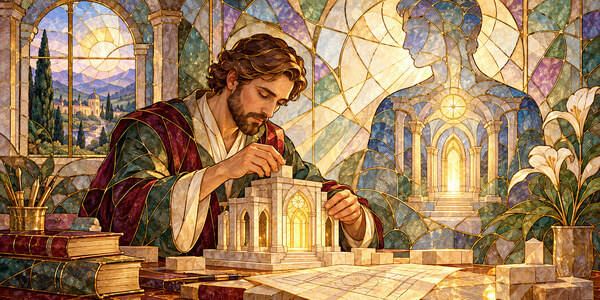
In many later Rosicrucian interpretations, the temple ceases to be merely a building or ritual setting. It becomes an image of inner life. The initiate must construct a space of clarity, discipline, and moral steadiness within. Its walls are made not of stone but of habits, convictions, and actions. Its door opens not through an external key but through readiness for self-knowledge.
This image is connected with wider traditions of Christian mysticism and philosophy. Spiritual development is often described as an inward transformation requiring humility and attention to one’s motives. Rosicrucian symbolism adds the idea of humanity as a microcosm, a being in whom the greater order may be reflected. The temple thus becomes both a moral and a cosmological metaphor.
Philosophically, such initiation raises a difficult question: what distinguishes knowledge from wisdom? Someone can read hundreds of books about symbols, memorize alchemical terminology, and understand ritual grades without becoming more responsible toward others. The inner temple demands something different: consistency between conviction and conduct. Knowledge that breeds arrogance has not fulfilled the promise of spiritual transformation.
This interpretation must not be presented as the single doctrine of all Rosicrucians. It is a philosophical development of themes emphasized differently by different movements. Its strength lies in translating the mystical language of initiation into an ethical question comprehensible beyond any particular religious community: what kind of person do we become through what we study?
Silence as Discipline: Why Hidden Knowledge Is Not Revealed Immediately
Silence is a recurring motif in the history of esoteric societies. It can mean preserving ritual information, respecting a community, or exercising caution under conditions of religious persecution. In the Rosicrucian legend, silence also performs a literary function: it makes the brotherhood invisible and intensifies the expectation of revelation. Concealment creates space for the reader to imagine what the text does not show directly.
Spiritually, silence is often interpreted as the capacity to resist turning every insight into self-advertisement. It suggests patience and the ability to distinguish premature speech from mature reflection. Such an understanding has ethical value: not every experience must immediately become a doctrine for others. Yet silence is not automatically evidence of depth. It can also conceal abuses or reinforce unquestionable authority.
Contemporary readers must therefore distinguish voluntary spiritual discipline from imposed secrecy. A community may preserve private ceremonies and personal practices, but this does not remove the need for transparency concerning financial obligations, relationships among members, and the freedom to leave. Mystical language about silence must never be used to suppress critical thought.
The strongest philosophical meaning of silence lies in the capacity to listen. When we stop constantly trying to prove what we know, more attentive understanding becomes possible. This interpretation can be drawn from Rosicrucian symbolism without claiming that inaccessible supernatural powers have been demonstrated.
The Myth of Invisible Masters and the Human Need for Hidden Order
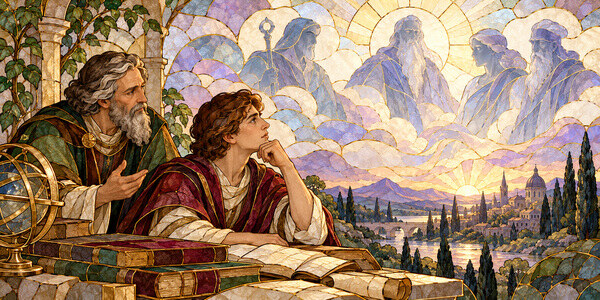
Various esoteric movements have imagined invisible masters guiding humanity’s spiritual development behind the visible course of history. The Rosicrucian legend contributed to the popularity of this image, although later versions introduced ideas absent from the original manifestos. The sages appear as guardians of knowledge that ordinary society is not yet prepared to receive. They do not govern openly but act through selected students and symbolic messages.
This motif has deep literary roots. In myths and folktales, heroes often encounter mysterious mentors who recognize their potential and prepare them for trials. Religious narratives transmit wisdom through prophets, hermits, and spiritual teachers. The Rosicrucian image of the hidden fraternity combines such patterns in a form adapted to the intellectual anxieties of early modern Europe.
The psychological appeal is clear. When the world appears chaotic, the idea of an invisible order promises meaning. It suggests that apparent accidents form part of a purpose and that wiser beings oversee human development. Yet the appeal of a story does not establish its factual truth. Legends of hidden masters provide no evidence for secret control of politics, science, or world history.
The philosophical question is more interesting than the sensational version. Why do people seek teachers who possess final answers? What happens when we transfer responsibility for our decisions to an imagined authority? Rosicrucian history can also be read as a warning: the search for wisdom may require guidance, but it does not require surrendering personal judgment.
Rosicrucianism and the Legends of Ancient Egypt
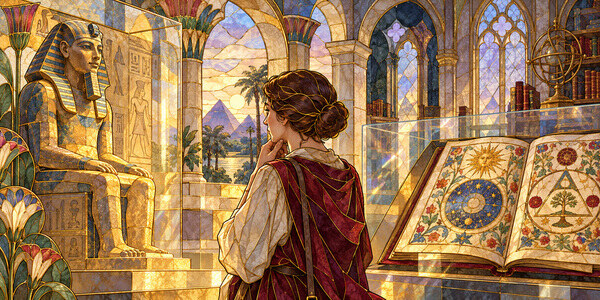
Modern Rosicrucian circles frequently recount stories of ancient Egyptian origins. Egypt appears as a land of temples, mysteries, and priests who preserved knowledge of the soul and cosmos. This image has a long European history. Ancient Greek authors associated Egypt with venerable wisdom, while Renaissance thinkers regarded Hermes Trismegistus as the bearer of an extremely ancient revelation. Later esoteric movements inherited and transformed this understanding.
The historical relationship between Egyptian religion and late antique Hermetic texts is real, but it does not prove that a Rosicrucian brotherhood existed in pharaonic times. The first documented Rosicrucian manifestos belong to the seventeenth century. When a modern organization claims direct descent from ancient temple schools, that is a claim of continuity requiring specific evidence. Symbolic affinity does not establish an unbroken institutional history.
Ancient Egypt is compelling to the esoteric imagination because it combines monumental architecture, elaborate religious symbolism, and immense historical distance. Pyramids, temples, and funerary texts evoke a world in which religion permeated life. Their actual meanings, however, are investigated through archaeology, philology, and Egyptian history. Their richness does not require turning them into the setting of an invented universal secret school.
Stories of Egyptian origin are valuable as part of the history of modern esoteric identity. They reveal how communities construct their place within time. Yet respect for tradition includes respect for historical truth. Rosicrucianism is significant enough through its documented European history without requiring an unproven continuous line back to the pharaohs.
Templars, Secret Archives, and the Temptation of a Grand Conspiracy
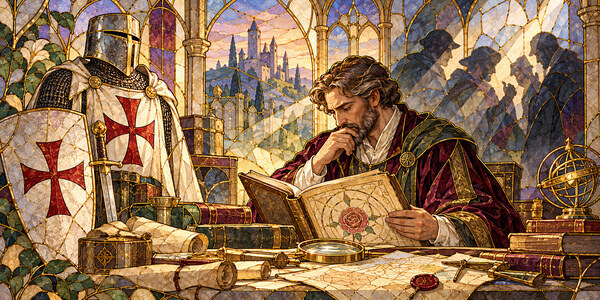
Popular legends about secret societies often claim that Rosicrucians inherited Templar secrets or belonged to a hidden network stretching across European history. Such stories combine actual organizations with literary motifs and later speculation. The Knights Templar existed during the Middle Ages and were suppressed in the early fourteenth century. The Rosicrucian manifestos appeared three centuries later. These facts do not establish an institutional connection between the two.
Why do such narratives endure? Because they create a single dramatic plot. Medieval knights, alchemists, Renaissance philosophers, and modern occultists become characters in one secret history. Every new symbol appears as a clue and every resemblance as proof. The problem is methodological: the conclusion is chosen first, and supporting details are selected afterward.
Historical research requires the opposite approach. Documents, dates, and relationships must be established before influence, borrowing, or succession can be claimed. Where evidence is absent, the responsible conclusion is that the connection has not been demonstrated. This is not a rejection of mystery but a refusal to replace questions with sensational answers.
Rosicrucian history already offers genuine puzzles: who participated in composing the manifestos, how were they interpreted by different readers, and why did their symbols survive so many transformations? These questions are more productive than a universal conspiracy in which a hidden fraternity controls everything. Real historical mystery becomes clearer and deeper when invented conspiracies are set aside.
Seven Days, Sacred Numbers, and the Geometry of Initiation
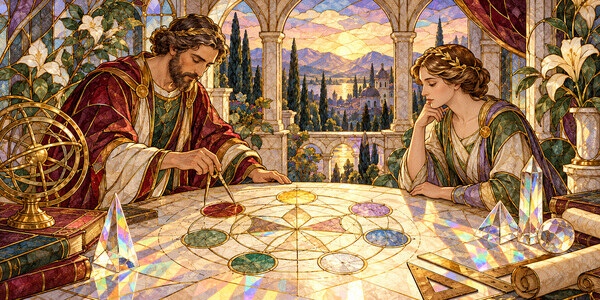
Numbers occupy a special place in Rosicrucian literature. The seven days of the Chymical Wedding, the seven-sided tomb, and the structured progression of trials point toward the symbolic language of early modern culture. Seven is associated with biblical motifs, traditional astrology, and ideas of cosmic completion. These meanings are not unique to Rosicrucianism, but its authors employ them to create the impression of an ordered spiritual universe.
Geometrical forms also function as philosophical images. The circle can suggest wholeness and completion; the square, stability and order; and the cross, intersecting directions and Christian meaning. Different esoteric systems assign additional interpretations to these forms. Yet no universal code can decode every figure in every Rosicrucian text in precisely the same way. Interpretation must begin with the specific source.
The philosophical significance of numerical symbolism lies in humanity’s desire to discover order. A story arranged across seven days creates a sense of movement from beginning to completion. A geometrically structured chamber appears as an image of the cosmos. Such artistic organization is powerful in its own right. We need not believe that numbers possess scientifically demonstrated supernatural effects to understand their importance in mystical literature.
In the Chymical Wedding, the sequence of days creates gradual revelation. The hero receives no complete explanation at the beginning. Each trial changes how he understands the next. The work’s form therefore expresses the conviction that knowledge requires time. The reader undergoes a comparable process, moving from curiosity to confusion, from confusion to reflection, and from reflection toward a new understanding of the symbols.
Spiritual Enlightenment: Knowledge That Changes Life
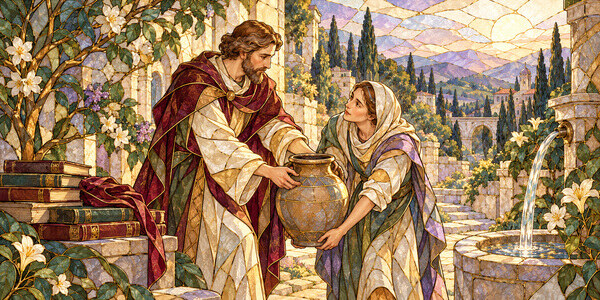
At the heart of the Rosicrucian ideal stands the belief that knowledge has transformative power. It should not become a collection of rare terms, secret signs, and impressive stories. Its purpose emerges in a person’s relationship with themselves, with others, and with the world. This is why the legend emphasizes healing, modesty, and service. The sage is not merely a guardian of mysteries but a person responsible for what they know.
This ideal has religious roots in the earliest manifestos, but it can also be considered philosophically. Knowledge of nature without ethical responsibility can be used destructively. Self-knowledge without honesty about personal weaknesses can turn into vanity. Spiritual discipline without care for others risks becoming a closed private pursuit. The Rosicrucian legend brings these problems together in the image of an initiate who serves rather than dominates.
Within this understanding, enlightenment need not be a sudden miracle. It can describe a sustained change in thought and conduct. Individuals begin to recognize their motives, question their pride, and seek a broader purpose for their abilities. This is a philosophical interpretation of the Rosicrucian ideal, not a universal description of every organization bearing the name.
In this sense, the Rose and Cross can be read as an image of maturation. The rose’s beauty does not erase the cross’s difficulty. Light does not automatically abolish human limitations; it makes them more visible. The mystical symbol thus becomes an invitation to responsibility rather than a promise of unlimited personal power.
What Do Historians Know, and What Remains Legend?

After centuries of interpretation, the boundary between documentation and legend must be made clear. The Rosicrucian manifestos appeared in the early seventeenth century and provoked a significant public response. The Chymical Wedding is associated with Johann Valentin Andreae. In subsequent centuries, documented societies adopted the Rosicrucian name and developed distinct teachings. These facts provide the historical foundation for serious discussion.
It has not been established that Christian Rosenkreuz existed as the particular biographical individual described in the manifesto. No independently authenticated seven-sided tomb matching the legend has been discovered. Nor has an unbroken organizational succession from ancient Egypt, classical mysteries, or the Knights Templar to all modern Rosicrucian societies been demonstrated. These motifs belong to traditional narratives, symbolic genealogies, and later interpretations.
This distinction does not deprive Rosicrucianism of its mystical atmosphere. On the contrary, it reveals the phenomenon’s true scale. A literary narrative about a hidden brotherhood inspired philosophical debates, religious reform projects, ritual organizations, and artistic works. It survived because it addressed enduring human questions about knowledge, belonging, and transformation. The historical reality of that influence is more significant than unsupported sensational claims.
For readers, the lesson is to ask precise questions. When encountering a claim of ancient origin, seek the earliest available document. When reading about a secret ceremony, establish which organization and period it belongs to. When interpreting a symbol, distinguish its role in the original text from subsequent meanings. Mystery then becomes a subject of understanding rather than an excuse for credulity.
How Should We Read Rosicrucian Texts Today?

The best starting point is the original works. The Fama Fraternitatis introduces the brotherhood’s history and appeal to Europe. The Confessio Fraternitatis develops its program of renewal. The Chymical Wedding offers an intricate allegorical narrative of trial and transformation. The three texts are connected but belong to different literary forms. Treating them as a single literal rulebook would erase much of their philosophical and artistic richness.
Historical context is indispensable. Words such as reformation, philosophy, alchemy, and medicine carried meanings different from their present-day uses. When the authors speak of restoring knowledge, they participate in specific religious and intellectual controversies. When they employ images of secret books and extraordinary healers, they create ideals through which to criticize society. Understanding this context protects against hasty modern reinterpretations.
The next step is to compare perspectives. Historians examine authorship, dating, and reception. Literary scholars investigate allegory and narrative technique. Philosophers consider theories of knowledge, morality, and transformation. Members of modern Rosicrucian organizations may attach personal and ritual significance to the same symbols. These perspectives can enter into dialogue, but they should not be conflated.
Finally, we must preserve the freedom to question. Mystical texts do not lose value when read critically. Their imagery becomes richer when we understand its origins. Studying Rosicrucianism means taking both the power of symbols and responsibility toward evidence seriously. The Rose and Cross then become not a ready-made answer to every mystery but an entrance into the complex history of humanity’s spiritual imagination.
Rosicrucianism in Literature, Art, and the Modern Imagination
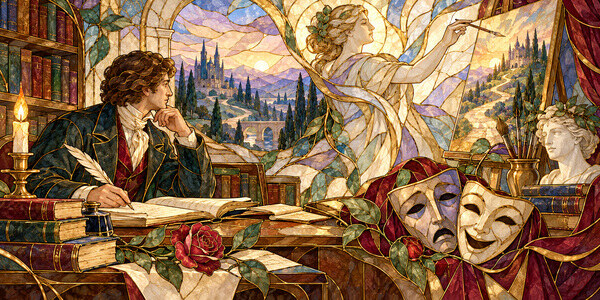
Rosicrucian influence extends beyond organizations bearing its name. Images of the secret mentor, hidden library, symbolic tomb, and alchemical transformation recur in European literature and visual culture in many forms. They answer art’s desire to turn abstract questions into memorable scenes. Instead of defining self-knowledge, a narrative portrays a hero who undergoes trials and returns transformed.
Romantic literature and later occult movements were particularly interested in such imagery. The hidden society became a symbol of alternative spiritual community, while the mysterious manuscript suggested that official knowledge did not exhaust human questions. These motifs could support philosophical exploration, artistic suspense, or social criticism. Their literary function does not establish that the secret organizations depicted actually existed.
In visual art, roses, crosses, alchemical figures, and geometric compositions create a language combining religious and philosophical associations. Different artists can use similar signs for different purposes. Analysis must therefore begin with the artist, period, and context rather than a supposedly universal esoteric dictionary. Symbols remain alive precisely because they participate in different historical conversations.
In contemporary popular culture, secret fraternities often drive adventure plots and conspiracy stories. Such works can be entertaining, but their narrative persuasiveness is not historical evidence. Distinguishing fiction from history allows us to enjoy mystery without mistaking every dramatic scene for a revelation about the past.
Why Has the Legend Survived for Four Centuries?
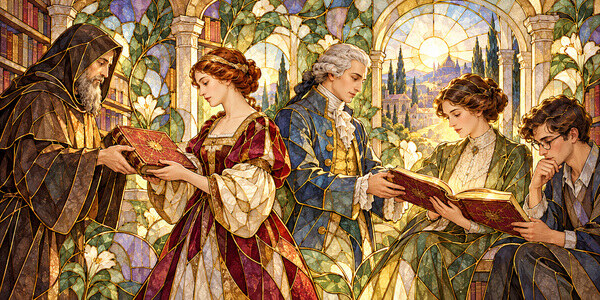
Few literary mysteries have generated such a prolonged afterlife. The explanation lies not merely in the mysterious founder or symbolic tomb. Rosicrucianism combines enduring human aspirations: the desire for knowledge, hope for moral renewal, longing for community, and conviction that life possesses meaning beyond what is immediately visible. These aspirations do not disappear as historical circumstances change.
The legend also offers a dramatic structure. First comes dissatisfaction with the existing world. Next is the journey toward hidden wisdom. Finally, a community appears whose purpose is to return knowledge to society. This sequence turns a philosophical question about reform into a story the reader can experience. One does not simply learn that knowledge requires renewal; one enters a world where renewal has a face, a location, and a secret.
The adaptability of its symbols also matters. Early readers understood the Rose and Cross through particular religious and philosophical concerns. Later societies could interpret them as initiation, universal wisdom, or personal development. Historians see evidence of ideas moving across centuries. Such multiplicity allows Rosicrucianism to remain recognizable even as its interpretations change.
Yet flexibility carries a danger. The more adaptable a symbol becomes, the easier it is to attach claims unrelated to its original sources. The legend’s longevity should therefore be studied as a history of reception and reinterpretation. It does not prove that every generation preserved the same secret. It demonstrates that a single narrative became a shared language for different forms of spiritual seeking.
The Final Initiation: When the Secret Becomes a Question

At the end of the Rosicrucian journey, no document awaits us that resolves every mystery of the fraternity. Instead, a more complex picture emerges. We encounter early modern authors dreaming of a renewal of knowledge, an allegorical hero undergoing trials, readers who treated the mystery as a promise of an actual brotherhood, and later organizations that turned the legend into the foundation of their identities. We see a symbol moving among religion, philosophy, alchemy, and art.
The historical Rosenkreuz remains a literary figure whose biography has not been independently verified. But the questions raised by his story are real. What makes knowledge valuable? Why do people seek hidden teachers? What connects spiritual development with service to others? Can society be transformed if individuals do not change the way they use their abilities? These questions explain Rosicrucianism’s lasting place in the history of European spirituality.
The most powerful image remains the tomb opening after a long silence. The past is not simply buried within it; it has left texts awaiting another reader. The legend reminds us that every generation inherits ideas it must understand anew. Genuine discovery does not consist in accepting every old story literally, but in recognizing the questions that continue to matter.
The rose blooms upon the cross as an image of beauty emerging amid trial. The alchemical wedding unites opposites in a narrative of transformation. The invisible brotherhood embodies the dream of a community serving knowledge rather than exploiting it for power. These are symbols, not evidence of supernatural history. Their power lies in their capacity to make us reflect on our own responsibilities.
In this sense, the final initiation is not the acquisition of a secret password. It is the refusal to replace truth with a convenient legend while preserving the spiritual beauty of symbolic language. Critical reason and mystical imagination need not be enemies. The former teaches us to verify; the latter inspires questions beyond everyday routine. Rosicrucianism remains meaningful where these capacities meet: in the pursuit of knowledge that is profound, responsible, and transformative.
Author: Vasil Stoyanov