
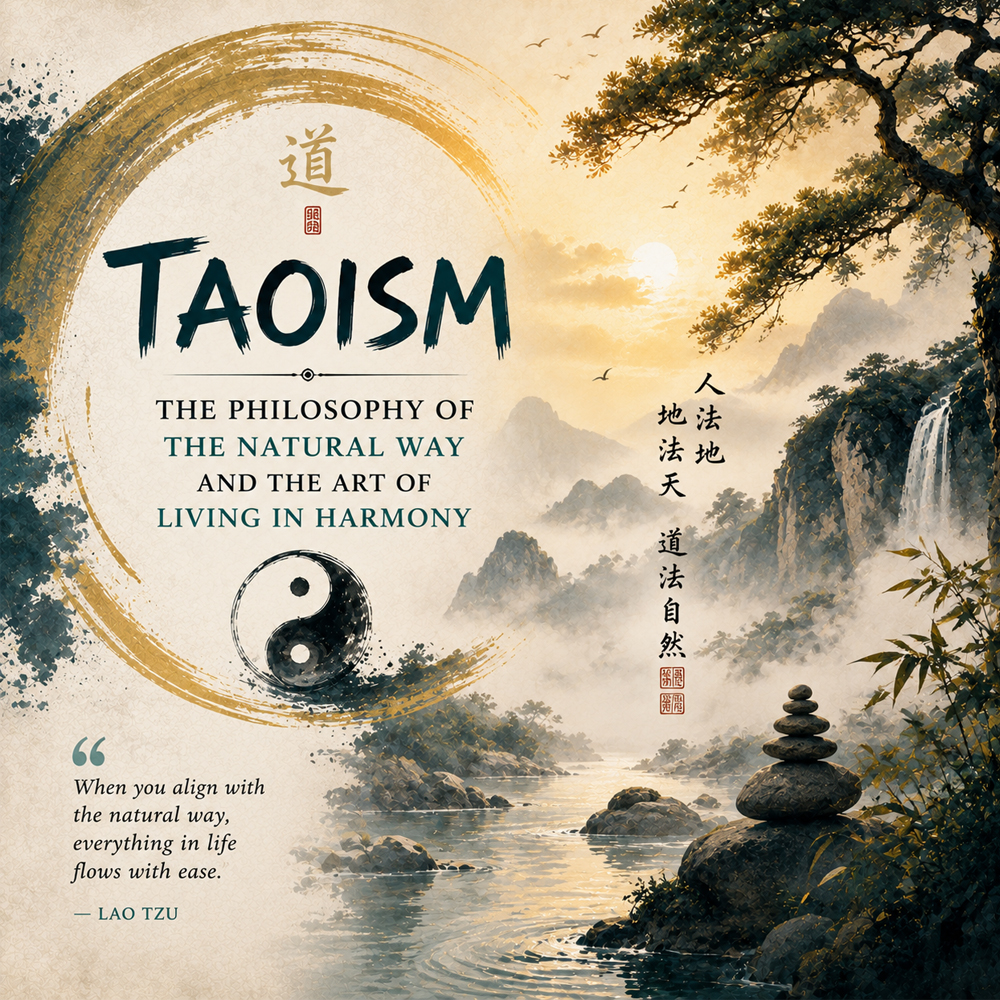
Introduction: Taoism as a Path Beyond Ordinary Thinking
Taoism is one of the deepest spiritual and philosophical traditions in human history because it does not merely attempt to explain the world, but to transform the way a person experiences it. It does not begin with dogma, command, or a system of rigid moral rules, but with a nearly silent observation: life is already in motion, nature already knows its rhythm, and human beings suffer most when they try to force that rhythm according to their own fears, ambitions, and illusions. In this sense, Taoism is not simply a teaching about ancient China, but a universal philosophy of human existence, because it raises the question of how we can live without constant inner tension, without unnecessary struggle, and without disconnecting from the natural flow of life.
At the center of Taoism stands the concept of the Tao, usually translated as “the Way,” though this translation is only approximate. The Tao is not a path in the ordinary sense of the word, not a road one can see ahead, nor a ready-made formula that can be followed mechanically. It is the very manner in which existence unfolds – the invisible principle behind birth and death, the movement of the seasons, the flow of rivers, the growth of trees, the silence of mountains, and the inner changes within the human heart.
From the very first lines of the “Tao Te Ching,” it is said that the Tao that can be spoken is not the eternal Tao. This sentence is key to the entire Taoist worldview, because it warns us that the deepest truth cannot be fully contained in words. Words can point toward it, hint at it, open a door – but they cannot replace the direct experience of reality itself.
For this reason, Taoism is not a philosophy that should only be studied, but one that must be felt, observed, and lived. It does not ask only what truth is, but how a person can free themselves from the unnecessary tensions that prevent them from being in harmony with it. Here lies its unique strength: Taoism does not seek to conquer life, but to merge with it.
The Historical World in Which Taoism Emerged
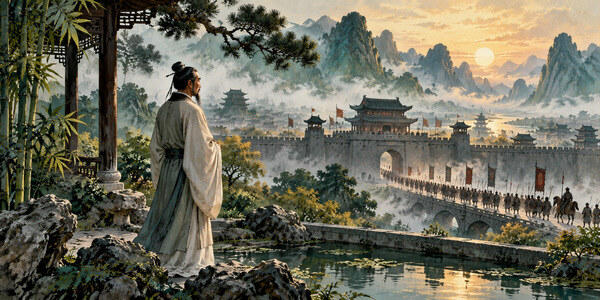
Taoism arose in China during a period of deep political, social, and spiritual upheaval. It was a time when various states were at war, rulers struggled for power, social order was collapsing, and thinkers sought to understand how a person could find stability in a world filled with uncertainty. It was within this historical context that the great philosophical schools of China emerged, including Confucianism, Legalism, Mohism, and Taoism.
Confucianism offered an answer through morality, ritual, social responsibility, and proper relationships between people. It believed that a person could live well by taking their place within the social order and fulfilling their duties with dignity. Taoism, however, moved in a different direction, seeing danger in the excessive artificiality of human rules and in the attempt to organize life through external force.
Taoist thinkers observed that the more people try to control the world, the more chaos they create. The more laws are imposed, the more cunning, fear, and hypocrisy arise. The more a person strives to be virtuous according to external standards, the more they risk losing their natural spontaneity.
This does not mean that Taoism is a teaching of disorder or moral irresponsibility. On the contrary, it seeks a deeper order than one that can be imposed from the outside. It speaks of the order of nature, the order of the Tao, that harmony which does not require force because it arises from the very essence of things.
In this sense, Taoism is both a philosophical and spiritual response to the crisis of civilization. When society becomes too noisy, Taoism returns the person to silence. When politics becomes too aggressive, it returns them to softness. When the mind becomes too complex, it returns them to simplicity.
Laozi and the Secret of Unpretentious Wisdom
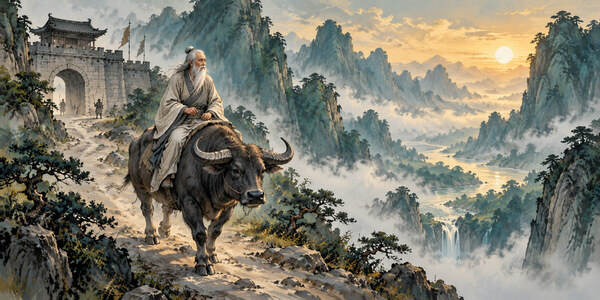
Laozi is the most well-known figure associated with the origins of Taoism, although his historical identity remains shrouded in legend. According to tradition, he was a sage, archivist, or guardian of ancient knowledge who, at the end of his life, left the civilized world, disillusioned by the decline of society. Before disappearing beyond the border, he left behind a short text known as the “Tao Te Ching,” which became one of the most influential spiritual and philosophical works in history.
Even if we cannot know all the historical details about Laozi with certainty, the symbolic significance of his figure is extremely important. He represents the image of the sage who does not seek fame, does not impose teachings by force, and does not attract followers through authority. His wisdom is quiet, unobtrusive, and almost invisible – like the Tao itself, which acts through all things without declaring itself their master.
The “Tao Te Ching” is an extraordinary text because it does not resemble a systematic philosophical treatise. It consists of short chapters filled with paradoxes, imagery, and poetic expressions that do not provide easy answers but open space for contemplation. The text does not persuade through logical arguments, but through an inner shift in perception.
One of Laozi’s most powerful ideas is that weakness is often a deeper form of strength. Water is soft, yet it overcomes stone; the valley is low, yet it gathers all streams; empty space appears as nothing, yet it is what makes a vessel useful. These images are not merely beautiful metaphors, but fundamental insights into how life truly functions.
Laozi shows us that the human tendency toward brute force often arises from inner insecurity. When a person does not understand the natural course of things, they try to compensate through control. But the more they control, the more they separate themselves from the Tao and the more tension they create within and around themselves.
The “Tao Te Ching” as a Book of Simplicity and Depth
The “Tao Te Ching” is a short text, but its brevity is not poverty – it is concentration. There are no unnecessary explanations, because the style itself follows the Taoist principle of simplicity. It does not say more than is needed and often leaves the reader in silence, where meaning must mature on its own.
This book can be read in many ways. It can be approached as a philosophical treatise, a spiritual guide, a political teaching, a poetic work, or a manual for inner transformation. This multilayered nature is what makes it timeless, because it cannot be exhausted by a single interpretation.
In the “Tao Te Ching,” the idea is constantly repeated that true wisdom is connected with a return to simplicity. This does not mean intellectual poverty or a rejection of knowledge, but a release from the unnecessary complexity created by the mind. A person may know many things and still be far from wisdom if their knowledge makes them proud, tense, and disconnected from immediate life.
Laozi often speaks of emptiness as the source of usefulness. A room is useful not because of its walls, but because of the empty space within them. A wheel is useful not only because of its spokes, but because of the empty center around which it turns. A vessel is useful not because of the clay itself, but because of the emptiness that can hold water.
This understanding has profound significance for human life. We often strive to fill ourselves with more ideas, possessions, desires, plans, ambitions, and identities. But Taoism asks whether we have lost the inner space in which life can breathe freely.
Zhuangzi and Freedom Beyond Fixed Truths
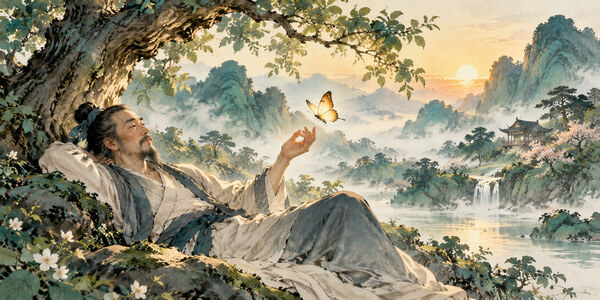
If Laozi is the quiet voice of Taoism, Zhuangzi is its free laughter. He is a philosopher, poet, storyteller, and destroyer of overly serious human pretensions. His text, known as the “Zhuangzi,” is filled with parables, paradoxes, dialogues, and strange stories intended not to create a new dogma, but to free the mind from dogmatic thinking.
Zhuangzi does not believe that human categories can capture reality as it truly is. He constantly shows that what we call right, wrong, beautiful, ugly, useful, useless, great, or small depends on perspective. This is not mere relativism, but a deep spiritual insight that the mind suffers when it clings to a limited viewpoint and declares it absolute truth.
One of Zhuangzi’s most famous stories is the dream of the butterfly. He dreams that he is a butterfly, freely flying and knowing nothing of the man Zhuangzi. When he awakens, he wonders whether he is a man who dreamed he was a butterfly, or a butterfly now dreaming that he is a man.
This story should not be understood merely as a play between reality and dream. It questions the stability of our identity. We believe we know who we are, but that knowledge may be far more fragile than we assume.
Zhuangzi teaches us not to cling too tightly to the image we have of ourselves. A person who fully identifies with their role, profession, name, social status, or opinion becomes a prisoner of their own form. True freedom begins when we see these forms as temporary expressions rather than final essence.
The Tao as the Inexpressible Foundation of Everything
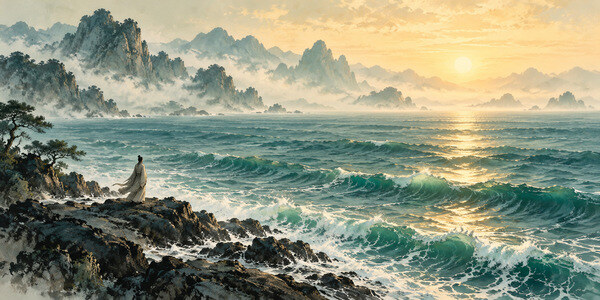
The Tao is the most important concept in Taoism, yet it is also the most difficult to explain. If we say that the Tao is nature, this is true, but not sufficient. If we say that the Tao is the law of the universe, this is also only partially true. If we say that the Tao is God, we risk introducing ideas that do not fully correspond to Taoist thought.
The Tao is not a personality that creates the world from the outside, nor a separate ruler over existence. It is rather the very way in which existence happens. It is the source and the movement, emptiness and form, the beginning and the beginningless.
The Tao cannot be reduced to something specific, because all specific things arise within it. It is like the ocean, and individual phenomena are like waves. The waves may differ in shape, height, and duration, but none of them is separate from the ocean.
Human beings are also manifestations of the Tao. This means that we should not seek the Tao as something distant, hidden in the sky or in some otherworldly realm. The Tao is present in breathing, in walking, in silence, in thinking, in the arising of an emotion and in its disappearance.
The problem is not that the Tao is absent, but that people are too busy to notice it. The mind constantly names, compares, evaluates, plans, and worries. In this noise, natural clarity becomes obscured, just as still water becomes muddy when constantly stirred.
Wu Wei: The Art of Acting Without Unnecessary Struggle
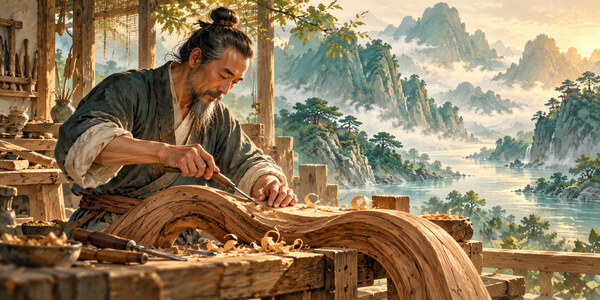
One of the most well-known principles in Taoism is wu wei, often translated as non-action. However, this translation can be misleading, because wu wei does not mean laziness, passivity, or withdrawal from life. A more accurate understanding is action without force, action without artificial tension, action in harmony with the natural course of a situation.
When a person acts through wu wei, they do not try to impose their will at any cost. They observe, sense the direction of the process, and participate in it in a way that does not violate its inner logic. This is very different from inaction, because it requires high sensitivity, awareness, and inner discipline.
Imagine a skilled craftsman working with wood. He does not cut randomly against the grain, but follows the natural structure of the material. His action appears effortless because it is not a struggle against the nature of the wood, but a cooperation with it.
The same applies to human relationships. The more we force others to be what we want them to be, the more resistance we create. But when we understand the nature of the situation, we can act more wisely, more gently, and often far more effectively.
Wu wei is not a refusal to act, but a refusal to force. It does not mean doing nothing, but not doing the unnecessary. In this sense, wu wei is the art of recognizing when action is needed and when the desire to act is merely fear, impatience, or a need for control.
Water as the Most Perfect Symbol of the Tao

Water is perhaps the most beautiful and frequently used symbol in Taoism. It is soft, yet not easily defeated. It has no fixed form, yet takes on any form. It flows toward the low places that people often avoid, and precisely because of this, it gathers the strength of all streams.
Laozi uses water as an image of the highest virtue because it nourishes all things without competing with them. Water does not boast of its strength, does not insist on being noticed, and does not seek recognition. It simply follows its nature, and through this, it expresses the Tao.
This symbol contains a profound lesson for human beings. We often associate strength with hardness, pressure, control, and domination. Taoism reverses this idea and shows that the deepest strength can be soft, flexible, and unobtrusive.
Water does not fight the stone directly, yet over time it transforms it. It does not confront obstacles with anger, but flows around them and continues. This ability to continue without becoming rigid is one of the most important Taoist virtues.
In human life, this means developing flexibility without losing direction. To be soft does not mean to be weak. It means not allowing the world to turn us into something brittle, rigid, and easily broken.
Yin and Yang: The Living Dance of Opposites
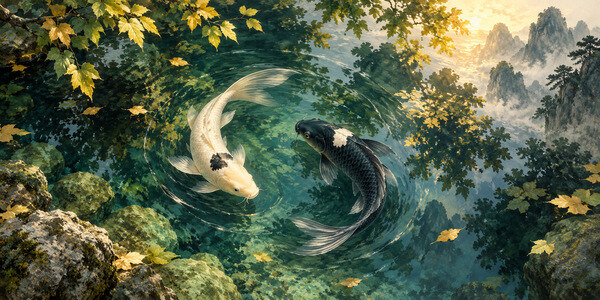
Yin and Yang are among the most recognizable ideas associated with Chinese thought, but they are often understood superficially. They are not simply two opposing forces that fight each other. They are complementary aspects of the same living process.
Yin is associated with darkness, night, softness, rest, inwardness, earth, and receptivity. Yang is associated with light, day, activity, movement, outwardness, heaven, and manifestation. But Yin and Yang are not absolute categories, because anything can be Yin in relation to one thing and Yang in relation to another.
This means that reality is not composed of isolated opposites, but of relationships. Night is not the enemy of day, but its condition. Rest is not the negation of movement, but its possibility for renewal.
In the symbol of Yin and Yang, each side contains a point of the other. This shows that within every extreme, its opposite movement is already emerging. When the day reaches its peak, it begins to turn into night; when winter reaches its depth, spring is already hidden within it.
This idea is extremely important for understanding human life. Joy and sorrow, success and failure, strength and weakness are not completely separate states. They flow into one another, and wisdom lies in seeing the movement between them rather than clinging desperately to one side.
De: The Power That Does Not Impose Itself
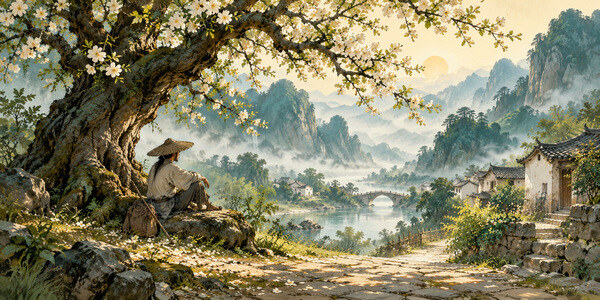
After Dao, the second key concept in the “Dao De Jing” is De, often translated as virtue, power, or inner strength. But this is not virtue in the ordinary moralistic sense, where a person follows external rules to be considered good. De is the natural power of a being that is in harmony with its own nature and with the Dao.
When a tree grows according to its nature, it expresses its De. When water flows downward without resistance, it expresses its De. When a person acts without pretense, without force, and without unnecessary self-imposed burden, they too express De.
This power is quiet because it does not need to prove itself. It is not like authority that must constantly be defended, nor like a social image that must be maintained before others. De is like the fragrance of a flower: it does not persuade anyone, does not advertise itself, and does not impose itself, yet it naturally radiates.
In the modern world, people often associate power with control, visible success, influence, status, and the ability to get what you want. Daoism offers a completely different understanding. True power is not making the world bend before you, but living in such a way that your actions are not in conflict with the deeper order of life.
This understanding of De also changes how we think about a good person. In Daoism, the virtuous person is not one who constantly demonstrates moral superiority. It is one who is so naturally aligned with themselves and with life that their goodness does not appear as effort.
Simplicity as a Gateway to Wisdom
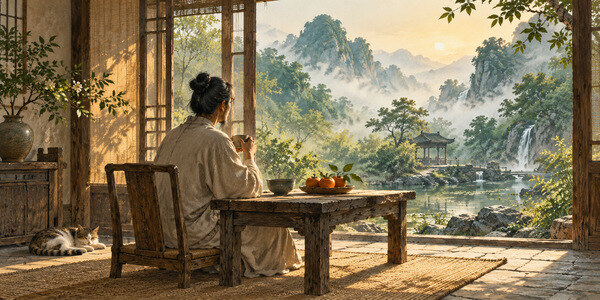
Daoism constantly returns to the theme of simplicity because it sees in it not poverty, but clarity. A simple person is not an ignorant person, but someone who is not torn apart by thousands of unnecessary desires, fears, roles, and pretensions. Simplicity in Daoism is a form of inner purity, in which life can be experienced directly, without the constant interference of the complicating mind.
This simplicity does not mean a rejection of intelligence. On the contrary, it is often the result of deep intelligence that has seen the limits of excessive complexity. A person may accumulate vast knowledge and still remain confused if they do not know how to return to what is essential.
Daoist simplicity is closely related to inner liberation. When a person stops chasing every desire that arises in their mind, they discover that they do not need so much to feel whole. When they stop constantly constructing an image of themselves, they begin to feel the freedom to be who they are.
In this sense, simplicity is the opposite of fragmentation. It gathers a person back into their center. It allows them to see more clearly, act more lightly, and suffer less from things that the mind has turned into dramatic necessities.
Daoism does not say that one must live primitively or reject the world. It says that one must recognize what is naturally necessary and what is artificially accumulated. This distinction is the beginning of true inner freedom.
Emptiness as a Source of Possibility
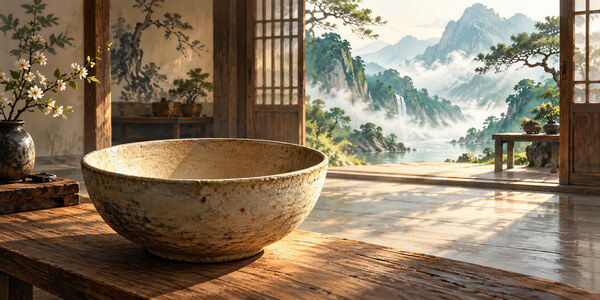
One of the deepest and most beautiful ideas in Daoism is the idea of emptiness. To the ordinary mind, emptiness often appears as lack, deficiency, or absence. But from the Daoist perspective, emptiness is the condition for all possibility, because only empty space can receive, contain, and allow movement.
A room is useful precisely because of the empty space within it. A bowl is useful not because of the clay itself, but because of the emptiness that can hold water. A wheel turns around an empty center that is not visible as a material part, yet without it the entire structure would be useless.
This image has great significance for inner life. If the mind is completely crowded with thoughts, opinions, desires, and worries, there is no space for new understanding. If the heart is filled only with past pain, fears, and expectations, it cannot meet the present freely.
Emptiness is not meaninglessness, but openness. It is the ability not to be completely occupied by one’s own fixations. It is the space in which life can manifest in a new way.
Daoism teaches us that sometimes we should not add more to ourselves, but let go of what weighs us down. Not every emptiness needs to be filled. Some emptinesses are sacred, because through them we hear the quieter voice of life.
Ziran (Naturalness) and the Art of Being Yourself
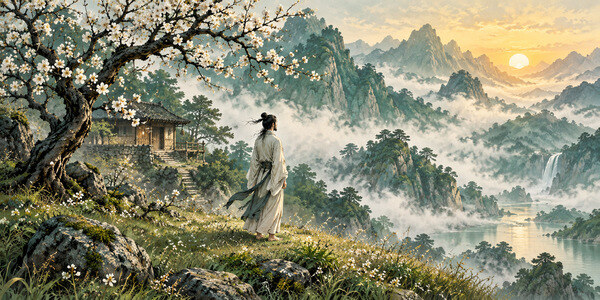
The concept of ziran is often translated as naturalness, spontaneity, or “so of itself.” It refers to the state in which things are as they are, without unnecessary interference and without being forcibly shaped according to an external idea. This is one of the most subtle and important concepts in Daoism, because it shows how the Dao manifests in concrete life.
Naturalness does not mean chaos or impulsiveness. It is not an excuse to follow every passing whim. To be natural in the Daoist sense means to be in harmony with one’s deeper nature, not with the surface movements of the ego.
Many people believe they are being natural when they simply express everything they feel. But Daoism would say that not every reaction is natural in the deeper sense. Some reactions are merely habits, fears, defense mechanisms, and social conditioning that have accumulated over a person’s original clarity.
True naturalness requires the release of these layers. It is a return to a state in which a person does not play a role before themselves or the world. This return may seem simple, but it is in fact one of the deepest spiritual movements.
When a person lives in ziran, their actions become less forced. They no longer constantly try to prove themselves, to be noticed, or to control the impression they leave. In this way, a special lightness appears – not irresponsibility, but freedom from artificiality.
The Sage in Daoism
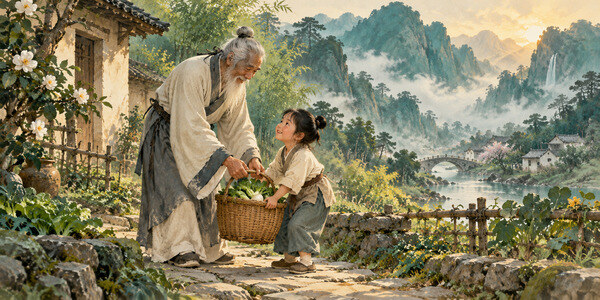
The Daoist sage does not resemble the image of a moral preacher who stands above others and tells them how to live. They do not present themselves as possessors of absolute truth and do not seek followers to affirm their importance. Their wisdom is often hidden, quiet, and unpretentious.
The sage in Daoism is someone who has stopped struggling against the natural course of life. They are not insensitive or detached from the world, but neither are they a prisoner of its fluctuations. They participate in life without being consumed by it.
This sage does not cling to success, because they know success is transient. They are not destroyed by failure, because they know failure is also part of the movement of things. They do not strive to be above others, because they understand that competition often arises from an inner emptiness that has not been properly understood.
The Daoist sage acts when it is time to act and withdraws when it is time to withdraw. They do not confuse constant activity with a meaningful life. They know that sometimes the wisest action is to allow a situation to mature.
This image is especially valuable in the modern world, because we live in a culture that constantly rewards visibility, speed, and self-promotion. The Daoist sage reminds us that not everything true needs to be loud. Some of the deepest changes happen quietly, almost unnoticed.
The Daoist Understanding of Human Suffering
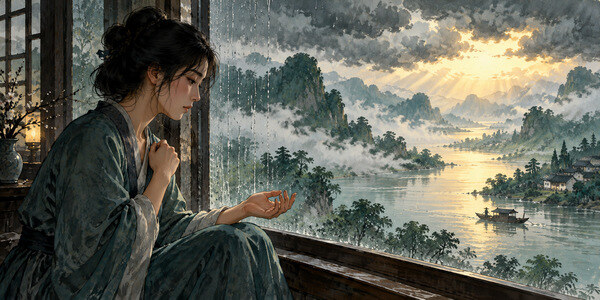
Daoism does not view suffering only as an external problem caused by circumstances. It sees much of human suffering as the result of resistance to the natural flow of life. When a person insists that reality should be different from what it is in the present moment, they create inner conflict.
This does not mean that Daoism teaches indifference to pain. On the contrary, it offers a very subtle way of meeting pain without adding additional suffering through resistance, fear, and mental exaggeration. Pain may be part of life, but suffering is often intensified by the way the mind clings to it.
When a person loses something they love, the mind often tries to restore the past or control the future. This creates tension, because neither the past can be brought back nor the future fully possessed. Daoist wisdom directs attention to the present flow, where life is still happening.
To live in harmony with the Dao does not mean never feeling sadness, fear, or confusion. It means allowing these states to move through you without turning them into a fixed identity. Emotions are like the weather: they arise, change, and pass.
This perspective brings gentleness toward human vulnerability. Daoism does not require a person to be hard and unshakable like stone. Rather, it invites them to be like water, which can take the shape of the vessel without losing its essence.
Daoism and the Mind That Creates Division

One of the main causes of human confusion, according to Daoism, is the tendency of the mind to divide reality into opposites and then cling to one side. The mind says: this is good, this is bad; this is success, this is failure; this is mine, this is yours; this is me, this is not me. These distinctions are useful in practical life, but they become a source of suffering when we take them as ultimate truth.
Zhuangzi especially shows how conditional human categories are. Something that is useful in one situation may be useless in another. Something one person calls beautiful, another may see as ordinary. Something that appears as misfortune today may turn out to be a doorway to a new direction tomorrow.
Daoist wisdom does not deny differences, but warns us not to absolutize them. Life is more fluid than our concepts. When we cling too tightly to names and categories, we begin to struggle with reality instead of seeing it.
This is especially important for inner freedom. A person who believes every thought lives as a prisoner of their mind. A person who sees thoughts as temporary forms begins to sense space beyond them.
Daoism does not say we should stop thinking. It says thinking should be a tool, not a master. When the mind takes its proper place, life becomes clearer, simpler, and less fragmented.
Daoist Political Wisdom
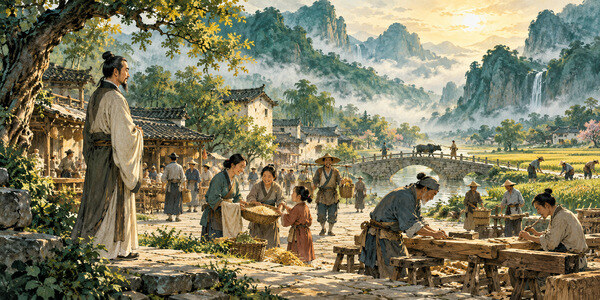
In the “Dao De Jing,” there are many passages that can be read as political philosophy. But this is not politics in the sense of a strategy for gaining power. It is a reflection on how governance can be in harmony with the natural order rather than disrupting it through excessive intervention.
Laozi describes the best ruler as one whose existence the people barely know. This means that good governance should not be intrusive, loud, and constantly controlling. When a ruler governs in harmony with the Dao, they do not exhaust the people with unnecessary laws, punishments, and ambitious projects.
This idea may seem strange to modern thinking, which often associates leadership with activity, visibility, and strong will. But Daoism asks whether excessive activity of power creates more problems than it solves. Sometimes the best governance is that which allows people to live naturally, without being constantly shaped from the outside.
Daoist political wisdom is not a naive dream of complete absence of order. It is a warning against artificial order that suppresses natural life. When laws become too numerous, people begin to lose their sense of inner virtue and think only about how to adapt to the external system.
In this sense, Daoism offers a deep critique of power as a psychological phenomenon. Power often arises from fear of chaos, but when it tries to eliminate all spontaneity, it creates a dead order. The Daoist alternative is a living order that moves like nature, not like a mechanical machine.
Daoism and Nature as a Mirror of Truth

Nature is the greatest teacher in Daoism because it does not pretend and does not moralize. The river does not try to be virtuous, yet it nourishes life. The tree does not try to be great, yet it grows toward the light. The mountain does not declare itself wise, yet its presence teaches silence.
The Daoist observes nature not as an external object to be conquered, but as a living manifestation of the same principle that operates within the human being. This is very different from modern alienation, where nature is often seen only as a resource. For Daoism, nature is more than an environment; it is a mirror of the Dao itself.
When a person watches the changing seasons, they see that change is not a mistake, but a fundamental law of life. Spring does not cling to itself, summer does not refuse to become autumn, and winter does not consider its stillness a failure. Each state has its time and its necessity.
This observation can change how a person perceives their own inner seasons. There are periods of growth, periods of unfolding, periods of loss, and periods of rest. Daoism teaches us not to force winter to be spring, because each phase has its hidden work.
Nature also teaches us unobtrusive strength. Roots grow in the dark, without noise and without recognition. Yet they are what sustain the tree when the storm comes.
Daoist Meditation as a Return to Silence

Daoist meditation is not necessarily a technique for achieving extraordinary experiences. It is rather a return to the natural silence that has always been present beneath the surface of thoughts. In this sense, meditation does not create the Dao, but removes the obstacles to sensing it.
When a person sits quietly and observes their breath, body, and mind, they begin to see how much inner movement occurs without their control. Thoughts come and go, emotions arise and pass, sensations change from moment to moment. This observation gradually weakens the illusion that one must control everything internally.
In Daoist practice, the body is very important, because it is not seen as an obstacle to spirituality. On the contrary, the body is a living gateway to the Dao. Breathing, posture, inner sensation, and energy flow are part of the path, not something secondary.
Silence in Daoism is not empty indifference. It is a living presence in which a person becomes more sensitive to the subtle movements of life. When the mind calms, the world does not disappear – it becomes clearer.
Thus, Daoist meditation is not an escape from the world. It is a way for a person to return to the world with less tension, less fear, and more natural clarity. True meditation continues even when one rises from their seat and begins to walk, speak, work, and interact.
The Body as a Small Universe
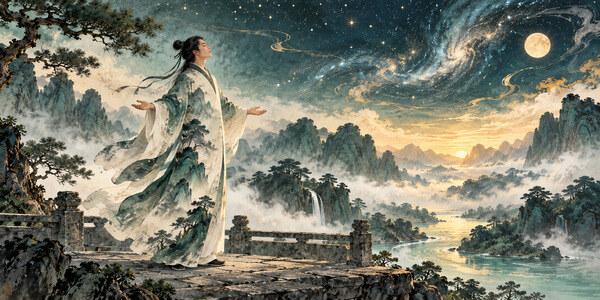
In Daoism, the body is not just a physical machine, but a microcosm in which the processes of the greater universe are reflected. This understanding underlies many Daoist practices related to breathing, movement, internal alchemy, and longevity. The human body is seen as a place where Heaven, Earth, and vital energy meet.
This perspective differs from traditions that oppose body and spirit. For Daoism, the body is not an enemy of spirituality, but its expression. If a person neglects their body, they neglect one of the ways in which the Dao manifests.
Breathing has special significance because it connects the inner and the outer. With each inhalation, a person receives the world into themselves, and with each exhalation, they return to the world. This simple process shows that the boundary between “self” and “non-self” is more permeable than it appears.
Daoist exercises often aim for fluidity, softness, and continuity. They do not force the body, but teach it to move in harmony with its structure. This is a physical expression of the same principle behind wu wei.
When the body becomes more relaxed and sensitive, the mind also changes. Tension in thinking is often connected to tension in the body. Therefore, the path to inner freedom does not pass only through ideas, but also through the way we inhabit our own body.
Daoist Internal Alchemy

In the later development of Daoism, practices known as internal alchemy emerged. They use symbolic language related to the transformation of energy, the preservation of vital force, and the attainment of spiritual wholeness. Although these practices may sometimes sound mystical, at their core lies the idea of harmonizing the human being with the Dao.
Internal alchemy should not be understood only literally. It is also a metaphor for the transformation of the human being. Coarse emotions, scattered energy, and a chaotic mind can gradually be transformed into clarity, calmness, and inner strength.
This process requires patience, because Daoism does not believe in forced enlightenment. Just as nature does not hurry, inner transformation cannot be compelled. A seed does not become a tree overnight, no matter how strongly we wish it.
Internal alchemy often speaks of gathering scattered energy. This can also be understood psychologically: a person stops losing themselves in endless desires, worries, and conflicts. When energy returns to the center, a sense of wholeness arises.
Thus, alchemy in Daoism is not merely a search for immortality in a literal sense. It is a striving for a state in which a person lives more fully, more consciously, and more in harmony with the rhythm of life. This is immortality not as an escape from change, but as a touch of that in life which is not exhausted by individual forms.
Taoism and Martial Arts as Philosophy in Motion
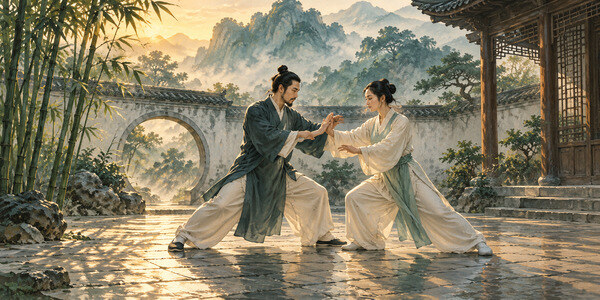
The Taoist influence on Chinese martial arts is one of the clearest proofs that this philosophy is not merely abstract reflection, but a practical understanding of movement, strength, and the human body. In styles such as Tai Chi, the idea is clearly visible that softness can overcome hardness when combined with proper sensitivity, balance, and timing. Here, victory does not come through brute opposition, but through understanding the direction in which force is already moving.
In Taoist-inspired martial arts, the body should not be tense, because excessive tension hinders free movement. Strength is not accumulated only in the muscles, but in the overall connection between breathing, posture, attention, and intention. When a person moves naturally, they do not waste unnecessary energy and can respond more quickly, because they are not locked into rigid forms.
This philosophy has meaning beyond physical combat. In life, a person often encounters situations that cannot be overcome through direct pressure. Taoism teaches that sometimes it is wiser to yield, to wait, to change one’s angle of movement, and to allow the situation itself to reveal its weakness.
Thus, martial arts become a living embodiment of wu wei. The true master is not the one who uses the most force, but the one who uses the least unnecessary force. They do not struggle against reality, but move with it until they find the point where change becomes natural.
Taoism and Traditional Chinese Medicine
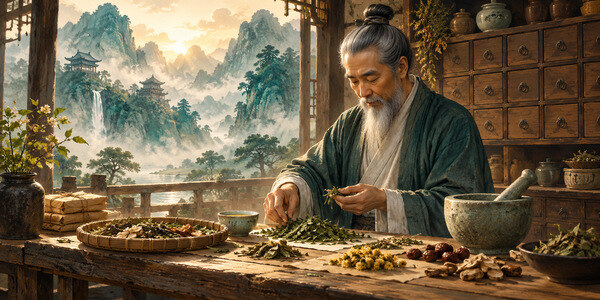
Taoism also has a profound influence on traditional Chinese medicine, because it too views the human being as part of a larger cosmic order. Health is not understood merely as the absence of illness, but as harmony among various forces, flows, and rhythms within the body. A person is healthy when their inner nature is in agreement with itself, with the environment, and with the deeper rhythm of life.
The concepts of Yin and Yang, the five elements, and the vital energy qi are connected to the understanding that the body is not a mechanical machine, but a dynamic system. Illness is often seen as an imbalance, stagnation, or excess in a particular direction. Treatment therefore aims not only to remove symptoms, but to restore movement and balance.
This approach is very close to Taoist philosophy because it does not view the human being in isolation. Emotions, seasons, food, breathing, movement, sleep, and thinking are all connected in a single process. To take care of one’s health means to take care of the way one lives, not just to react when a problem appears.
Taoist medicine reminds us that the body has its own wisdom. Sometimes the mind wants to force the body – to make it work more, sleep less, and ignore its signals. But the body is part of the Tao, and when a person does not listen to it, they gradually lose connection with one of the most direct sources of natural knowledge.
Taoism and the Art of Living
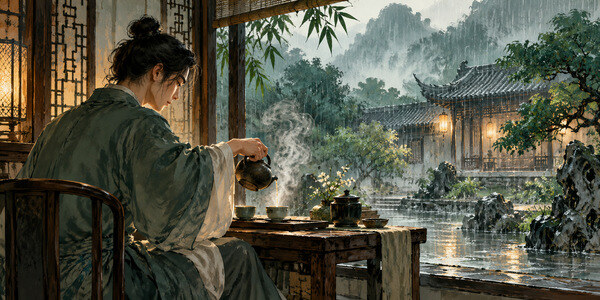
Taoism does not separate spirituality from everyday life. It does not say that one must escape the world to discover truth, nor that wisdom exists only in temples, mountains, or ancient texts. On the contrary, the Tao can be found in the most ordinary actions, if they are performed with presence, ease, and inner clarity.
Drinking tea, walking, working, being silent, listening to another person, or watching the rain can all be Taoist practices. What matters is not that the action appears spiritual, but that it is carried out without unnecessary division between the one who acts and the action itself. When the mind stops constantly evaluating experience, life becomes more direct and more alive.
This is especially important in the modern world, where people often live more in their thoughts than in their actual experience. They eat while thinking about work; they rest while worrying about the future; they communicate while secretly comparing, analyzing, and defending themselves. Taoism offers a return to immediacy, where one once again feels life instead of merely thinking about it.
According to Taoism, the art of living is not about making everything perfect. It is about learning to participate in imperfection without constant inner tension. Life is never completely orderly, but it can be experienced with greater softness if one stops demanding that it be fixed and unchanging.
Taoism and the Love of the Useless
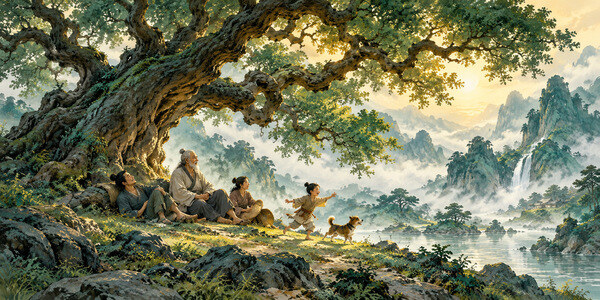
One of the most interesting themes in Zhuangzi is the value of what the world calls useless. In his stories, there are often trees so crooked and unsuitable for carpentry that no one cuts them down. Precisely because they are “useless” for human purposes, they remain alive, large, and free.
This idea is a deep critique of a society that measures everything by usefulness. If something does not bring profit, status, productivity, or visible results, it is often considered unimportant. Taoism, however, asks whether life loses its soul when everything is subordinated to utility.
The useless can be a space for freedom. An aimless walk, silence, contemplation, play, poetry, and quiet presence cannot always be measured, yet they often bring a person back to themselves. What does not serve an external purpose may serve life itself.
In this sense, Taoism is especially important today, when many people feel guilty even when they rest. They believe that every minute must be used, improved, monetized, or turned into a result. Taoist wisdom reminds us that not everything valuable must be productive.
Taoism and Death as a Change of Form

Taoism has a unique perspective on death, because it does not see it merely as an end, but as part of the continuous transformation of life. In nature, nothing remains in a fixed form forever. A leaf falls, decomposes, returns to the earth, and nourishes new life.
Zhuangzi often speaks about death in a way that seems strange to ordinary human consciousness. He does not deny the pain of loss, but questions our certainty that death is an absolute tragedy from the perspective of the Tao itself. If life is a transformation of forms, then death is also a transition within this greater process.
This does not mean cold indifference. Taoism does not say that one should not grieve or that love should not hurt. It simply offers a broader horizon in which pain is not separate from the movement of life.
When a person realizes that everything is transient, they can begin to appreciate things more deeply. Transience does not make life meaningless – it makes it more tender. Precisely because nothing can be possessed forever, every meeting, every breath, and every quiet joy becomes infinitely precious.
Taoism and the Modern Human Being

The modern human lives in a world of constant speed, information, and comparison. The mind is continuously stimulated, attention is fragmented, and the body is often exhausted by a life that does not follow a natural rhythm. This is why Taoism sounds so relevant, even though it comes from ancient China.
Taoism does not offer an escape from modernity, but a change in how one is present within it. It does not say that we must abandon work, technology, or society. It says that we must stop living as if we are separate from nature, from our bodies, and from our inner stillness.
In everyday terms, this means recognizing where we force life. Perhaps we force our bodies through constant fatigue. Perhaps we force our minds through excessive information. Perhaps we force our relationships through expectations, control, and fear of loss.
The Taoist approach is not to fight these habits aggressively, because that would be another form of tension. Rather, it invites us to see them clearly. When we see how we create our own tension, part of it begins to dissolve naturally.
The Practical Application of Taoism in Everyday Life
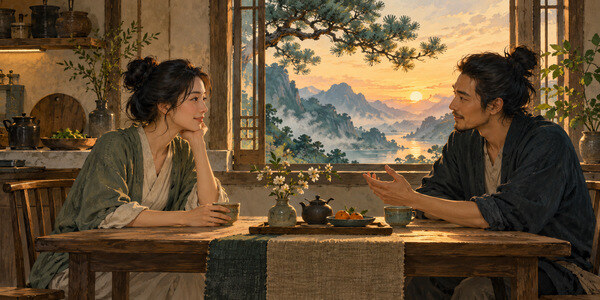
To live in a Taoist way does not mean dressing in a certain manner, using mystical words, or withdrawing from the world. It means beginning to sense when life flows naturally and when the ego tries to force it. This sensitivity is more important than any external form.
In work, Taoism can manifest as the ability to act with focus but without inner hysteria. This means doing what needs to be done without constantly adding fear, self-criticism, and tension. In this way, action becomes cleaner, because it is not burdened with unnecessary psychological weight.
In relationships, Taoism can appear as less control and more listening. Many conflicts intensify because people do not truly hear one another, but only defend their own positions. When there is more empty space in the mind, the other person can be seen more clearly.
In personal life, Taoism can manifest as respect for natural cycles. There is a time for action and a time for rest, a time for speaking and a time for silence, a time for growth and a time for withdrawal. A person suffers when they expect themselves to remain in the same phase constantly.
Taoist practice can begin very simply. It can start with a more conscious breath, a walk without a phone, a silent observation of the sky, or a refusal to react immediately out of fear. In small moments, the great Way reveals itself.
The Difference Between Taoism as Philosophy and Taoism as Religion

It is important to distinguish between philosophical Taoism and religious Taoism, although historically they often intertwine. Philosophical Taoism is primarily associated with texts such as the Tao Te Ching and Zhuangzi, which explore the nature of reality, human freedom, and living in harmony with the Tao. Religious Taoism includes temple practices, rituals, deities, priests, alchemical traditions, and various methods of spiritual cultivation.
This distinction should not be understood as opposition. In Chinese culture, philosophy, religion, medicine, cosmology, and practice are often interconnected in ways that do not fully correspond to Western categories. For many people, Taoism is simultaneously a way of thinking, a way of life, and a spiritual tradition.
Philosophical Taoism, however, is especially accessible to the modern reader because it does not require belonging to a specific religious community. One can be inspired by Taoism without adopting an entire system of rituals and beliefs. It is enough to begin observing life more carefully and recognizing one’s own resistance to it.
Religious Taoism, on the other hand, shows how these ideas have been lived, embodied, and developed within specific communities over the centuries. It reminds us that Taoism is not just a book on a shelf, but a living tradition that has shaped culture, art, medicine, and spiritual practice. Thus, the two dimensions can be seen as different faces of the same Way.
Taoism, Confucianism, and Buddhism
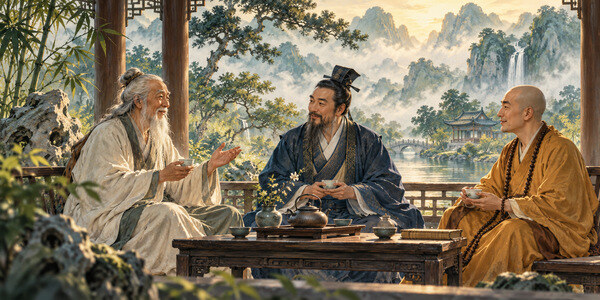
Taoism is one of the three great spiritual and philosophical forces that shaped Chinese civilization, alongside Confucianism and Buddhism. Confucianism is concerned with social harmony, morality, family relationships, and proper conduct in society. Taoism is more concerned with naturalness, spontaneity, freedom from artificial constraints, and harmony with nature.
Buddhism entered China later and began a deep dialogue with Taoism. Many Buddhist ideas were translated and understood through Taoist concepts, especially when it comes to emptiness, non-duality, and liberation from attachment. This encounter had a profound influence on the development of Chan Buddhism, which later became known in Japan as Zen.
Despite their differences, these three traditions often coexisted within Chinese culture. A person could follow Confucian principles in family and society, practice Buddhist contemplation, and at the same time be inspired by Taoist naturalness. This shows that in East Asian thought, spirituality is often not exclusive, but complementary.
Within this triad, Taoism plays the role of a voice that reminds us of the danger of excessive form. When ritual becomes too heavy, Taoism returns us to spontaneity. When morality becomes too rigid, it returns us to natural virtue. When the mind becomes too serious, it returns us to the laughter of Zhuangzi.
Why Taoism Cannot Be Fully Systematized
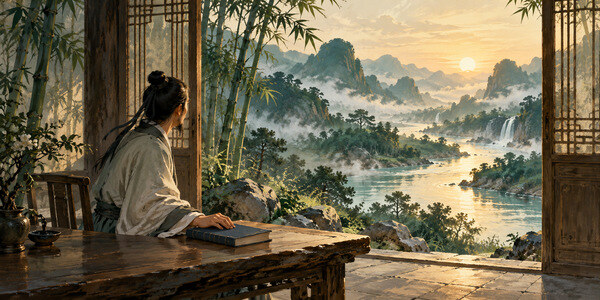
One of the reasons Taoism is so difficult to explain is that it resists excessive systematization. Every system organizes reality, but also limits it. Taoism uses words, yet constantly warns that words are not the Tao itself.
This does not mean that Taoism is vague or chaotic. It has a deep internal logic, but this logic is closer to the logic of nature than to the logic of a strict philosophical system. It thinks through images, paradoxes, and movements, because life itself is more fluid than abstract definitions.
To try to turn Taoism into a rigid doctrine would be to betray it. It is a Way, not a cage. It is an invitation to see, not a final list of rules.
Therefore, the best understanding of Taoism comes not only from reading, but from contemplation. One must allow its ideas to work within, slowly and quietly. Just as water gradually shapes stone, Taoist wisdom gradually transforms the way one sees the world.
Conclusion: Tao as a Return to Life
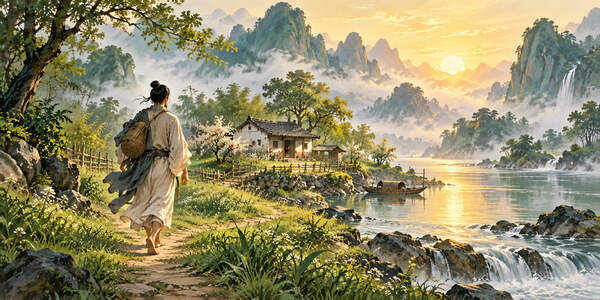
Taoism is a philosophy of return. It does not tell us to become something artificially great, but to return to what is natural, simple, and alive within us. It does not urge us to conquer the world, but to see that we are part of its movement.
In a world that constantly teaches us to strain, Taoism teaches us to relax into a deeper intelligence. In a world that teaches us to prove ourselves, it teaches us to be. In a world that urges us to hurry, it returns us to the rhythm of breathing, the seasons, and the quiet flow of life.
The Tao is not a distant mystical idea hidden somewhere beyond human experience. It is here – in the way light falls upon the earth, in the way a thought appears and disappears, in the way the heart closes in fear and opens again in understanding. The Tao is the very movement of life, before we give it a name.
To live in harmony with the Tao does not mean never to suffer, never to make mistakes, or never to be confused. It means learning not to turn every difficulty into a battle against existence. It means understanding that life is not an enemy to be defeated, but a flow in which one must learn to swim.
Ultimately, Taoism does not offer a final answer, because life itself is not a final answer. It offers a way of seeing in which the world ceases to be merely a field of control and becomes a living mystery. And when a person senses this, even for a moment, they understand why the deepest Way cannot be spoken, but can be lived.
Author: Vasil Stoyanov